 Sandra
 Ramazan pidesi is the soft, round, finger-dented Turkish flatbread baked only during Ramadan and served warm at iftar to break the fast. Topped with nigella and sesame seeds over an egg-yogurt glaze. Recipe makes 2 large pides.
The bread carries 500 years of tradition. Türkiye Today traces it to the Ottoman period, where 17th-century traveler Evliya Çelebi already documented similar breads topped with anise and saffron. Ozlem Warren, who covers Turkish home cooking on Ozlem’s Turkish Table, also calls it tırnaklı pide ekmek (finger-dented flatbread) for the signature lattice the baker presses into the dough by hand.
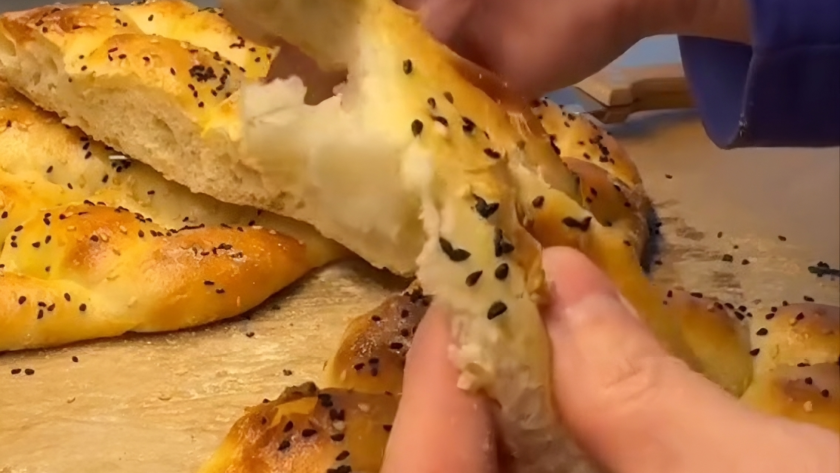
The lattice isn’t decorative. Pressing fingertips into the risen dough creates the soft, pillowed pockets that catch the egg-yogurt glaze and hold the seeds in place. Skip it and you’ve baked plain flatbread. The glaze gives the deep gold colour; the nigella and sesame give the recognizable scent
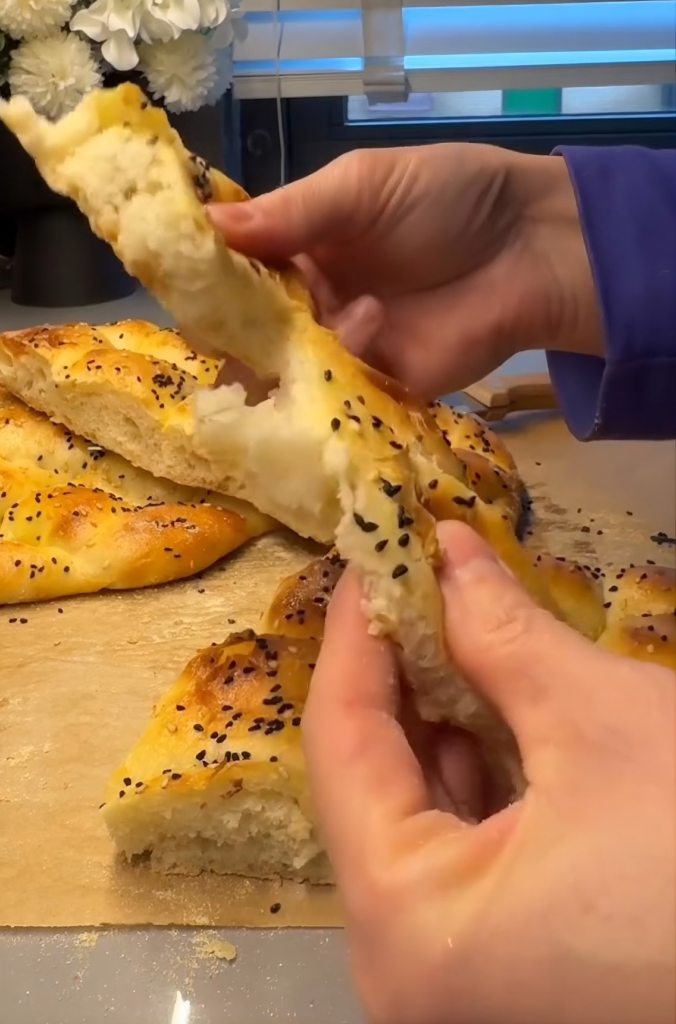
Turkish Ramadan Flatbread (Ramazan Pidesi)
Description
Soft, round Turkish flatbread with a finger-pressed lattice, glazed with egg and yogurt, topped with nigella and sesame seeds.
Ingredients
For the dough
For the glaze
For the topping
Instructions
- Mix the wet base. Combine warm water, yeast, sugar, salt and olive oil in a large bowl. Stir until the yeast fully dissolves.
- Add the flour. Pour in the flour slowly while mixing. Knead well; the dough should be slightly sticky to the touch. Oil your hands while shaping to stop the dough pulling away.
- First rise. Cover and rest somewhere warm for 1 hour.
- Knead and divide. Knead briefly, then divide into 2 equal balls. Dust generously with flour as you shape, the dough is sticky.
- Prepare the trays. Line two baking trays with parchment and sprinkle cornmeal across the surface. Place one dough ball on each, cover loosely, rest 20 minutes.
- Make the glaze. Whisk egg yolk, yogurt and oil in a small bowl until smooth.
- Shape and glaze. Press each dough ball gently with your fingertips into a wide flat disc, creating the signature finger-dented lattice. Brush the glaze across the whole surface, no dry spots. Stretch the edges gently outward to widen and keep the bread thin.
- Top and rest. Sprinkle nigella and sesame seeds across the surface. Rest in the tray for 10 minutes.
- Bake. Heat oven to 200°C / 180°C fan / gas 6. Bake on the bottom rack until deep golden, around 15-18 minutes.
FAQs
Why press the lattice pattern into the dough?
The finger dents create soft, pillowed pockets that hold the glaze and seeds in place during baking. Without them, the glaze pools and the seeds slide off as the bread expands. The technique is so signature to this bread that one of its other names is tırnaklı pide ekmek (finger-dented flatbread) in reference to it.
Can I use dry instant yeast instead of fresh yeast?
Yes. The recipe calls for half a fresh yeast packet, which is roughly 1½ teaspoons of instant yeast. Mix instant yeast straight into the flour rather than dissolving it in the water. Instant yeast activates dry.
Can I make this any time of year, or is it really only for Ramadan?
Traditionally yes, only during Ramadan — Türkiye Today notes Turkish bakeries historically baked it only during the holy month, prepping their ovens specifically for the season. At home you can make it any time, and many Turkish families now do for breakfast or alongside soups and meze through the year.
How do I keep it fresh, and what should I serve it with?
Best eaten warm the day it’s baked. Wrap leftovers tight and freeze up to a month; reheat at 200°C for 5 minutes to bring back the crust. Traditional iftar pairings: olives, white cheese (beyaz peynir), sliced tomato, lentil soup. Outside Ramadan it works as a base for any spread: meze, dips, grilled meat.