
 Sandra
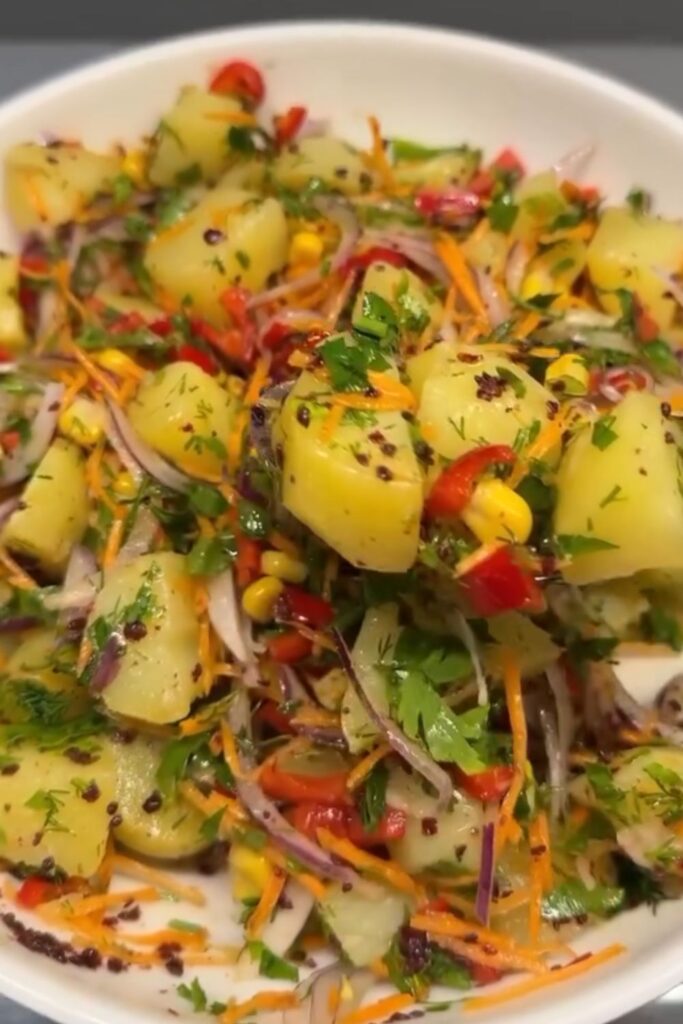
 Turkish potato salad is a vibrant Mediterranean side dish mixed with crisp peppers, sweetcorn, red onion, fresh herbs, and a tangy sumak dressing. The combination of colourful vegetables and bright spices creates an incredibly refreshing profile.
If you need a solid side dish that brightens up any grilled meal, this is the one. The key to the whole recipe is dressing the potatoes whilst they’re still warm. Skipping this step means the potatoes won’t absorb the olive oil and sumak properly, leaving you with a bland, heavy salad.
The thinly sliced red onion gives the dish a necessary crunch and sharp contrast. Rubbing the onion with a little salt before mixing it in softens the raw bite completely. I love serving this at summer barbecues because it holds up much better in the sun than mayonnaise-based salads.
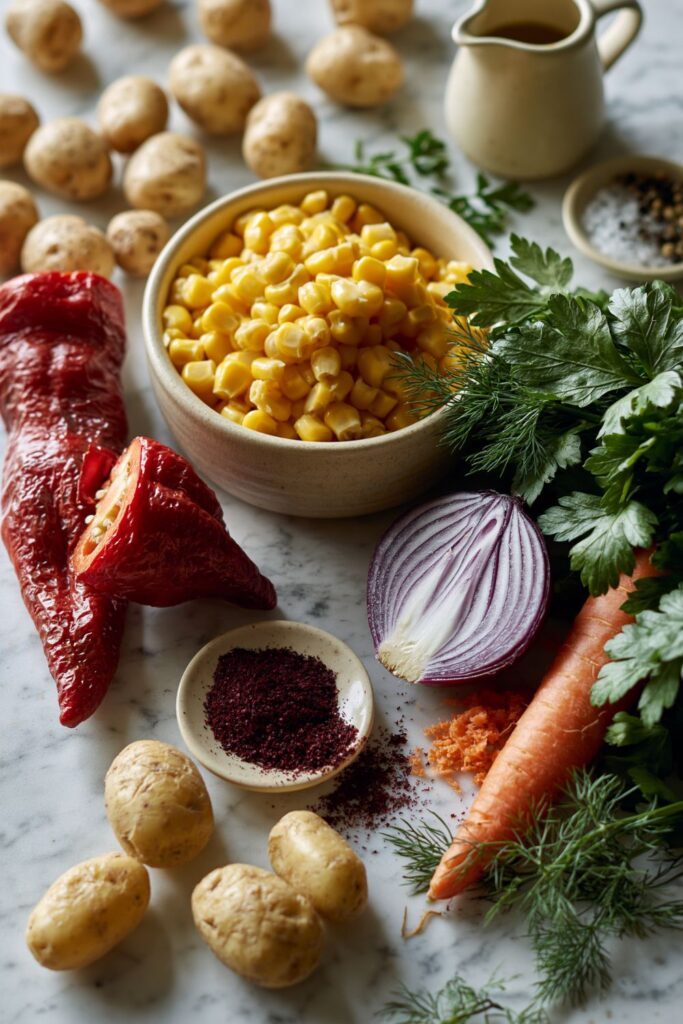
Turkish Potato Salad Ingredients
- 750g (1lb 10oz) small potatoes, peeled
- 1 large pointed red pepper, cored and finely chopped
- 75g (2½oz) tinned sweetcorn, drained
- 1 red onion, halved and thinly sliced
- 1 medium carrot, grated
- 15g (½oz) fresh flat-leaf parsley, finely chopped
- 15g (½oz) fresh dill, finely chopped
Dressing
- 1 tbsp sumak
- 120ml (4fl oz) extra virgin olive oil
- Salt and black pepper, to taste
How To Make Turkish Potato Salad
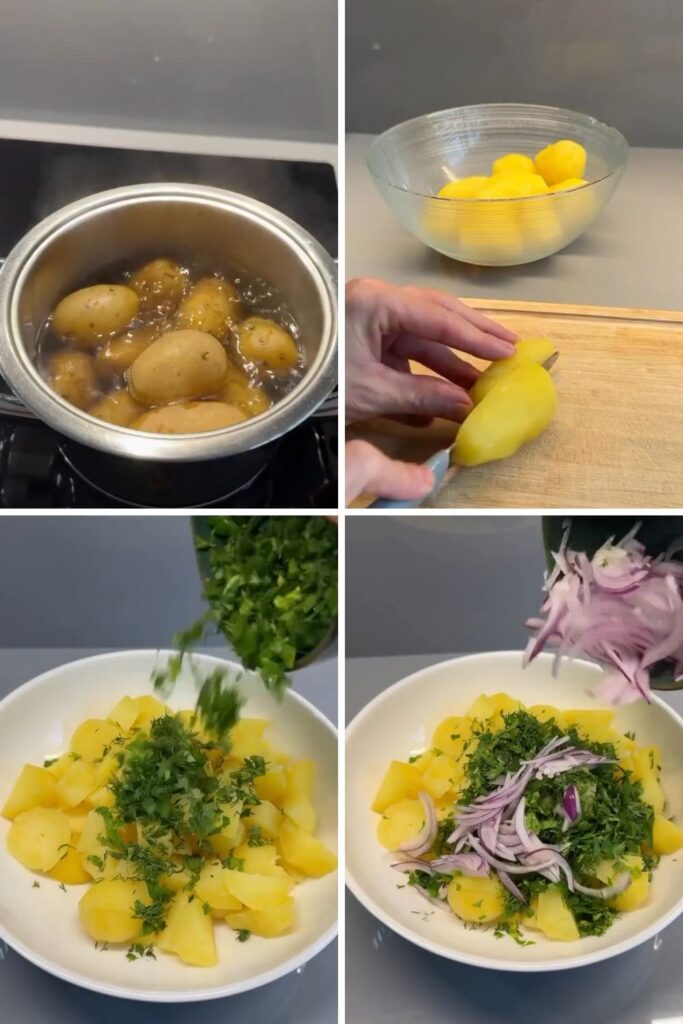
- Boil the potatoes: Place the peeled potatoes into a large saucepan of salted water, bring to the boil over a medium-high hob, and cook for about 15 to 20 minutes until tender when pierced with a fork. Drain them well in a colander.
- Chop the potatoes: Cut the warm potatoes into bite-sized chunks and place them into a large mixing bowl.
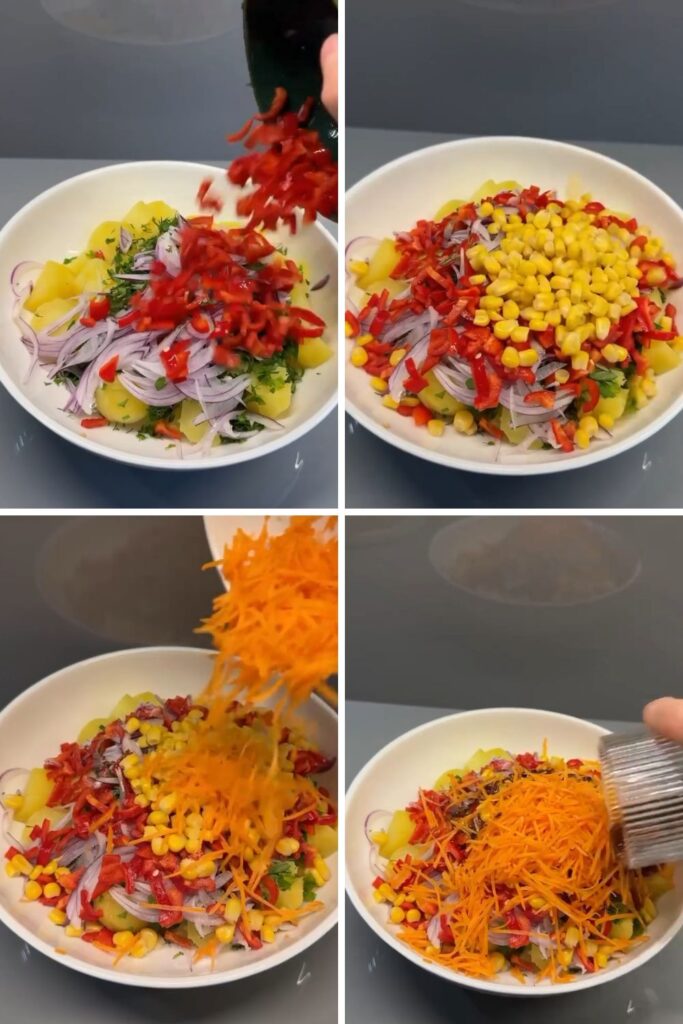
- Mellow the onions: Put the sliced red onion into a small bowl with a pinch of salt and rub the salt into the layers with your fingers for 30 seconds until they start to soften. Rinse the onions under cold running water and squeeze out the excess moisture.
- Combine the salad: Add the softened onions, chopped red pepper, drained sweetcorn, grated carrot, parsley, and dill to the bowl with the warm potatoes.
- Whisk the dressing: Mix the sumak and extra virgin olive oil together in a small jug, then season with salt and black pepper to taste.
- Dress and serve: Pour the dressing over the salad and toss gently with a large spoon until everything is coated well. Serve warm or cover with clingfilm and chill until needed.
Recipe Tips
- Dress them warm. Pour the sumak dressing over the potatoes as soon as they are chopped because the heat helps them draw the flavours right into the centre.
- Prep the onions properly. Do not skip rinsing the salted red onions because it removes the harsh sulfur compounds that ruin the fresh taste of the herbs.
- Make it ahead. You can boil the potatoes and chop the vegetables a day early, but keep the dressing separate in a jar until an hour before serving.
- Choose the right spud. Use a waxy variety like Charlotte or new potatoes because they hold their shape perfectly when tossed with the heavy vegetables.
- Chop everything evenly. Cut the red pepper to about the same size as the sweetcorn kernels so every spoonful gives you a balanced crunch.
What To Serve With Turkish Potato Salad
This salad pairs brilliantly with charred chicken skewers, grilled lamb chops, or spiced koftas straight off the barbecue. The sharp sumak dressing cuts through the fat of grilled meats beautifully. It also works as part of a larger mezze spread alongside warm flatbreads, hummus, and crunchy falafel.
How To Store Turkish Potato Salad
Fridge
Pack the salad into an airtight container and keep it in the fridge for up to three days. The flavours actually deepen after twenty-four hours, though the fresh herbs will soften slightly over time.
Reheat
This dish is best enjoyed at room temperature or chilled. If you prefer it slightly warm, take it out of the fridge thirty minutes before serving to let the cold olive oil liquefy completely. Do not use the microwave as it turns the crisp peppers soggy and warms up the fresh herbs unpleasantly.
Freeze
Do not freeze this salad. The structure of boiled potatoes changes completely in the freezer, turning them grainy, whilst the raw peppers and onions will become mushy upon thawing.
Turkish Potato Salad Nutrition Facts
Per serving (1 of 4): Calories: 395, Protein: 4g, Fat: 27g, Carbohydrates: 34g, Sugar: 5g, Sodium: 180mg. Estimated. May vary based on ingredients and cooking methods.
FAQs
You can use a tablespoon of fresh lemon juice mixed with a teaspoon of grated lemon skin instead. This gives you a similar sharp, fruity acidity, though you will miss out on the distinct dark red colour.
No, because extra virgin olive oil forms the base of the flavour dressing, and light varieties lack the fruity aroma needed to tie the vegetables together.
The potatoes were likely overcooked or you stirred the salad too vigorously while they were piping hot. Let the steam escape for two minutes after chopping, then toss the ingredients together gently with a wide wooden spoon.
Turkish Potato Salad Recipe
Description
A vibrant Mediterranean potato salad packed with sweetcorn, pointed red peppers, fresh herbs, and a tangy extra virgin olive oil and sumak dressing.
Ingredients
Instructions
- Boil peeled potatoes in salted water for 15 to 20 minutes until tender.
- Drain well and cut into bite-sized chunks while still warm.
- Rub sliced red onion with salt for 30 seconds, rinse under cold water, and squeeze dry.
- Combine warm potatoes, softened onions, pepper, sweetcorn, carrot, and chopped herbs in a bowl.
- Whisk the sumak and extra virgin olive oil together with salt and pepper.
- Pour dressing over the salad, toss gently to coat, and serve warm or chilled.