 Sandra
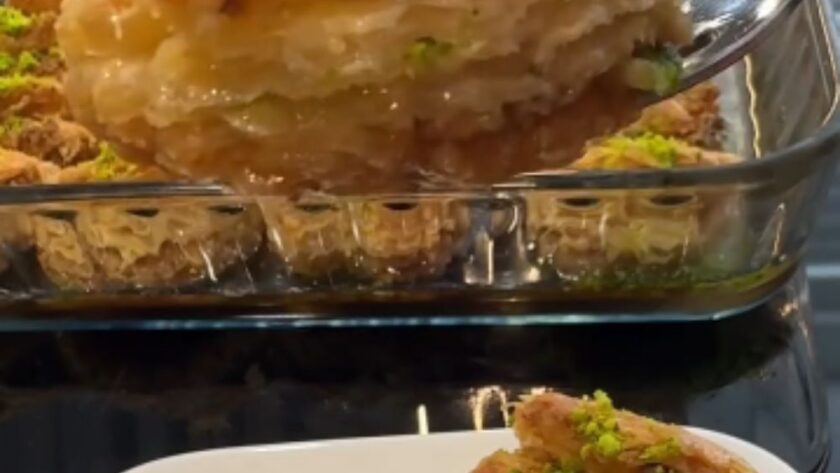
 Turkish lip-shaped pastry (dilber dudagi) is a layered yoghurt dough pastry filled with walnuts, baked in clarified butter and soaked in warm lemon sugar syrup. Flaky, nutty, and shaped like crescent lips with crisp edges that shatter.
The dough for this is unusual. Yoghurt, oil, egg and vinegar together make a pastry that rolls out thin as paper without tearing or springing back. Most pastry doughs fight you when you try to get them thin. This one stretches willingly because the yoghurt keeps it soft and the vinegar relaxes the gluten. After 30 minutes of resting, it rolls out so easily you barely need pressure on the rolling pin.
I stack the rolled sheets with cornflour between them before folding and cutting. The cornflour stops the layers from fusing together during baking, and that’s what gives you the flaky, separating texture in the finished pastry. Without it, the layers press into one solid piece and you get a dense biscuit instead of a pastry that breaks apart in sheets. Be generous with the cornflour between every layer.
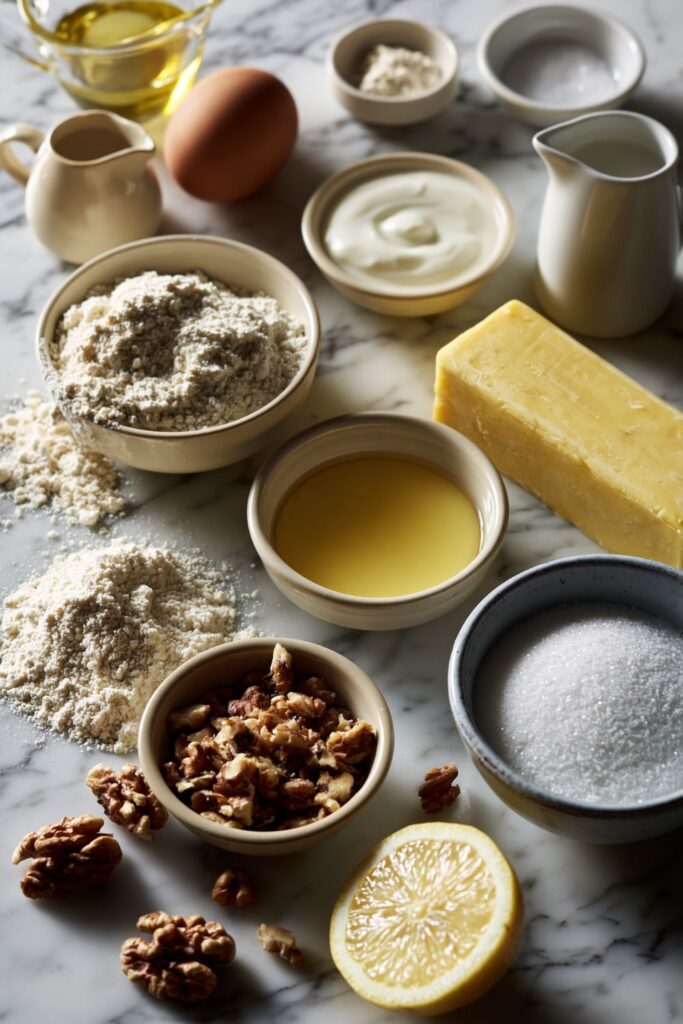
Turkish Lip-Shaped Pastry (Dilber Dudagi) Ingredients
For the Syrup
- 500g (1lb 2oz) caster sugar
- 625ml (22fl oz) water
- Juice of 1/4 lemon
For the Dough
- 1 egg
- 125ml (4fl oz) yoghurt
- 125ml (4fl oz) vegetable oil
- 1/2 tsp baking powder
- 1/2 tsp salt
- 1 tbsp white wine vinegar
- 310g (11oz) plain flour, approximately
- Cornflour, for dusting
For the Filling and Topping
- 150g (5oz) walnuts, finely chopped
- 150g (5oz) unsalted butter
How To Make Turkish Lip-Shaped Pastry (Dilber Dudagi)
- Make the syrup: Put the sugar, water and lemon juice in a saucepan over high heat. Stir until the sugar dissolves. Once boiling, reduce to medium and simmer for 20 minutes. Take off the heat and let it cool to lukewarm. The syrup should be warm, not hot and not cold, when you pour it over the pastry.
- Make the dough: Put the egg, yoghurt, oil, baking powder, salt and vinegar in a large bowl. Whisk together until combined. Add the flour gradually and knead until you have a soft, smooth dough that doesn’t stick to your hands. Cover and rest for 30 minutes.
- Divide and rest again: Split the dough into 12 equal pieces and roll each into a ball. Dust generously with cornflour, place on a tray, cover with clingfilm and rest for another 30 minutes.
- Roll out the layers: Dust your work surface with cornflour. Roll each ball out as thinly as you can, roughly the size of a dinner plate. Stack the rolled sheets on top of each other with plenty of cornflour between each layer. Press down gently with your hands to bond them slightly, then roll again with a rolling pin to make them as thin as possible.
- Fill and shape: Scatter chopped walnuts generously over the top sheet. Fold the edges in slightly to neaten. Fold one third of the dough from one end toward the centre, then fold the other third over the top, like folding a letter. You’ll have two long, folded strips. Press down lightly with your hands. Cut down the middle carefully to separate them. Use a tea glass to cut crescent or half-moon shapes from each strip, alternating the direction of the glass.
- Arrange in the dish: Place the crescent shapes in a greased ovenproof dish, pressing down lightly with your fingers. Gather any leftover scraps and bake them in a separate small dish.
- Add the butter and bake: Melt the butter and skim the white foam off the top. Pour the clear golden butter over all the pastries. Bake in a preheated oven at 180-200°C (350-400°F/Gas Mark 4-6) with top and bottom heat until the tops and bottoms are properly golden brown.
- Soak in syrup: Remove from the oven and let the pastry sit for 5 minutes. Pour the entire amount of lukewarm syrup over the hot pastry. Leave uncovered for 2-3 hours to absorb the syrup before serving.

Recipe Tips
The syrup should be lukewarm, not cold. Unlike baklava where cold syrup meets cold pastry, this recipe works best with warm syrup on hot pastry. The thicker dough needs slightly warm syrup to soak through to the centre. Cold syrup sits on the surface and the insides stay dry.
Be generous with cornflour between layers. The cornflour is what keeps the layers separate during baking. Without enough of it, the sheets fuse together and you lose the flaky texture that defines this pastry.
Roll as thin as you can. The thinner the sheets, the more delicate and crisp each layer becomes. Don’t worry about small tears, they won’t show once the pastry is folded, cut and baked.
Skim the butter foam. The white foam is milk solids that burn and leave dark spots. Pour only the clear golden liquid over the pastry for an even colour and clean flavour.
Don’t cover the finished pastry. Covering traps moisture and softens the layers. Leave it uncovered at room temperature. The pastry stays flaky for days stored this way.

What To Serve With Turkish Lip-Shaped Pastry
A cup of Turkish coffee or strong black tea is the classic pairing. The bitterness balances the sweet syrup and buttery layers.
These are rich enough to serve on their own. One or two pieces per person is plenty. For a dessert spread, arrange on a platter alongside other syrup pastries or a bowl of clotted cream.

How To Store Turkish Lip-Shaped Pastry
Fridge
Do not refrigerate. Store uncovered or loosely covered with greaseproof paper at room temperature for up to 4 days. The cold firms the butter and changes the texture of the layers.
Reheat
Not needed. Serve at room temperature. If the pastry has softened from humidity, a few minutes in the oven at 160°C (325°F/Gas Mark 3) can help restore some crispness.
Freeze
Freeze before adding syrup. Bake and cool completely, then freeze in a sealed container with greaseproof paper between layers for up to 1 month. Thaw at room temperature, warm gently in the oven, then pour lukewarm syrup over and rest 2-3 hours.
Turkish Lip-Shaped Pastry (Dilber Dudagi) Nutrition Facts
Per serving (1 piece, based on 16): Calories: 270kcal, Protein: 4g, Fat: 14g, Carbohydrates: 34g, Sugar: 22g, Sodium: 75mg. Estimated. May vary based on ingredients and cooking methods.
FAQs
Dilber dudagi translates to “beauty’s lips” in Turkish. The pastries are shaped into crescents that resemble pouted lips. The name comes from their curved, half-moon shape.
Either there wasn’t enough cornflour between the layers, or the sheets weren’t rolled thin enough. Both are needed for the layers to separate during baking. Be generous with cornflour and roll each sheet as thin as you can.
Yes, pistachios give a sweeter, milder flavour and a bright green colour inside the pastry. Chop them finely the same way. Either nut works well.

Turkish Lip-Shaped Pastry Recipe (Dilber Dudagi)
Description
Crescent-shaped layered pastries made from a yoghurt and vinegar dough, filled with chopped walnuts, baked in clarified butter and soaked in lukewarm lemon sugar syrup until flaky and saturated.
Ingredients
For the Syrup:
For the Dough:
For the Filling and Topping:
Instructions
- Dissolve sugar in water with lemon juice, boil then simmer 20 minutes, cool to lukewarm.
- Whisk egg, yoghurt, oil, baking powder, salt and vinegar, add flour gradually, knead into a soft dough, rest 30 minutes.
- Divide into 12 balls, dust with cornflour, rest another 30 minutes, then roll each as thinly as possible and stack with cornflour between layers.
- Scatter walnuts over the top, fold into thirds from each end, cut down the middle, stamp out crescent shapes with a tea glass.
- Arrange in a greased dish, pour skimmed melted butter over, bake at 180-200°C (350-400°F/Gas Mark 4-6) until golden, rest 5 minutes, pour lukewarm syrup over, rest 2-3 hours uncovered.