 Sandra
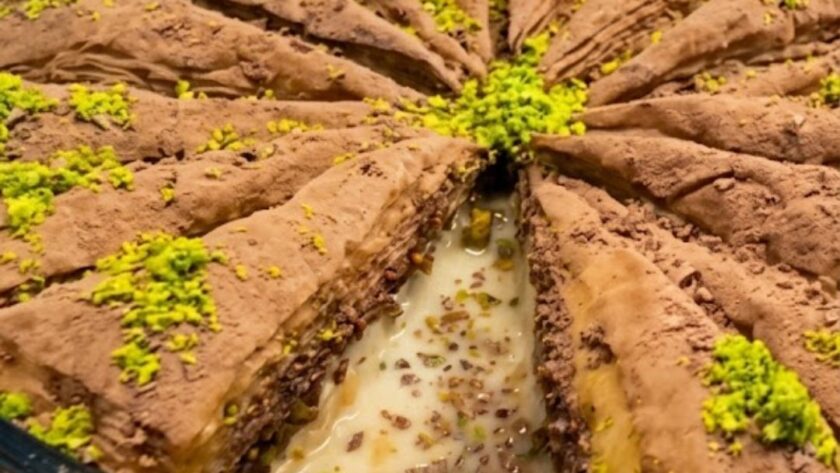
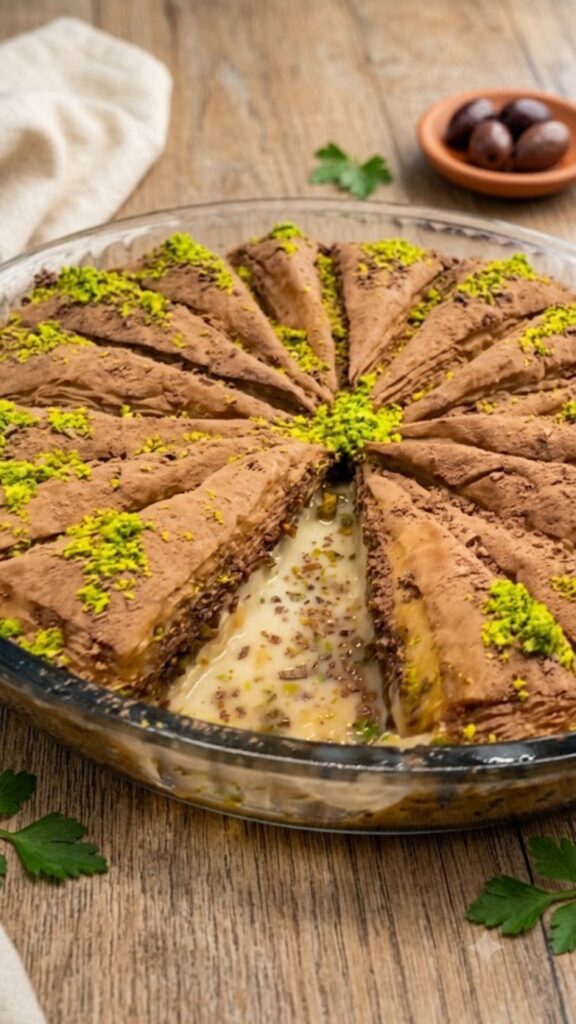
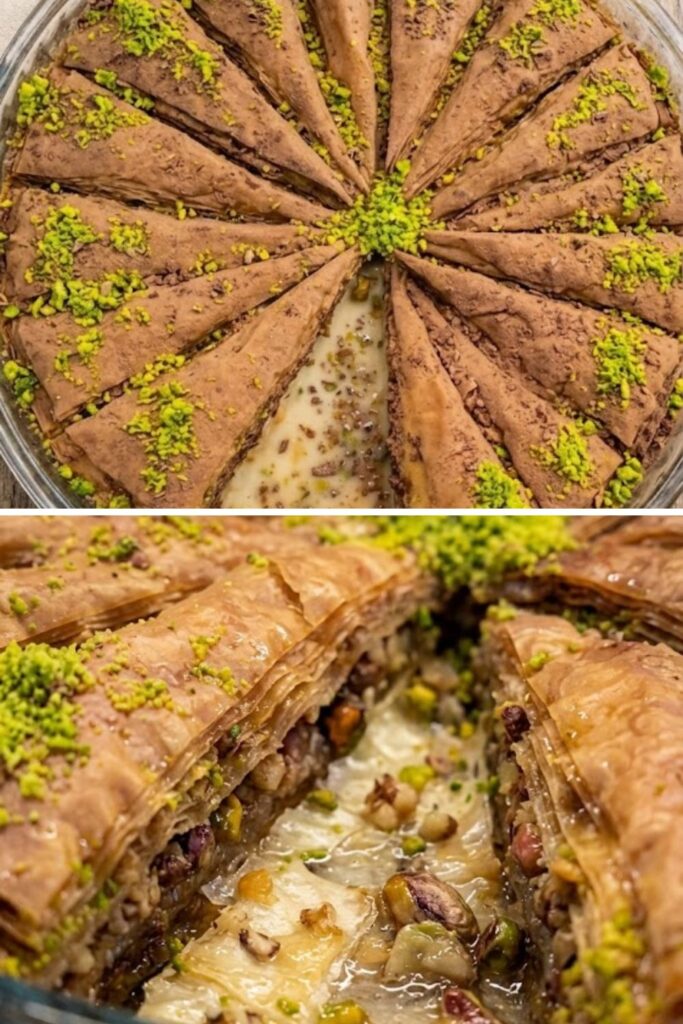
 Havuç dilim soğuk baklava is a Turkish cold baklava made with phyllo sheets, pistachios or walnuts and a milk syrup, finished with Nesquik powder and grated milk chocolate. It is assembled in a round glass dish, baked at 175°C until golden, soaked in cooled syrup and refrigerated for 4 to 5 hours before serving. Makes 16 slices.
The syrup here is made with milk, not just sugar and water. Once the sugar and water have boiled for 5 minutes, the milk goes in, the heat comes off and everything cools completely before it touches the hot pastry. That milk-based soak is what gives this baklava its soft, creamy texture and keeps it from being overpoweringly sweet.
Cut the baklava into its 16 slices before it goes into the oven, not after. The cuts let the butter run down between the layers during baking and give you clean, even portions once the pastry is soaked and set.
Havuç Dilim Soğuk Baklava Recipe (Turkish Cold Milk Baklava)
Description
Turkish cold milk baklava made with buttered phyllo, pistachios or walnuts and a milk syrup, topped with Nesquik powder and grated chocolate. One round dish, 16 slices.
Ingredients
For the baklava:
For the milk syrup (bardak = 200ml):
For the topping:
Instructions
- Make the syrup first. Put the sugar and water in a saucepan and bring to the boil. Boil for 5 minutes, stir in the milk and remove from the heat. Set aside to cool completely.
- Melt the butter in a pan over low heat. Skim the foam from the surface, then strain the clear butter into a bowl. Set aside.
- Cut the phyllo sheets into rounds to fit your glass dish. Reserve any offcuts.
- Grease the dish. Lay 2 rounds of phyllo on the base. Brush the edge offcuts with clarified butter and use them to neatly line any gaps around the sides.
- Add a generous, even layer of walnuts or pistachios.
- Layer the remaining phyllo rounds one at a time, brushing each sheet with clarified butter before adding the next.
- Brush the top generously with butter. Cut into 16 equal diamond or fan-shaped slices. Pour more clarified butter evenly over the top.
- Bake on the bottom rack of the oven at 175°C using top and bottom heat (not fan mode) until the surface is deeply golden, about 40 to 50 minutes.
- Remove from the oven and rest for 10 minutes. Pour the cooled milk syrup slowly and evenly over the hot baklava. Leave to cool completely at room temperature.
- Once cool, dust generously with Nesquik, scatter the grated chocolate and garnish with green pistachios. Cover and refrigerate for 4 to 5 hours before serving.
FAQs
Why did my baklava go soggy after adding the syrup?
The syrup was most likely still warm when it was poured. Warm syrup on hot pastry causes the layers to steam and collapse. Let the baklava rest the full 10 minutes and make sure the syrup has cooled to room temperature before combining the two.
Can I use cocoa powder instead of Nesquik?
Yes, but cocoa powder on its own is bitter. Mix it with an equal amount of powdered sugar first, then dust it over the baklava the same way you would the Nesquik. The Nesquik gives a sweeter, lighter chocolate finish that works better with the milk syrup.
Can I use margarine instead of butter?
Yes. The original recipe lists butter or margarine as equal options. Margarine gives a very similar result in the oven but a slightly less rich flavour. Use it in the same quantity and clarify it the same way — melt, skim and strain before using.
Should I use walnuts or pistachios?
Both work and the original recipe gives the choice. Pistachios give a more vibrant green colour and a milder, sweeter filling. Walnuts have more texture and a slightly bitter edge that balances the sweetness of the milk syrup. The garnish pistachios on top look better if you use pistachios inside too.
What should I serve this with?
Cold baklava like this works well as part of a Turkish dessert spread. Semolina Cake in Syrup (Sambali) is the natural second dessert — another Turkish syrup-soaked sweet that can be made ahead and served at the same table. For something from the same pastry family, Pressed Kadayif with Pistachios (Basma Kadayıf) rounds out a proper Turkish sweet spread.