 Sandra
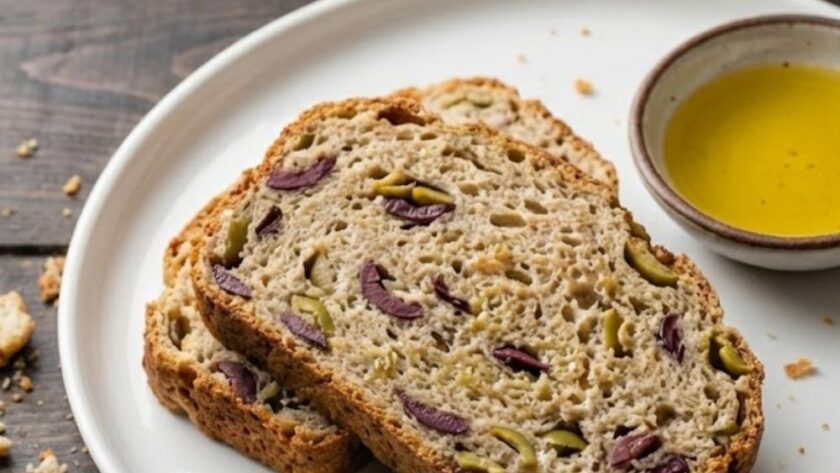
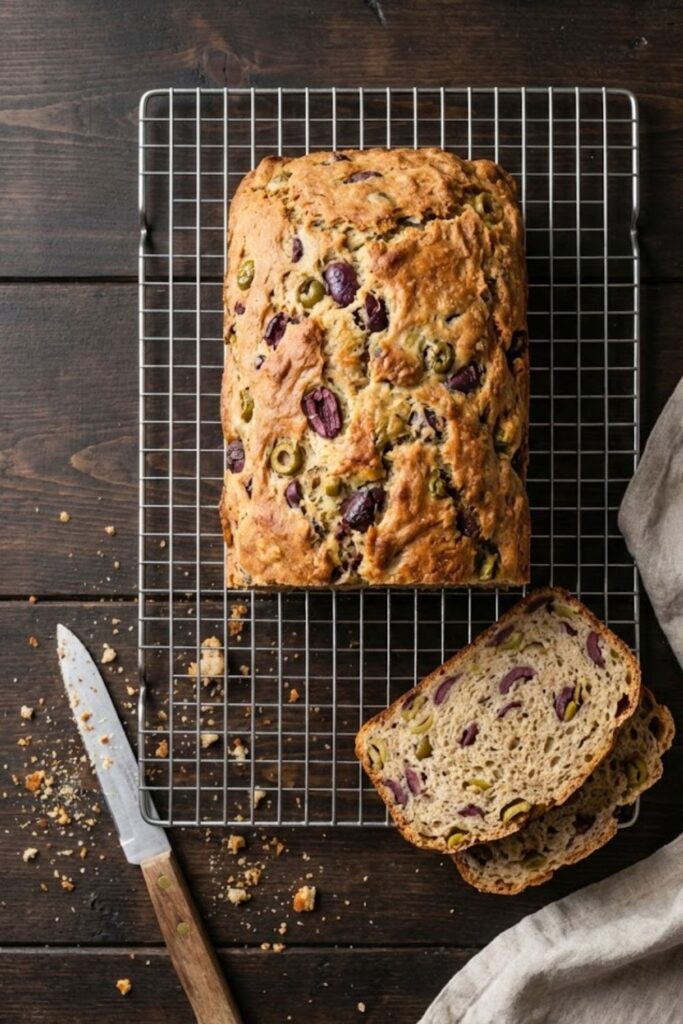
 This tender, crusty Alton Brown Olive Loaf is made with a savory blend of chopped olives, tapenade, and olive oil, and is ready in just over two hours. The hero moment isn’t the rise, but the slice—revealing a mosaic of jewel-toned olives suspended in a golden crumb flavored deeply by a secret dollop of tapenade. I love how this recipe skips the yeast entirely for a foolproof, restaurant-quality result.
The Secret To Getting It Right
What I learned making this loaf is that it defies the usual rules of bread making because it isn’t a yeast bread at all—it is technically a quick bread, like a muffin. The biggest mistake you can make is treating it like sourdough and overworking the dough. When I first mixed the wet and dry ingredients, I was tempted to stir until smooth, but Alton Brown advises against this; leaving the batter lumpy ensures the final texture is moist and tender, not tough.
The real genius of this recipe, however, is the addition of tapenade directly into the flour mixture before the wet ingredients are added. Most olive breads just toss in chopped fruit, which can leave the surrounding dough tasting bland. By coating the flour with tapenade first, every single crumb carries that briny, savory depth, making it impossible to eat just one slice.
Alton Brown Olive Loaf Ingredients
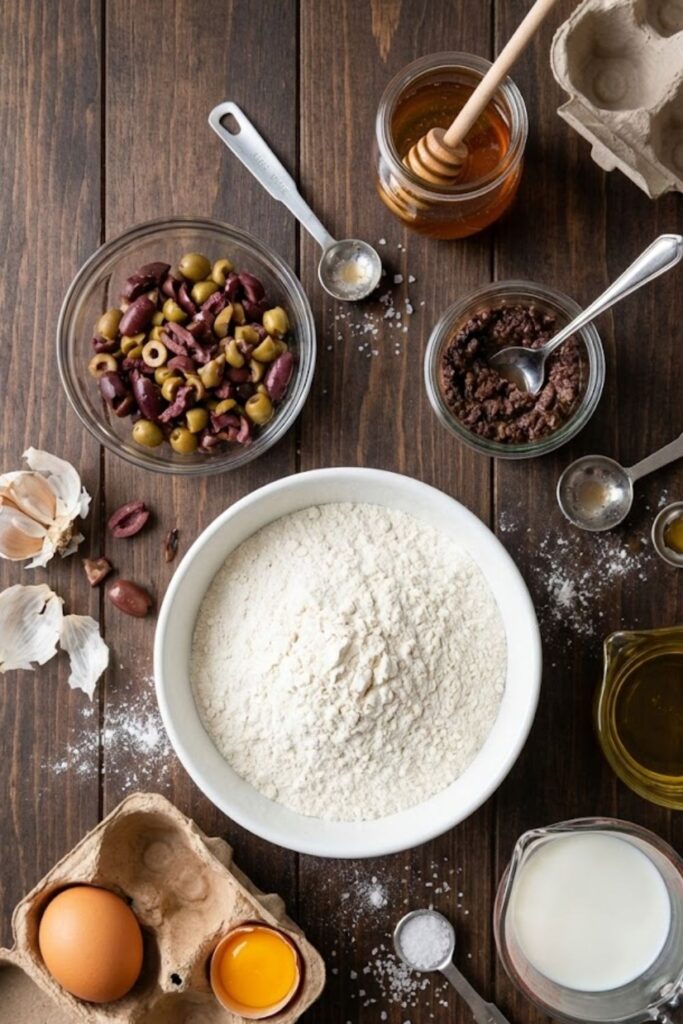
- 17 ounces (approx. 3 ½ cups) all-purpose flour
- 3 teaspoons baking powder
- 1 ¼ teaspoons kosher salt
- 2 cups pitted, mixed olives, roughly chopped (Kalamata and Manzanilla work well)
- ⅓ cup tapenade (store-bought or homemade)
- 2 large eggs, beaten
- ½ cup olive oil
- 1 cup whole milk
- 1 tablespoon honey
How To Make Alton Brown Olive Loaf
- Prep the Oven and Pan: Preheat your oven to 375°F. Spray a standard 9×5-inch loaf pan with vegetable oil spray and line it with a parchment paper “sling” (leaving overhang on the sides) for easy removal.
- Mix Dry Ingredients: Place the flour and baking powder in a food processor and pulse for 5 seconds to aerate. Pour this mixture into a large mixing bowl.
- Incorporate the Flavor: Add the chopped olives and tapenade to the flour mixture. Stir well so the olives and tapenade are coated in flour; this prevents them from sinking and distributes the flavor.
- Whisk the Liquids: In a separate bowl, whisk together the beaten eggs, olive oil, milk, honey, and kosher salt until combined.
- Combine and Bake: Pour the wet mixture into the dry ingredients. Stir until just combined—do not mix until smooth; lumps are okay. Pour the batter into the prepared loaf pan and bake for 75 to 80 minutes, or until the internal temperature reaches 210°F. Cool on a rack before slicing.

Recipe Tips
- Check the Temperature: This loaf is dense and can fool you by looking done on the outside while being raw in the middle. Always use a probe thermometer to ensure the internal temperature hits 210°F.
- Drain the Olives: Wet olives can make the batter too soggy. Rinse and pat your olives dry with paper towels before chopping them to control the moisture level.
- The Parchment Sling: Don’t skip the parchment paper sling. This heavy loaf can stick to the corners of the pan, and the paper handles make lifting it out safe and easy.
- Tapenade Choice: If you don’t have homemade tapenade, a high-quality jarred version works perfectly. Look for one with a simple ingredient list (olives, capers, oil).
What To Serve With Olive Loaf
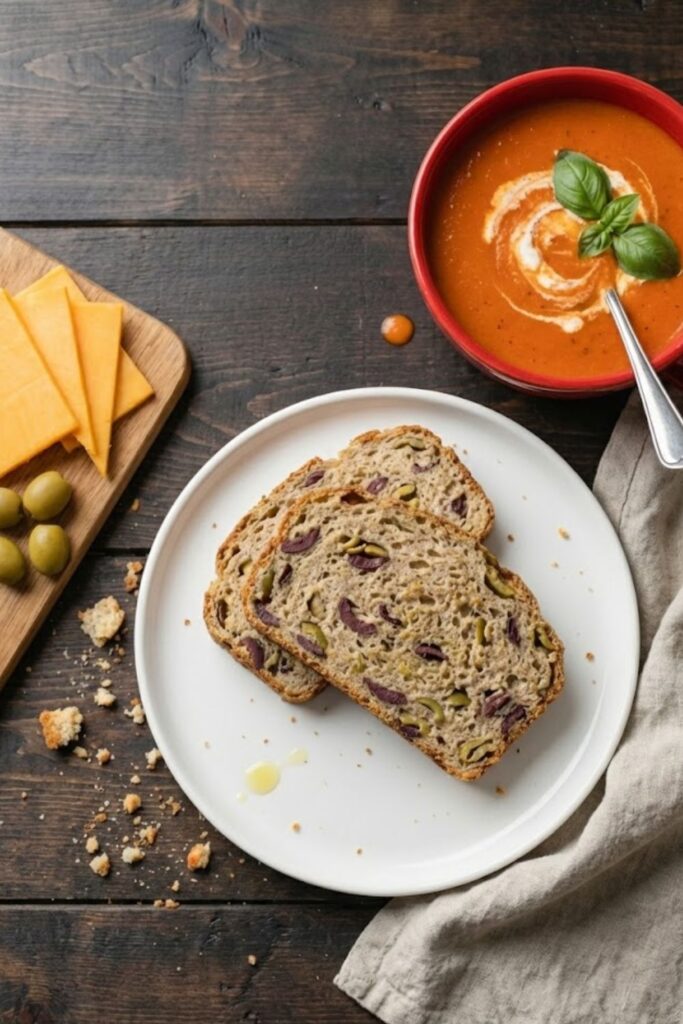
This savory bread pairs beautifully with a simple charcuterie board featuring sharp cheddar or manchego cheese. It is also excellent served alongside a hot bowl of tomato soup or roasted red pepper bisque, where the salty olive flavor cuts through the richness of the soup.
How To Store
Store the cooled loaf in a paper bag or bread box at room temperature for up to 2 days to maintain the crust. For longer storage, slice the bread, wrap it tightly in plastic and foil, and freeze for up to 3 months.
FAQs
- Can I use yeast instead of baking powder? No, this is a quick bread recipe designed for chemical leavening (baking powder). If you want a yeast bread, you would need a completely different recipe with rising times.
- What kind of olives should I use? A mix of Kalamata (purple) and Manzanilla (green) looks beautiful and balances the flavor. Avoid canned black olives as they lack the necessary briny punch.
- Why is my bread crumbly? You may have overmixed the batter or used too much flour. Measure your flour by weight (17 ounces) if possible, rather than scooping, to ensure accuracy.
- Can I make this dairy-free? Yes, you can substitute the whole milk with an unsweetened plant-based milk like almond or oat milk, though the texture may change slightly.
Nutrition
- Calories: 340
- Total Fat: 18g
- Saturated Fat: 3g
- Cholesterol: 45mg
- Sodium: 680mg
- Total Carbohydrate: 38g
- Protein: 7g
Try More Recipes:
Alton Brown Olive Loaf Recipe
Description
A dense, savory quick bread engineered to carry a high payload of oil-rich olives and tapenade, using chemical leavening and a high-temperature internal target to ensure a structured, non-gummy crumb.
Ingredients
Instructions
- Preheat the oven to 375°F and prepare a 9×5-inch loaf pan with a parchment paper “sling,” ensuring the sides have overhang for easy extraction.
- Aerate the flour and baking powder by pulsing them in a food processor for 5 seconds; this mechanical sifting ensures the leavening agent is perfectly distributed through the starch.
- Coat the chopped olives and tapenade by stirring them into the dry flour mixture; this creates a friction-rich surface that prevents the heavy inclusions from sinking to the bottom of the pan during the bake.
- Whisk the eggs, olive oil, milk, honey, and salt in a separate vessel until the emulsion is uniform and the honey is fully dissolved.
- Fold the wet ingredients into the dry ingredients using a spatula, stopping the moment the flour is hydrated; over-mixing at this stage will over-develop gluten and result in a tough, “tunneled” loaf.
- Bake for 75 to 80 minutes, or until the internal temperature reaches exactly 210°F. This high threshold is necessary to evaporate excess moisture introduced by the olives.
- Cool the loaf in the pan for 10 minutes, then use the parchment sling to transfer it to a wire rack to finish cooling before slicing.
Notes
- Coating the olives and tapenade in dry flour before adding the liquids is a critical structural step. The flour absorbs surface moisture from the olives, allowing them to “grip” the batter as it rises, ensuring a homogenous distribution of fruit throughout the loaf.
- The internal temperature target of 210°F is higher than standard yeast breads (usually 190°F-200°F). Because this is a high-fat, high-moisture batter, a lower temperature would result in a “gummy” or “wet” center; the extra 10 degrees ensure the crumb structure is fully set.
- Utilizing a food processor for the dry ingredients isn’t just for speed; the high-velocity blades break up flour clumps and incorporate air more effectively than a standard whisk, leading to a more consistent rise in a chemically leavened loaf.