 Sandra
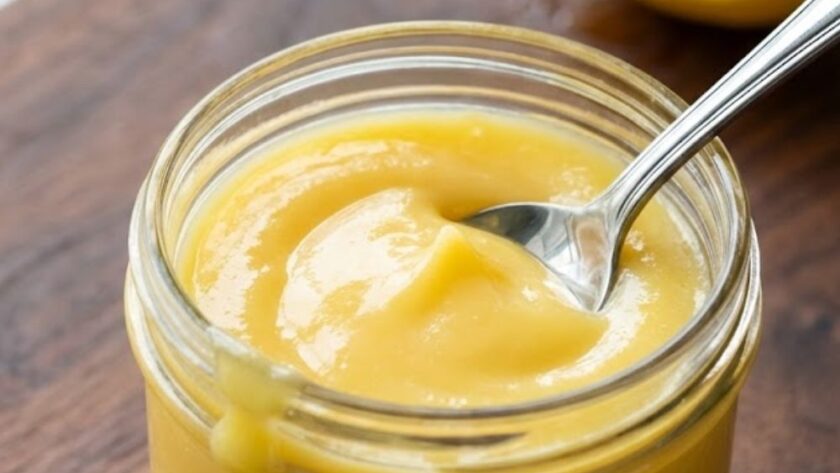
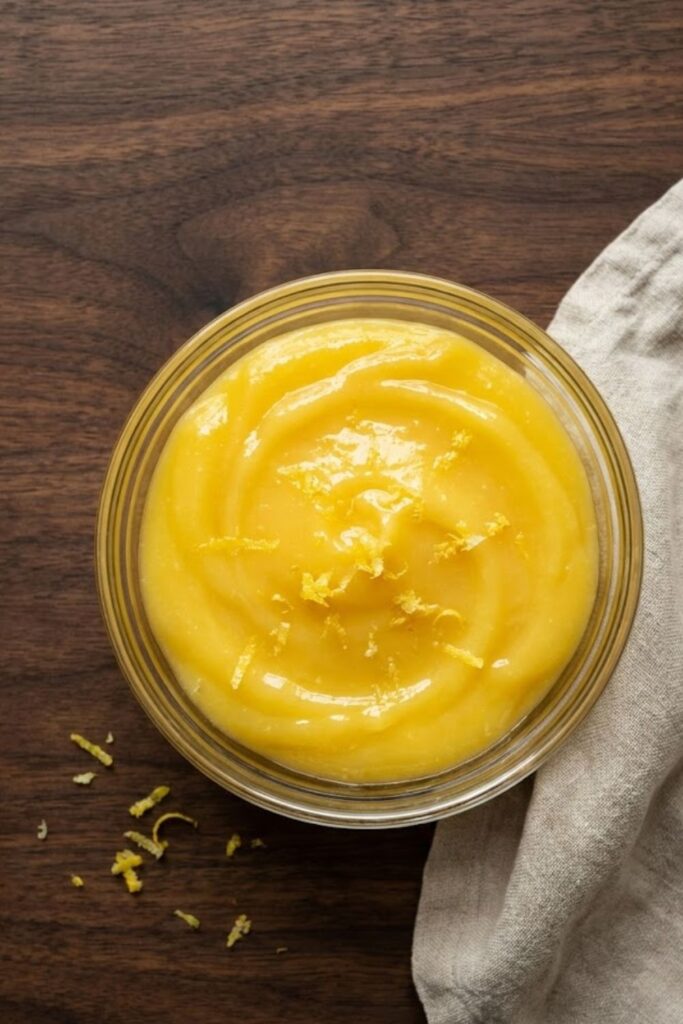
 This creamy, tangy Alton Brown Lemon Curd is made with fresh lemon zest, egg yolks, and sugar, and is ready in just 20 minutes. The mixture thickens gently over simmering water before cold butter is whisked in to create a glossy, velvety finish. I love having a jar of this in the fridge to instantly upgrade plain yogurt, toast, or simple cakes.
The Secret To Getting It Right
I learned quickly that the order of operations matters immensely when making this curd. Alton Brown’s method specifically calls for whisking the sugar and egg yolks together before introducing any lemon juice. This “buffers” the proteins in the yolks, preventing them from instantly curdling when the acid hits them, which ensures your final product is smooth rather than grainy.
The real magic, however, happens off the heat. Unlike some recipes that cook the butter with the eggs, this version whisks cold pats of butter into the cooked mixture at the very end. This technique, known as mounting, helps cool the curd down gently while creating a stable, incredibly glossy emulsion that feels luxurious on the tongue.
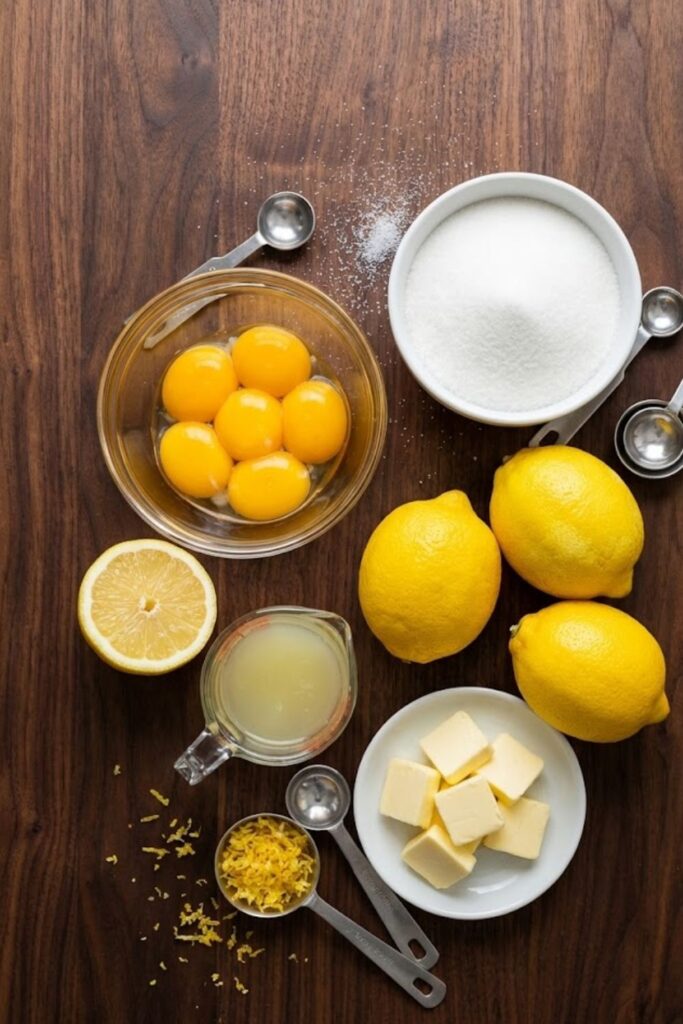
Alton Brown Lemon Curd Ingredients
- 5 large egg yolks: Save the whites for a meringue or omelet.
- 1 cup granulated sugar: Provides the necessary sweetness to balance the tart acid.
- 4 lemons, zested: You want the bright oils from the zest of all four lemons.
- 1/3 cup fresh lemon juice: Measure this precisely; if your lemons don’t yield enough, top it up with cold water to reach exactly 1/3 cup.
- 8 tablespoons (1 stick) unsalted butter: Cut into small pats and kept chilled until the very end.
How To Make Alton Brown Lemon Curd
- Setup the Double Boiler: Add about an inch of water to a medium saucepan and bring it to a simmer over medium-high heat.
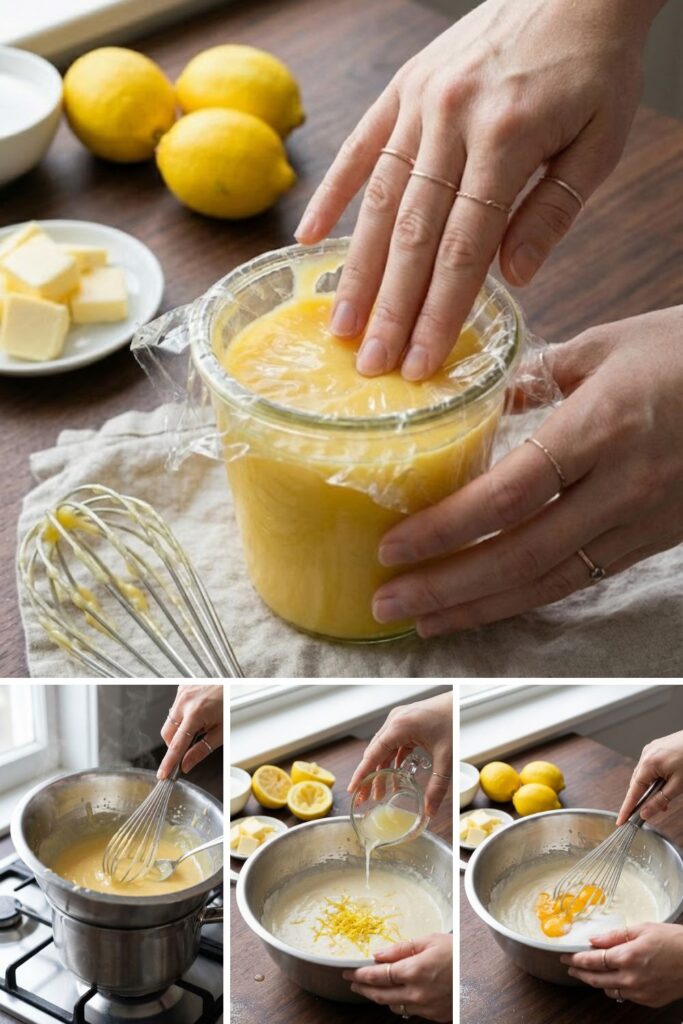
- Whisk Yolks and Sugar: While the water heats, combine the egg yolks and sugar in a medium metal bowl (one that will sit comfortably on top of the saucepan). Whisk vigorously for about 1 minute until the mixture is smooth and pale.
- Add Lemon: Stir the lemon juice and lemon zest into the egg mixture until combined.
- Cook the Curd: Reduce the heat to low and place the bowl over the simmering water, ensuring the bottom of the bowl does not touch the water. Whisk constantly for about 8 to 10 minutes, or until the mixture thickens significantly. It should be light yellow and coat the back of a spoon.
- Mount the Butter: Remove the bowl from the heat immediately. Whisk in the cold butter one piece at a time, waiting for each piece to melt before adding the next.
- Cool and Store: Transfer the finished curd to a clean jar or container. Press a piece of plastic wrap directly onto the surface of the curd to prevent a skin from forming, then refrigerate.
Recipe Tips
- Don’t Stop Whisking: The key to a smooth texture is constant movement. If you stop whisking while the bowl is over the heat, the eggs on the bottom will scramble.
- Check Your Bowl Material: Use a stainless steel or glass bowl. Aluminum or copper bowls can react with the acid in the lemons, giving your curd a metallic taste and a greenish tint.
- Strain for Perfection: If you prefer a silky smooth texture without bits of zest, press the warm curd through a fine-mesh sieve before adding the butter.
- Temperature Control: If the water in the bottom pot is boiling too vigorously, it can overheat the eggs. Keep it at a gentle simmer.
What To Serve With Lemon Curd
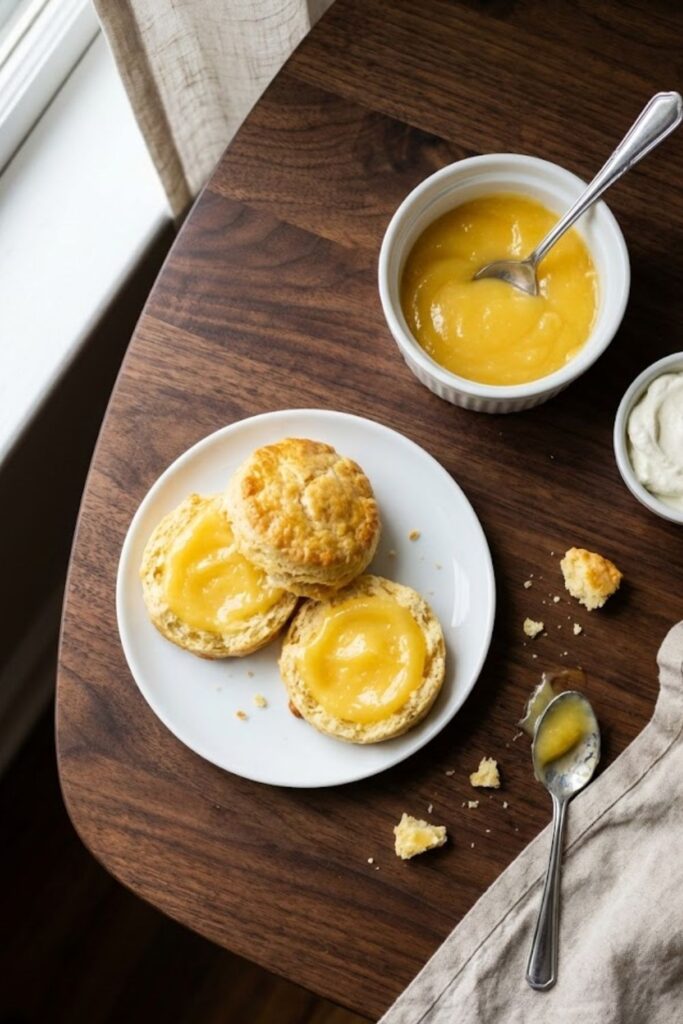
This curd is exceptional spread over warm scones or biscuits as a bright alternative to jam. It also serves as a perfect filling for pre-baked tart shells or layered between vanilla cake sponges for a zesty surprise. For a simple dessert, fold it into whipped cream to create a quick lemon mousse.
How To Store
Store the lemon curd in an airtight container in the refrigerator for up to 2 weeks. The flavor actually improves after the first 24 hours as the zest infuses further. For longer storage, you can freeze the curd for up to 3 months; just thaw it overnight in the fridge before using.
FAQs
- Why is my lemon curd runny? It likely wasn’t cooked long enough. It needs to reach about 170°F or coat the back of a spoon thickly; remember it will thicken more as it cools in the fridge.
- Can I use bottled lemon juice? Avoid bottled juice if possible. Fresh lemons provide the essential zest and a much brighter, less chemical flavor that is crucial for a recipe with so few ingredients.
- What do I do if my curd has lumps? Don’t panic; just push the warm curd through a fine-mesh strainer to remove any bits of cooked egg, then proceed with adding the butter.
Nutrition
- Calories: 180 kcal
- Total Fat: 10g
- Saturated Fat: 6g
- Cholesterol: 135mg
- Sodium: 10mg
- Total Carbohydrate: 22g
- Protein: 2g
Try More Recipes:
Alton Brown Lemon Curd Recipe
Description
A vibrant, silky-smooth citrus spread that utilizes a precise “mounting” technique to create a stable emulsion of lemon juice, egg yolks, and butter.
Ingredients
Instructions
- Prepare a double boiler by bringing one inch of water to a gentle simmer in a saucepan; ensure the heat is low enough that the steam is steady but not violent.
- Whisk the egg yolks and sugar in a medium metal bowl for 60 seconds until the mixture is pale and the sugar crystals begin to dissolve into the protein.
- Incorporate the lemon juice and the zest of all four lemons into the yolk mixture, stirring until the liquid is homogenous.
- Cook the mixture by placing the bowl over the simmering water; whisk constantly for 8 to 10 minutes. The curd is ready when it reaches a thick, “pudding-like” consistency and cleanly coats the back of a spoon.
- Mount the butter (monter au beurre) by removing the bowl from the heat and whisking in the chilled butter pats one at a time. This gradual addition of cold fat into the hot base creates a superior, stable emulsion.
- Seal the curd by transferring it to a container and pressing plastic wrap directly onto the surface to prevent the formation of a protein “skin” caused by evaporation.
Notes
- Whisking the yolks and sugar together before adding the acid is a critical safety step; the sugar acts as a thermal buffer, raising the temperature at which the egg proteins coagulate and preventing the high acidity of the lemon juice from “cooking” the yolks prematurely.
- The technique of adding chilled butter to the hot curd base is a classic French method. The cold butter absorbs the latent heat of the curd, cooling it down rapidly while the fat molecules are suspended in the liquid, resulting in a significantly glossier and more stable texture than if melted butter were used.
- Precision in the 1/3 cup lemon juice measurement is vital for the pH balance of the curd; if the mixture is too acidic, the curd may break or fail to set, which is why Alton recommends supplementing with water to reach the exact volume if the lemons are under-sized.