 Sandra
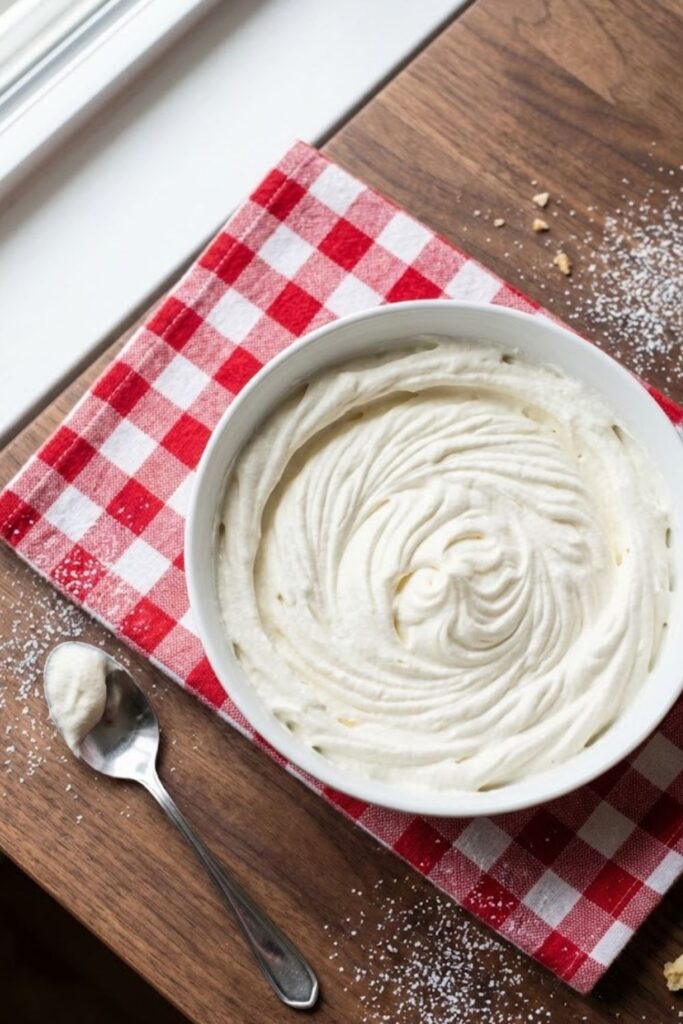
 This airy, stable Alton Brown Whipped Cream is made with heavy whipping cream, confectioners’ sugar, and vanilla, and ready in just 20 minutes. Watch as the loose liquid transforms into firm, glossy peaks that hold their shape perfectly without weeping. I used to struggle with deflation, but this cold-bowl method completely changed my dessert game.
The Secret To Getting It Right
I learned quickly that temperature is the single most important factor when making whipped cream. If your bowl or cream is even slightly warm, the fat globules won’t emulsify properly, leading to a loose, sad topping that melts off your pie. Alton Brown’s insistence on freezing the metal bowl and whisk attachment for 15 minutes acts as an insurance policy, keeping everything cold enough to trap air bubbles efficiently.
Another surprise was the choice of sweetener. While I used to grab granulated sugar, this recipe proves that confectioners’ sugar is superior because it contains a tiny amount of cornstarch. This acts as a stabilizer, meaning your whipped cream won’t weep or separate if you make it a few hours ahead of dinner.
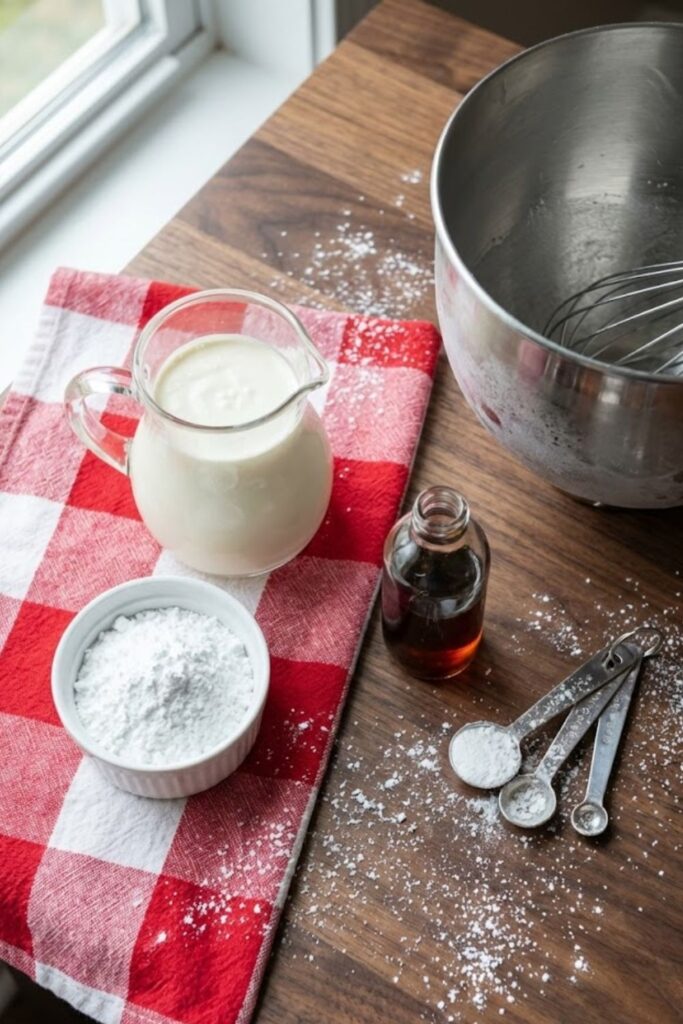
Alton Brown Whipped Cream Ingredients
- 1 cup heavy whipping cream
- 1 tablespoon plus 2 teaspoons confectioners’ sugar
- 1 to 2 drops vanilla extract (optional)
How To Make Alton Brown Whipped Cream
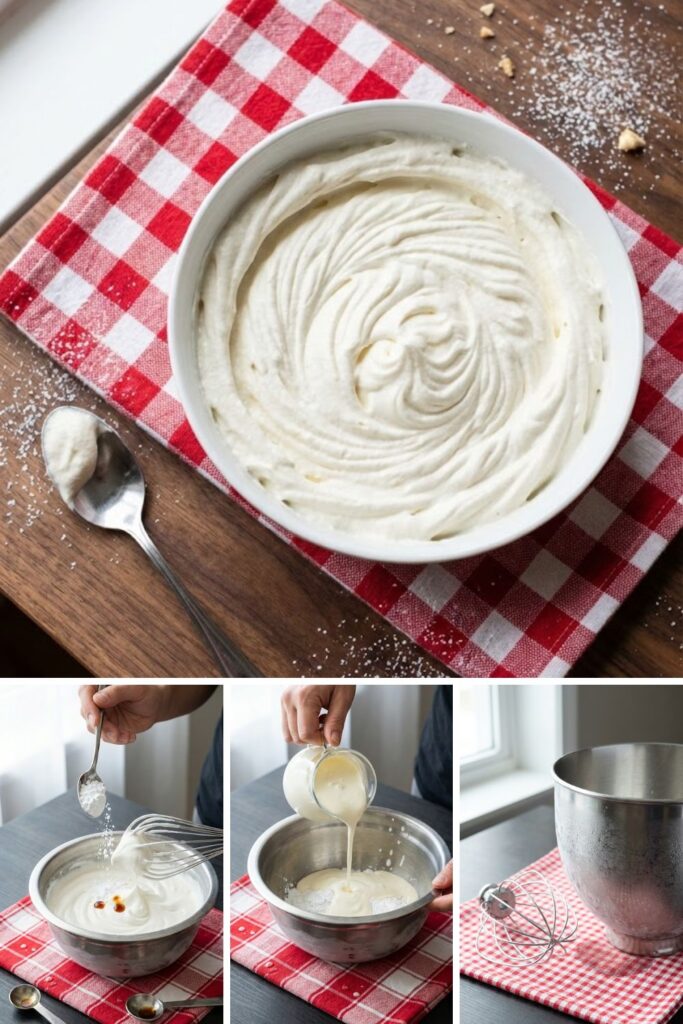
- Chill the Gear: Place your metal mixing bowl and the whisk attachment in the freezer for 15 minutes before you plan to start.
- Start the Whip: Remove the bowl from the freezer. Pour in the heavy cream and add half of the confectioners’ sugar. Whisk on medium-high speed until the mixture becomes thick and frothy, about 3 minutes.
- Reach Stiff Peaks: Add the remaining sugar and the vanilla extract. Continue whisking just until the cream reaches stiff peaks—meaning when you lift the whisk, the cream stands up straight without drooping.
Recipe Tips
- Stop at the Right Moment: Watch the cream closely during the final minute of whipping. If you go too far, the fat will separate from the liquid and you will essentially make sweetened butter.
- Use a Metal Bowl: Stainless steel retains cold much better than glass or plastic, which helps the cream whip up faster and with more volume.
- Sift the Sugar: If your confectioners’ sugar has been sitting in the pantry for a while, sift it first to prevent tiny white lumps in your smooth cream.
What To Serve With Whipped Cream
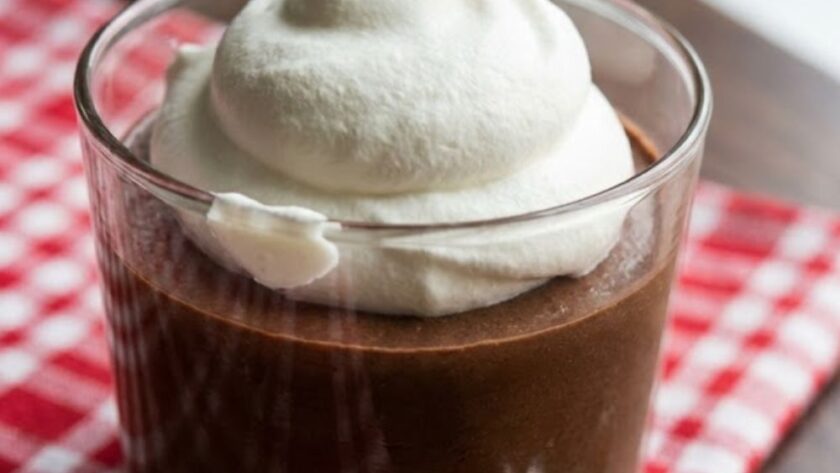
This stabilized cream is perfect for topping a classic pumpkin pie or chocolate mousse because it holds its shape without melting immediately. It is also light enough to dollop over fresh berries or a mug of hot cocoa for a simple treat.

How To Store
You can store any unused portion in an airtight container in the refrigerator for up to 10 hours. When you are ready to serve it again, simply re-whisk it by hand for about 10 to 15 seconds to bring back the volume.
FAQs
- Can I use granulated sugar instead? You can, but the texture may be slightly grainy. Confectioners’ sugar dissolves instantly and provides better stability due to the cornstarch.
- Can I use a hand mixer? Yes, a hand mixer works perfectly fine. Just make sure to use a metal bowl that has been chilled, and move the beaters around to reach all the liquid.
- How do I fix overbeaten cream? If it looks grainy but hasn’t turned to butter yet, try gently folding in a tablespoon of cold liquid cream with a spatula to smooth it out.
Nutrition
- Calories: 420 kcal
- Total Fat: 44g
- Saturated Fat: 27g
- Cholesterol: 165mg
- Sodium: 45mg
- Total Carbohydrate: 8g
- Protein: 3g
Try More Recipes:
- Alton Brown Vanilla Ice Cream Recipe
- Alton Brown Horseradish Cream Sauce Recipe
- Alton Brown Chocolate Ice Cream Recipe
Alton Brown Whipped Cream Recipe
Description
A technically precise method for creating a stable foam. By manipulating the temperature of the equipment and utilizing the starch in confectioners’ sugar, you create a structural matrix of air and fat that resists collapsing.
Ingredients
Instructions
- The Thermal Prep: Place your metal mixing bowl and whisk attachment in the freezer for 15 minutes. This is a thermodynamic requirement; keeping the fat in the cream as cold as possible prevents it from softening, which is essential for maintaining the integrity of the air bubbles.
- Initial Aeration: Pour the cold heavy cream into the chilled bowl and add approximately half of the confectioners’ sugar. Begin whisking on medium-high speed. At this stage, you are forcing air into the liquid, creating a “froth” of large, unstable bubbles.
- The Thickening Phase: Continue whisking for about 3 minutes. As the whisk moves through the cream, it partially damages the membranes of the fat globules, allowing them to stick together and form a protective “scaffolding” around the air bubbles.
- Final Stabilization: Add the remaining sugar and the vanilla extract. The sugar provides flavor, while the trace amounts of cornstarch usually found in confectioners’ sugar act as a desiccant and stabilizer, absorbing excess moisture.
- Reaching Stiff Peaks: Whisk just until the cream reaches “stiff peaks.” This is the point of maximum structural integrity; if you lift the whisk, the cream should stand upright in a sharp point. Be vigilant—over-whisking at this stage will cause the fat globules to clump too tightly, resulting in butter.