 Sandra
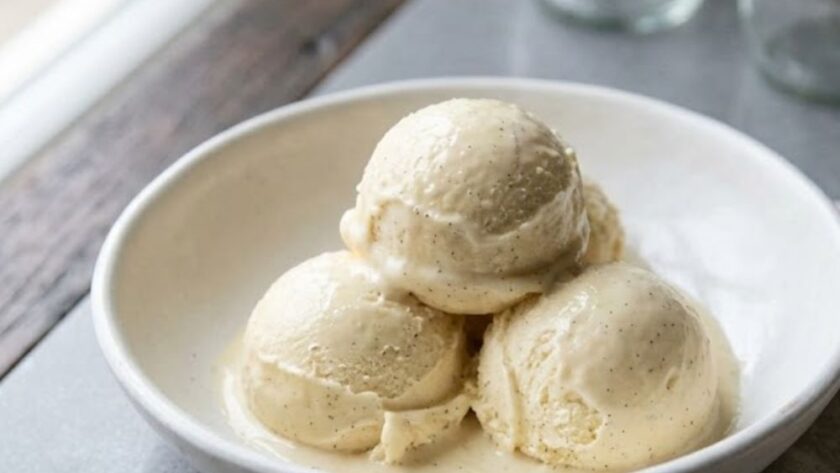
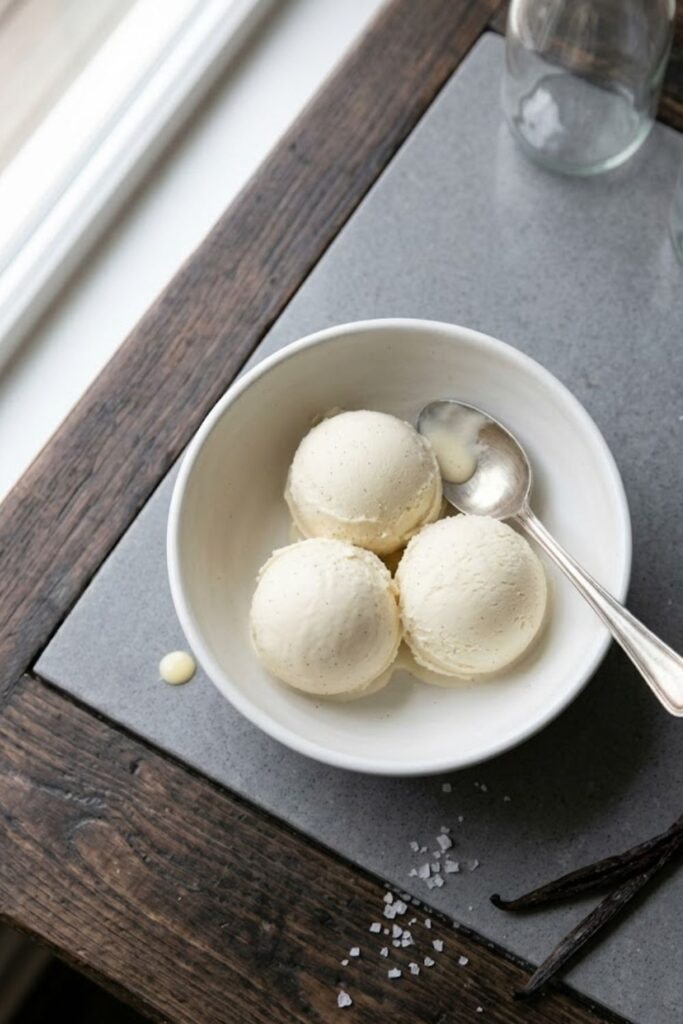
 This rich, velvety Alton Brown Vanilla Ice Cream is made with egg yolks, heavy cream, and pure vanilla extract, and ready in about 6 hours. The cooked custard base coats the back of a spoon perfectly, promising an ultra-smooth final texture. I find that letting the mixture chill overnight produces the best flavor development.
The Secret To Getting It Right
Tempering the egg yolks is the make-or-break moment for this custard base. I learned early on that adding hot cream too quickly cooks the eggs instantly, leaving you with lumpy sweet scrambled eggs.
The trick is to whisk the yolks furiously while pouring the hot liquid in a very slow, steady stream. Once the temperatures equalize, the custard thickens beautifully without a hint of graininess.
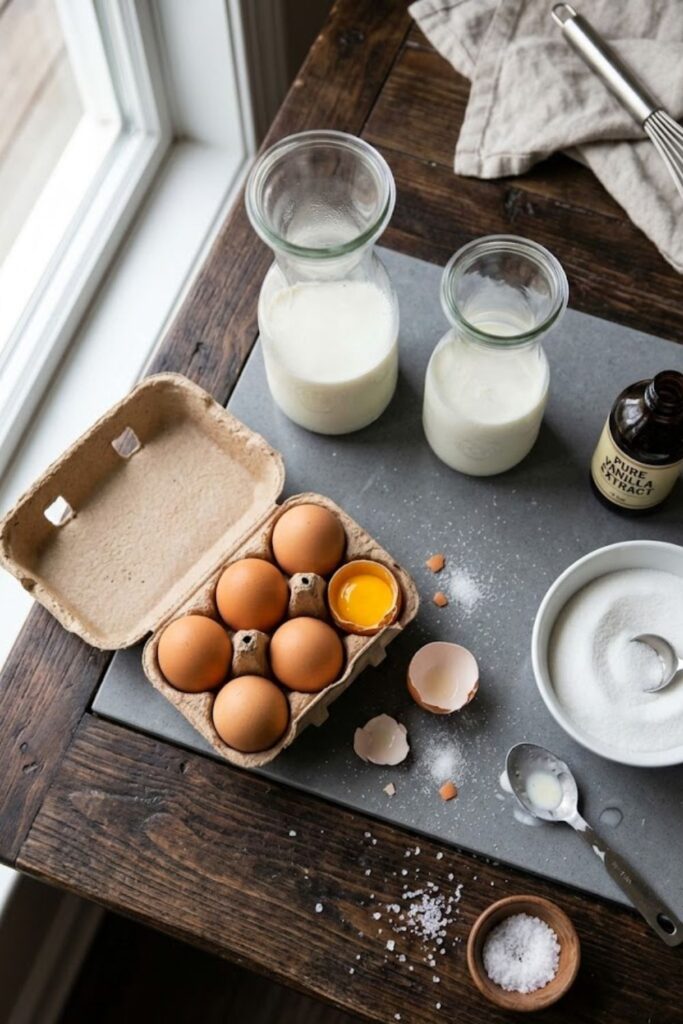
Alton Brown Vanilla Ice Cream Ingredients
- 2 cups half-and-half
- 1 cup heavy whipping cream
- 8 large egg yolks
- 9 ounces granulated sugar
- 4 teaspoons pure vanilla extract
- 1 pinch kosher salt
How To Make Alton Brown Vanilla Ice Cream
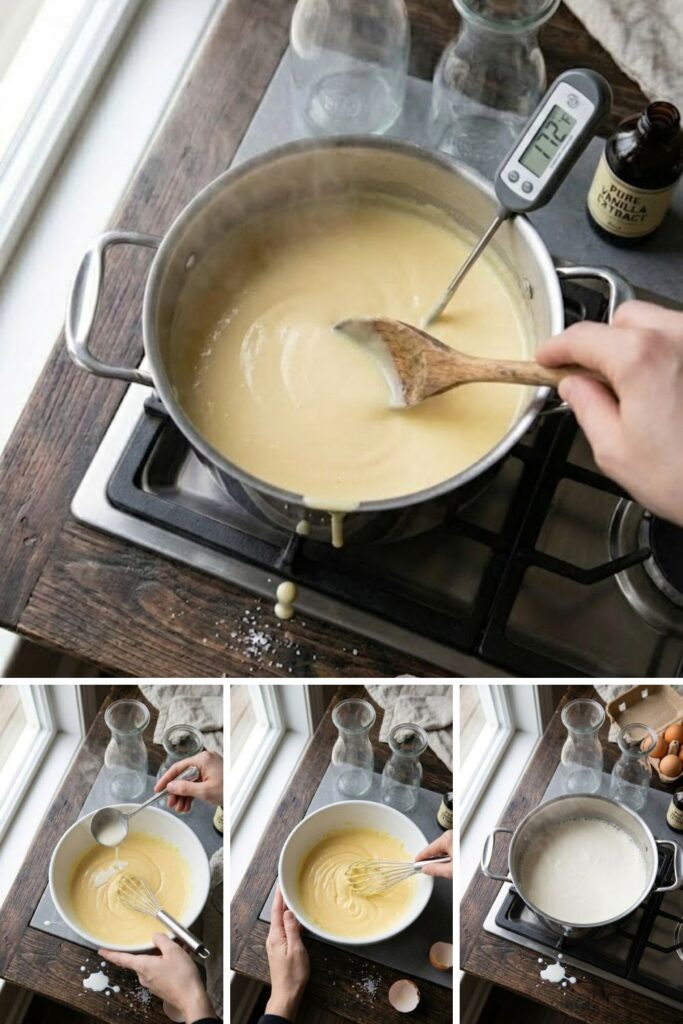
- Heat the Cream: Combine the half-and-half and heavy whipping cream in a medium saucepan over medium heat until it reaches a gentle simmer.
- Whisk the Yolks: In a separate bowl, whisk the egg yolks with the sugar and salt until the mixture turns pale yellow and ribbons slightly.
- Temper the Mixture: Slowly pour about one cup of the hot cream mixture into the yolks while whisking constantly to gently raise their temperature.
- Cook the Custard: Pour the tempered yolk mixture back into the saucepan and cook over low heat, stirring constantly with a wooden spoon, until it reaches 170°F to 175°F.
- Cool Down: Strain the liquid immediately into a clean container, stir in the vanilla extract, and cool to room temperature before refrigerating for 4 to 6 hours.
- Churn the Ice Cream: Pour the completely chilled mixture into an ice cream maker and process according to manufacturer instructions until it reaches soft-serve consistency.
Recipe Tips
- Don’t skip straining: Even with careful tempering, small bits of cooked egg can occur, so straining ensures a silky texture.
- Chill the bowl: Make sure your ice cream maker’s freezer bowl is completely frozen solid (usually 24 hours) before starting.
- Use a thermometer: Guessing when the custard is done is risky; 170°F is the sweet spot for thickness without curdling.
What To Serve With Vanilla Ice Cream
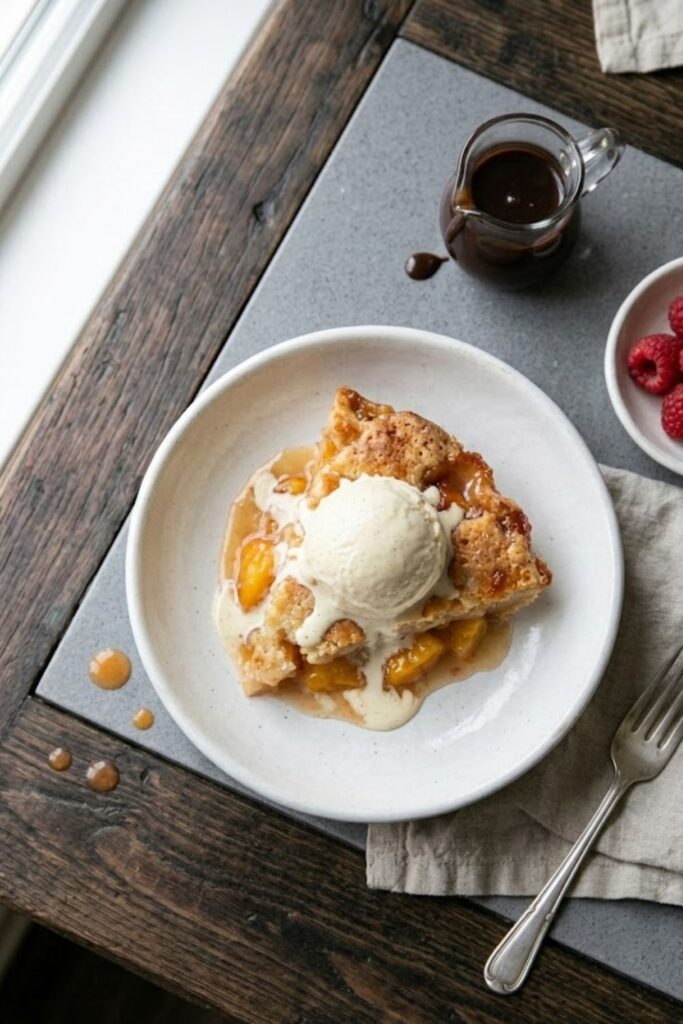
This ice cream is the ultimate companion for a warm peach cobbler or crisp apple pie. It also stands alone perfectly when topped with fresh berries or a drizzle of hot fudge sauce.
How To Store
Transfer the churned ice cream to an airtight container and press a piece of plastic wrap directly onto the surface to prevent ice crystals. Freeze for at least 2 hours to firm up before serving.
FAQs
- Can I use milk instead of half-and-half? You can, but the texture will be icier and less rich than the original recipe intends.
- Why did my custard curdle? The heat was likely too high or the mixture wasn’t stirred enough during the cooking process.
- Do I have to use 8 yolks? The high yolk count provides the signature richness and stability, so reducing them alters the result significantly.
Nutrition
- Calories: 380
- Total Fat: 22g
- Saturated Fat: 13g
- Cholesterol: 230mg
- Sodium: 60mg
- Total Carbohydrate: 38g
- Protein: 6g
Try More Recipes:
- Alton Brown Chocolate Ice Cream Recipe
- Alton Brown Hot Chocolate Recipe
- Alton Brown Blueberry Buckle Recipe
Alton Brown Vanilla Ice Cream Recipe
Description
A classic French-style custard ice cream that relies on a high egg-yolk count and precise thermal management to create a dense, velvety texture and deep vanilla flavor.
Ingredients
Instructions
- Heat the half-and-half and heavy whipping cream in a medium saucepan over medium heat until the mixture reaches a gentle simmer and small bubbles form around the edges.
- Whisk the egg yolks, sugar, and salt in a heat-proof bowl until the mixture lightens to a pale yellow color and reaches the “ribbon stage.”
- Temper the yolks by slowly pouring approximately one cup of the hot cream mixture into the bowl while whisking vigorously; this gradually introduces heat to the proteins without causing them to coagulate into solids.
- Cook the custard by returning the tempered yolk mixture to the saucepan over low heat. Stir constantly with a wooden spoon or spatula until the liquid reaches an internal temperature of $170^{\circ}F$
- Strain the custard through a fine-mesh sieve into a clean container to remove any potential protein clumps, then stir in the vanilla extract.
- Chill the base at room temperature for 30 minutes, then refrigerate for 4 to 6 hours (or ideally overnight) until the temperature drops below $40^{\circ}F$.
- Churn the cold mixture in an ice cream maker according to the manufacturer’s instructions until it achieves a soft-serve consistency.
- Ripen the ice cream by transferring it to an airtight container and freezing for at least 4 hours to allow the crystal structure to stabilize and the flavor to deepen.
Notes
- The tempering process is a critical exercise in kinetic energy management; by slowly increasing the temperature of the yolks, you allow the egg proteins to uncoil and bond with the water and fat molecules in the dairy, creating a stable emulsion rather than curdled solids.
- Cooking the custard to exactly $170^{\circ}F$
–$175^{\circ}F$
is essential because this is the specific window where the egg proteins thicken the liquid through coagulation; exceeding $185^{\circ}F$ will cause the proteins to over-bond, resulting in a grainy, “eggy” texture. - Storing the base in the refrigerator for at least 4 hours (the “aging” phase) allows the milk fats to undergo partial crystallization and the proteins to fully hydrate. This leads to better air incorporation (overrun) during the churn and a finished product that is smoother and more resistant to melting.