 Sandra
 This crispy skinned, tender Alton Brown Roast Duck is made with a whole duckling, a zesty orange brine, and ready in about 4 hours. The unique process renders out excess fat through steaming before finishing with a high-heat sear for deep mahogany skin. I use this scientifically proven method whenever I want restaurant-quality duck without the grease.
What I Learned Making This
I used to be intimidated by roasting duck because of the notorious layer of fat that never seemed to render comfortably. My first attempt at a traditional roast resulted in a smoky kitchen and a greasy bird, but this method completely changed my approach. The secret lies in steaming the meat first—it sounds counterintuitive to introduce water to something you want crispy, but it works like magic to melt away the subcutaneous fat gently.
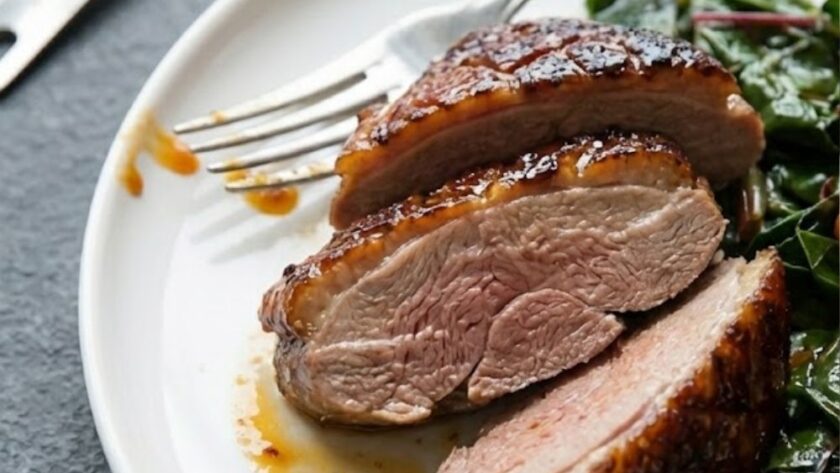
The real surprise comes when you transfer the steamed, pale-looking pieces into the screaming hot cast iron skillet. The transformation happens incredibly fast, turning the skin from flabby to glass-like and mahogany in just minutes. I learned that you absolutely cannot skip the preheating of the skillet; that initial contact shock is what gives you the signature crackling texture that rivals any Peking duck.
Alton Brown Roast Duck Ingredients
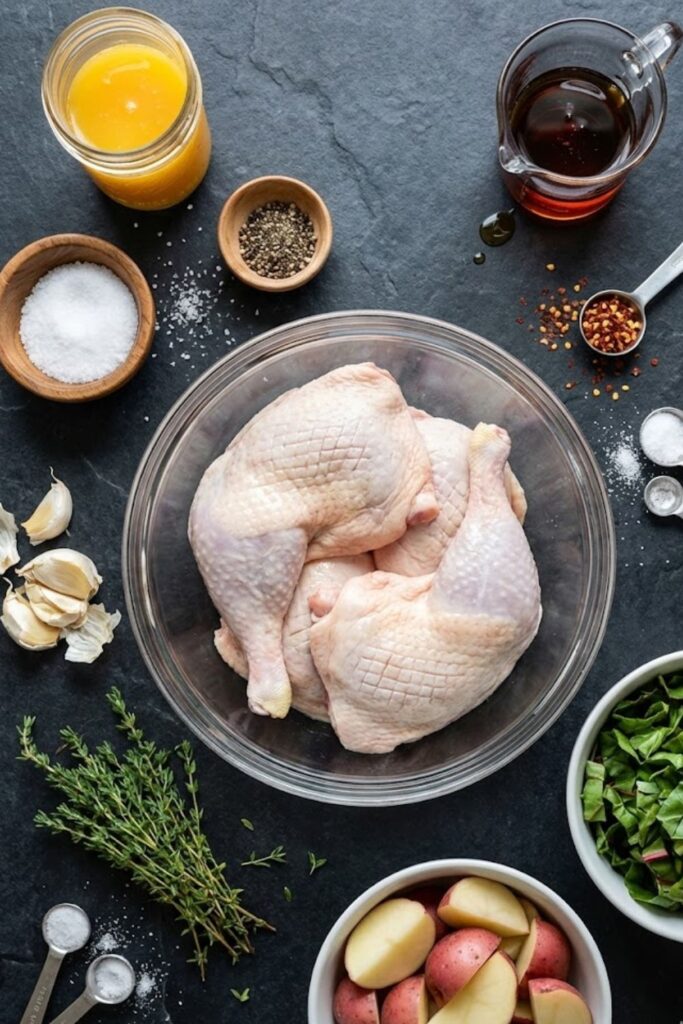
- Duck: 1 (5 1/2 to 6-pound) Long Island duckling (thawed if frozen).
- Water: For steaming and brine base.
- Potatoes: 1 pound Red Bliss potatoes, quartered (optional, for serving).
- Chard: 2 handfuls shredded Swiss chard (optional, for serving).
For the Brine:
- Orange Juice Concentrate: 10 ounces (approx. 1 cup), divided.
- Kosher Salt: 1/2 cup.
- Water: 1 can (use the juice can for measure) warm water.
- Peppercorns: 15 whole black peppercorns.
- Garlic: 4 cloves, smashed.
- Thyme: 1 bunch fresh thyme.
For the Glaze:
- Reserved Orange Juice Concentrate: Remaining amount from the can.
- Maple Syrup: 1/4 cup Grade A.
- Red Pepper Flakes: 2 teaspoons.
- Salt: A pinch.
How To Make Alton Brown Roast Duck
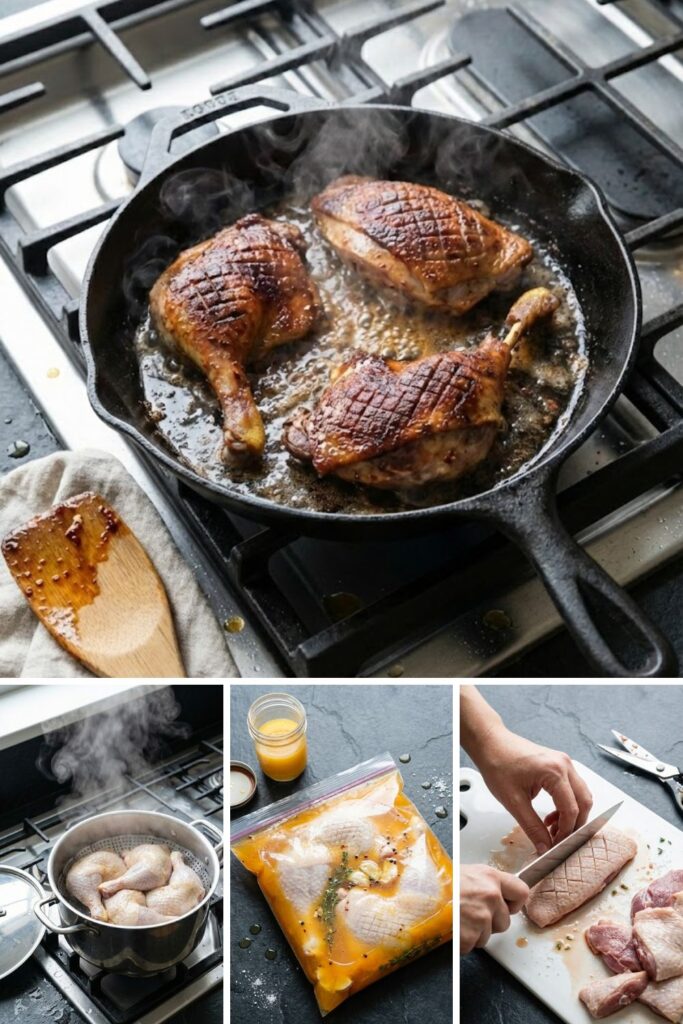
- Prep the Duck: Remove the liver, gizzards, and heart. Using kitchen shears, cut out the backbone and discard (or save for stock). Cut the duck in half down the breastbone, then separate the legs from the breasts to get four quarters. Score the skin of each piece in a cross-hatch pattern, being careful not to cut into the meat.
- Make the Brine: In a container with a tight lid, combine 10 ounces of orange juice concentrate, 1 can of warm water, 1/2 cup kosher salt, peppercorns, garlic, and thyme. Shake vigorously to dissolve the salt.
- Brine the Duck: Place the duck quarters in a large zip-top bag and pour the brine over them. Seal, removing air, and refrigerate for 2 to 2.5 hours.
- Steam the Duck: Bring 1.5 inches of water to a boil in a large pot with a steamer basket or colander set inside. Arrange the duck pieces in the colander (do not stack them). Cover, reduce heat to medium-low, and steam for 45 minutes to render the fat.
- Preheat the Skillet: While steaming, place a large 12-inch cast iron skillet on the center rack of your oven and preheat it to 475°F.
- Make the Glaze: Simmer the maple syrup, red pepper flakes, remaining orange juice concentrate, and a pinch of salt in a small saucepan over medium-high heat until it coats the back of a spoon (3-5 minutes).
- Roast the Legs: Carefully remove the hot skillet from the oven. Place the duck legs skin-side down into the hot pan. Return to the oven immediately and roast for 10 minutes.
- Roast the Breasts: Remove the skillet again and add the breast quarters, skin-side down. Roast for another 7 minutes until the skin is dark mahogany and crisp.
- Glaze and Finish: Remove the skillet, flip all pieces over, and brush the meat side with the glaze. Return to the oven for 3-5 minutes until the internal temperature reaches 160°F for legs and 140°F for breasts. Rest on a wire rack before serving.
Recipe Tips
- Score lightly: When scoring the skin, use a very sharp knife and barely press down. You only want to cut through the fat layer, not the pink meat underneath, or the juices will escape and dry out the bird.
- Don’t crowd the steamer: If your steamer basket is small, steam the duck in two batches. Overcrowding prevents the steam from circulating evenly, meaning the fat won’t render properly from the hidden areas.
- Save the liquid: The water left in the pot after steaming is essentially a weak duck stock enriched with drippings. Alton Brown suggests using this liquid to boil the potatoes before frying them in the rendered fat.
- Handle the hot skillet with care: The cast iron skillet will be 475°F and heavy. Use dry, thick oven mitts and be aware that the duck fat may splatter when you add the meat.
What To Serve With Roast Duck
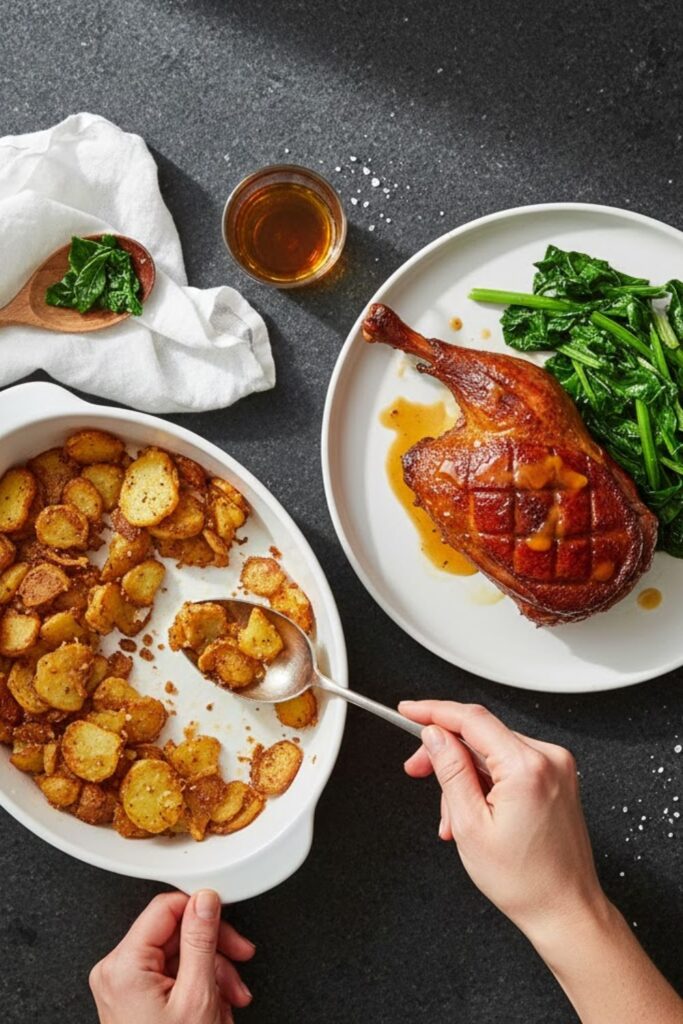
This rich, fatty meat pairs perfectly with acidic or bitter sides that cut through the heaviness. I recommend serving it with the traditional Alton Brown accompaniment of wilted Swiss chard with a splash of sherry vinegar. Crispy potatoes fried in the rendered duck fat are also non-negotiable for the full experience.
How To Store
Leftover roast duck can be stored in an airtight container in the refrigerator for up to 3 days. To reheat, place it skin-side up in a 400°F oven or air fryer for 5-8 minutes to re-crisp the skin; microwaving will make the skin rubbery.
FAQs
Can I use this method for a whole duck?
No, this specific “Mighty Duck” technique requires the bird to be quartered. Roasting a whole duck requires a different time and temperature profile to ensure the cavity cooks without drying out the breast.
Why is my duck skin not crispy?
This usually happens if the skillet wasn’t hot enough or if the steaming step was skipped. The preheated cast iron provides the thermal shock needed to sear the skin immediately upon contact.
Can I substitute the orange juice concentrate?
Yes, you can use a mixture of fresh orange juice and pineapple juice, but the concentrate provides a stronger sugar content for the glaze. If swapping, you may need to reduce the glaze longer to get the right sticky consistency.
Nutrition
- Calories: 850
- Total Fat: 65g
- Saturated Fat: 22g
- Cholesterol: 180mg
- Sodium: 1200mg
- Total Carbohydrate: 25g
- Protein: 45g
Try More Recipes:
Alton Brown Roast Duck Recipe
Description
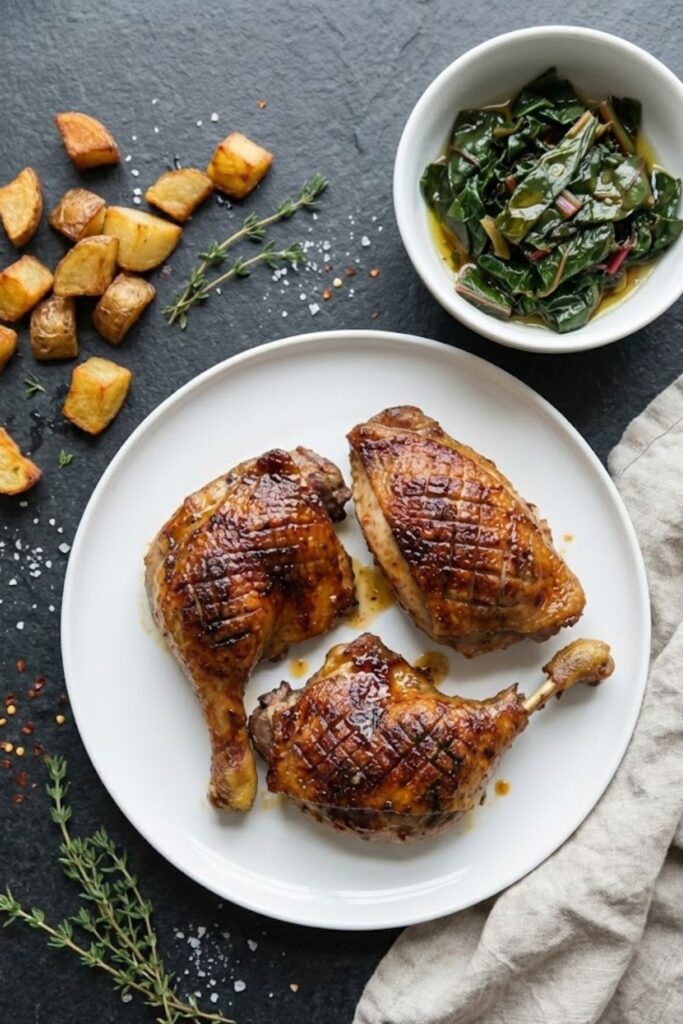
A masterfully engineered roast duck that utilizes a unique three-step process—brining, steaming, and high-heat roasting—to achieve incredibly succulent meat and thin, glass-like crispy skin.
Ingredients
Instructions
- Prep the duck by removing innards, cutting out the backbone, and quartering the bird into two breast and two leg pieces. Score the skin in a cross-hatch pattern without piercing the meat.
- Brine the pieces by combining 10 oz orange juice concentrate, water, salt, peppercorns, garlic, and thyme in a bag; refrigerate for 2 to 2.5 hours.
- Steam the duck quarters in a steamer basket over boiling water for 45 minutes to render out the heavy layer of subcutaneous fat.
- Preheat a large cast iron skillet in the oven at 475°F while the duck steams.
- Simmer the maple syrup, remaining orange juice concentrate, red pepper flakes, and salt in a saucepan until thickened to a glaze.
- Sear the legs skin-side down in the hot skillet for 10 minutes, then add the breasts skin-side down for another 7 minutes until the skin is dark and crisp.
- Glaze the meat side of the duck quarters after flipping them, then finish in the oven for 3-5 minutes until the internal temperature reaches 160°F for legs and 140°F for breasts.
- Rest the duck on a wire rack for 10 minutes before serving.
Notes
- Steaming the duck quarters before roasting is a critical scientific step that renders out the majority of the fat, ensuring the final skin is paper-thin and crispy rather than greasy and flabby.
- Scoring the skin in a cross-hatch pattern increases the surface area exposed to heat, allowing the rendered fat to escape more efficiently during the steaming and searing phases.
- The high-sugar glaze of maple syrup and orange juice concentrate provides a rapid caramelization during the final minutes of roasting, creating a deep mahogany color and a sweet-and-spicy flavor profile that complements the rich duck meat.