 Sandra
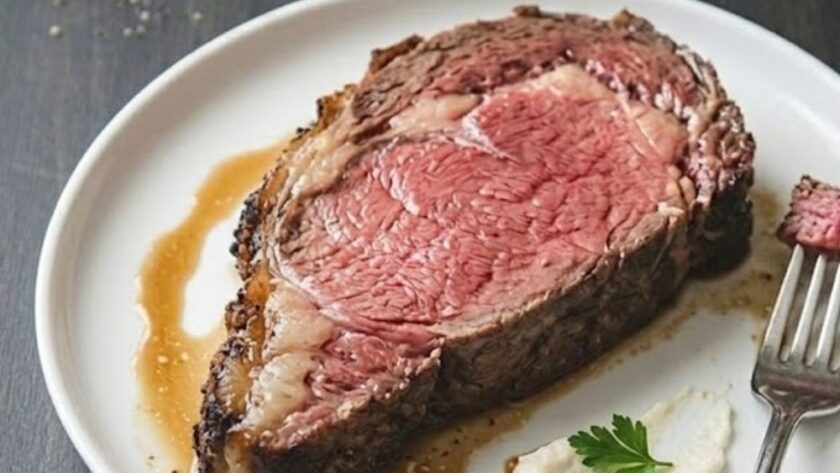
 This tender, melt-in-your-mouth Alton Brown Roast Beef is made with a standing rib roast, simple seasonings, and ready in about 4 hours. The slow-roasting reverse sear method creates a perfectly pink interior from edge to edge with a rich, crusty exterior. I love how this technique takes the stress out of holiday cooking by using a probe thermometer for guaranteed precision.
The Secret To Getting It Right
What I learned making this roast is that the “reverse sear” isn’t just a trendy term—it’s the only way to avoid that disappointing grey ring of overcooked meat around the edges. By starting at a low temperature (250°F), you gently bring the entire roast to temperature, ensuring the center is just as pink as the outside. My first attempt failed because I seared it first; trust the process of roasting low and slow before blasting it with heat at the very end.
Another surprise was how critical the resting period is before the final sear. Alton’s method has you pull the meat at 118°F and let it sit while the oven cranks up to 500°F. This allows the juices to redistribute so you don’t lose them on the cutting board later. Using a probe thermometer isn’t optional here—it’s the tool that separates a dry, expensive mistake from the best beef you’ve ever eaten.
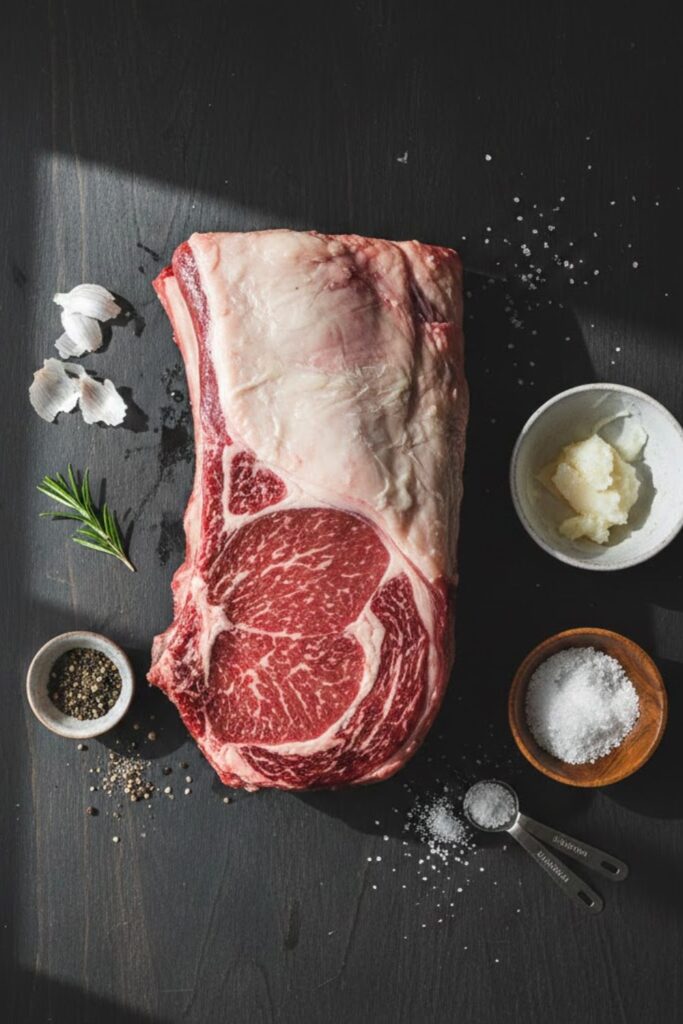
Alton Brown Roast Beef Ingredients
- 1 (3- to 4-bone) standing rib roast (approx. 7-10 lbs), preferably from the loin end
- 2 tablespoons beef fat, tallow, or vegetable oil
- 2 tablespoons kosher salt (approx. 2 teaspoons per bone)
- 1 tablespoon freshly ground black pepper
How To Make Alton Brown Roast Beef
- Temper the Meat: Remove the roast from the refrigerator and let it sit at room temperature for 1 hour. This helps it cook more evenly.
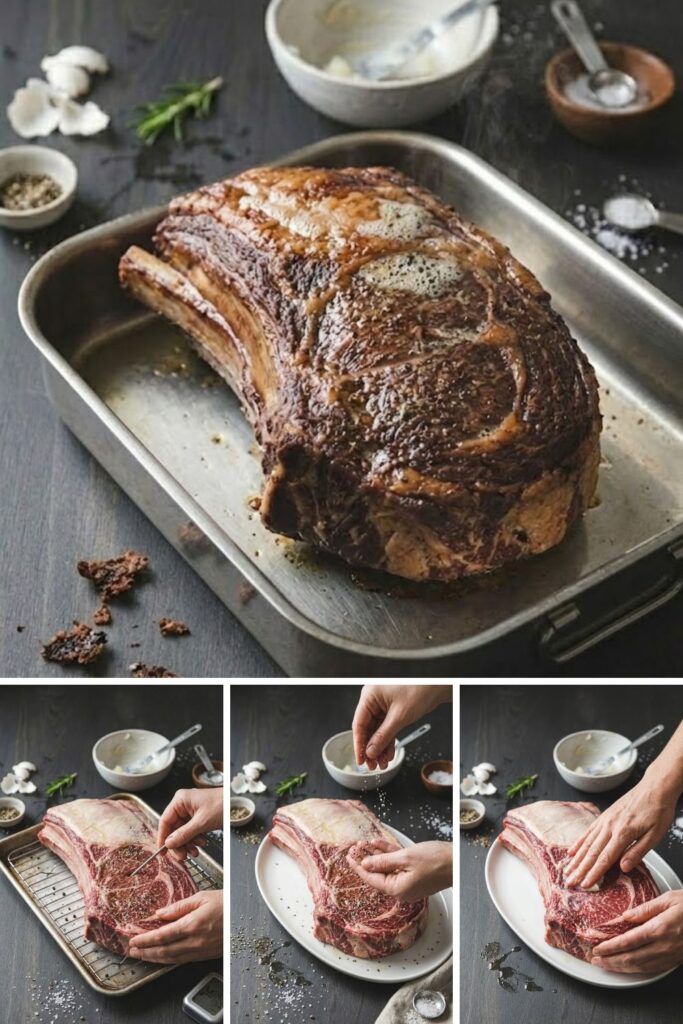
- Season the Roast: Rub the entire roast with the beef fat or oil. Massage the kosher salt and black pepper into the meat, ensuring you cover the sides and the bones.
- Insert Probe: Insert a digital probe thermometer horizontally into the center of the roast, aiming for the “eye” muscle. Make sure the probe does not touch the bone.
- Slow Roast: Place the roast on a rack in a roasting pan or rimmed baking sheet. Roast in a 250°F oven until the internal temperature reaches 118°F. This usually takes 3 to 4 hours depending on the size.
- Rest and Heat: Remove the roast from the oven and tent loosely with foil. Leave the probe in. Increase the oven temperature to 500°F (or your oven’s highest setting). Let the roast rest while the oven preheats (about 15-20 minutes).
- Reverse Sear: Uncover the roast and return it to the hot 500°F oven. Roast for 10 to 15 minutes, or until the exterior is deep brown and crispy.
- Serve: Remove from the oven and carve immediately. Since the meat rested before the sear, it does not need a second long rest.
Recipe Tips
- Trust the Probe: Do not rely on time estimates like “20 minutes per pound.” Shape and fat content vary wildly, so only the internal temperature (118°F) tells you when to pull it.
- Bone-In Matters: Always choose a bone-in standing rib roast over boneless. The bones act as an insulator, keeping the meat near them tender and juicy while adding significant flavor.
- Carryover Cooking: The temperature will continue to rise during the resting phase. Pulling it at 118°F ensures it lands at a perfect medium-rare (around 130°F) after the rest and sear.
- The Fat Cap: Leave the fat cap on while roasting. It bastes the meat as it renders, and you can easily trim excess fat on the plate if desired.
What To Serve With Standing Rib Roast
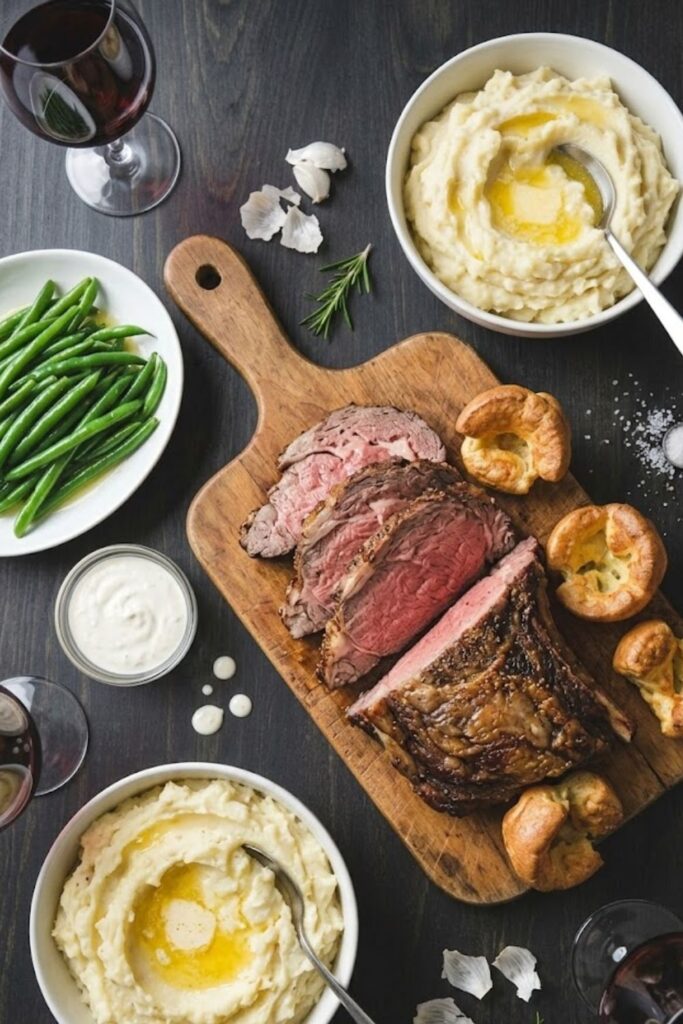
This rich beef pairs perfectly with traditional Yorkshire puddings, which can be baked in the beef drippings for extra flavor. A sharp horseradish cream sauce cuts through the richness of the meat, while roasted garlic mashed potatoes make for a hearty side. For greens, simple steamed green beans or creamed spinach balance the heavy main course.
How To Store
Store leftover roast beef tightly wrapped in plastic wrap or foil in the refrigerator for up to 3-4 days. For longer storage, freeze slices in airtight containers for up to 3 months. Reheat gently in a low oven with a splash of beef broth to prevent drying out.
FAQs
Can I use a different cut of beef?
While this method is specific to a standing rib roast (prime rib), you can use a top sirloin roast. However, leaner cuts like eye of round may dry out and require a lower target temperature.
Why do I roast at such a low temperature?
Roasting at 250°F cooks the meat evenly from edge to center. High heat would overcook the outer layers before the center is done, creating a “bullseye” effect rather than uniform pinkness.
Do I really need a probe thermometer?
Yes. This technique relies entirely on internal temperature. Opening the oven door to check with an instant-read thermometer causes heat fluctuation, so a leave-in probe is superior.
Nutrition
- Calories: 850 kcal
- Total Fat: 65g
- Saturated Fat: 28g
- Cholesterol: 180mg
- Sodium: 1400mg
- Total Carbohydrate: 1g
- Protein: 55g
Try More Recipes:
- Alton Brown Beef Wellington Recipe
- Alton Brown Beef Tenderloin Recipe
- Alton Brown Corned Beef Recipe

Alton Brown Roast Beef
Description
The definitive “Reverse Sear” method for standing rib roast. By cooking the meat “low and slow” first and finishing with a high-heat blast, you achieve a uniform medium-rare center with virtually no overcooked “gray ring.”
Ingredients
Instructions
- Temper the meat by removing it from the refrigerator 1 hour before roasting. This reduces the thermal gradient between the center and the exterior, allowing for more even heat penetration.
- Season the roast by rubbing the entire surface with beef fat or oil, then massaging the salt and pepper into the muscle and over the rib bones.
- Probe: Insert a digital probe thermometer horizontally into the center of the “eye” muscle. Precise placement is critical—ensure the probe is not touching bone, as bone conducts heat differently than muscle tissue.
- Slow Roast: Place the roast on a rack in a roasting pan and cook in a $250^{\circ}F$
oven. This low-intensity heat prevents the exterior proteins from over-contracting while the center reaches $118^{\circ}F$ (approx. 30–45 minutes per pound). - Rest & Heat: Remove the roast at $118^{\circ}F$
- Reverse Sear: Place the rested roast back into the $500^{\circ}F$ oven for 10–15 minutes. This creates a rapid Maillard reaction on the surface without significantly raising the internal temperature of the core.
- Carve: Since the primary rest occurred before the sear, the roast can be carved immediately after the final blast, ensuring it is served hot and crispy.
Notes
- The Enzyme Advantage: By roasting at $250^{\circ}F$
, the meat spends a longer duration in the $100^{\circ}F$
to $120^{\circ}F$ range. In this window, natural enzymes (calpains and cathepsins) remain active, effectively “aging” and tenderizing the meat as it cooks. - Why the Mid-Process Rest? Traditional roasting rests the meat at the end. By resting before the $500^{\circ}F$ sear, you allow the surface to dry out and the internal temperature to plateau. This ensures that the final 10-minute blast only affects the exterior crust, leaving the interior perfectly medium-rare from edge to edge.
- The “Gray Ring” Physics: In a traditional high-heat roast, the exterior 1–2 inches of meat are often overcooked and gray by the time the center is pink. The reverse-sear method eliminates this by using a low thermal delta, resulting in a roast that is $95\%$ perfectly cooked pink meat.