 Sandra
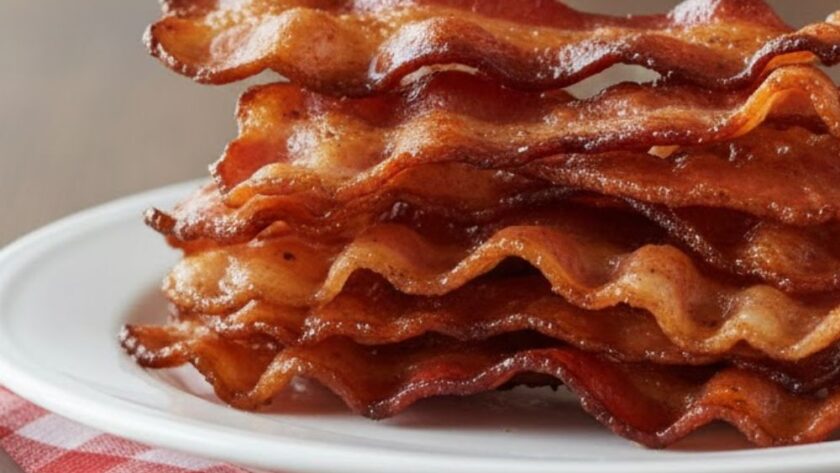
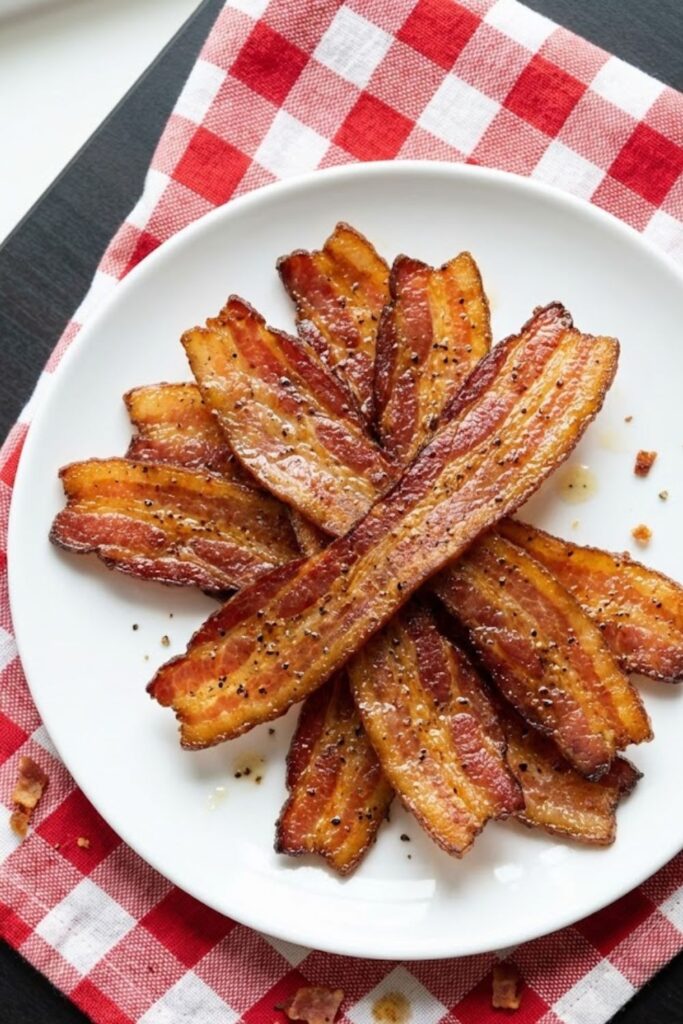
 This crispy, perfectly rendered Alton Brown Oven Bacon is made with just thick-cut bacon strips and ready in about 20 minutes. Starting with a cold oven slowly melts the fat, resulting in flat, golden slices that never curl up or splatter. I haven’t fried a single slice since discovering this mess-free method.
What I Learned Making This
The “cold start” technique sounded counterintuitive to me as a home cook used to preheating everything, but it is the absolute secret weapon here. The gradual rise in temperature allows the fat to render out slowly, which prevents the meat from seizing up or shrinking violently like it does in a hot skillet.
I also learned that while Alton recommends a wire rack for maximum crispiness, you can absolutely bake the strips directly on parchment paper if you want an easier cleanup. The biggest lesson was trusting the timing; the transition from perfect to burnt happens rapidly after the 15-minute mark, so vigilance is key.
Alton Brown Oven Bacon Ingredients
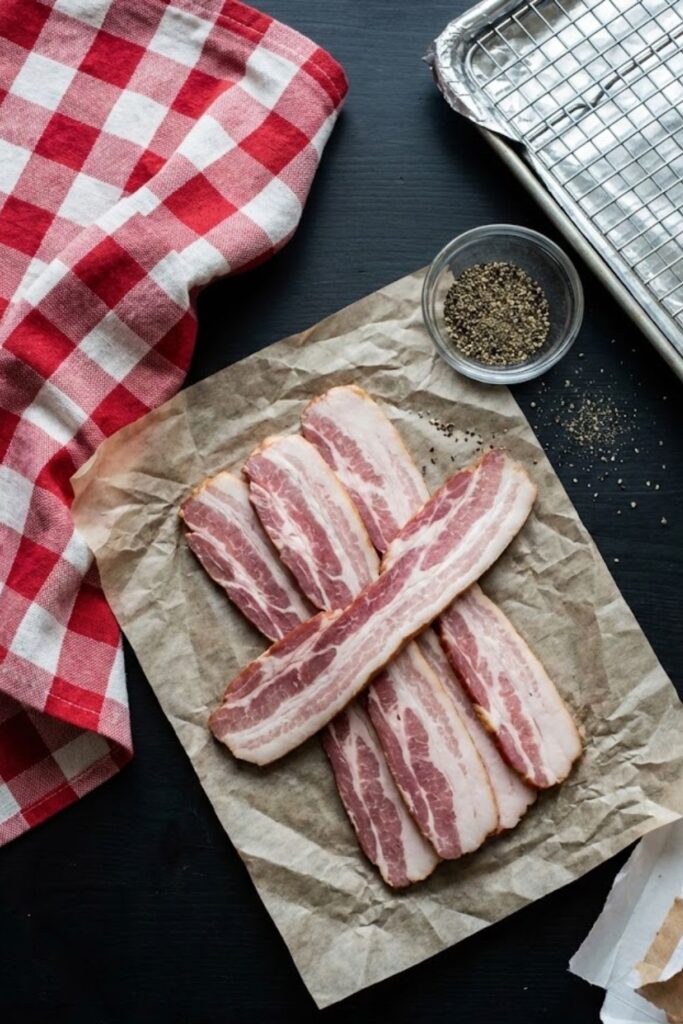
- 1 pound thick-cut bacon (approximately 12-16 slices)
- Freshly ground black pepper (optional, for seasoning)
How To Make Alton Brown Oven Bacon
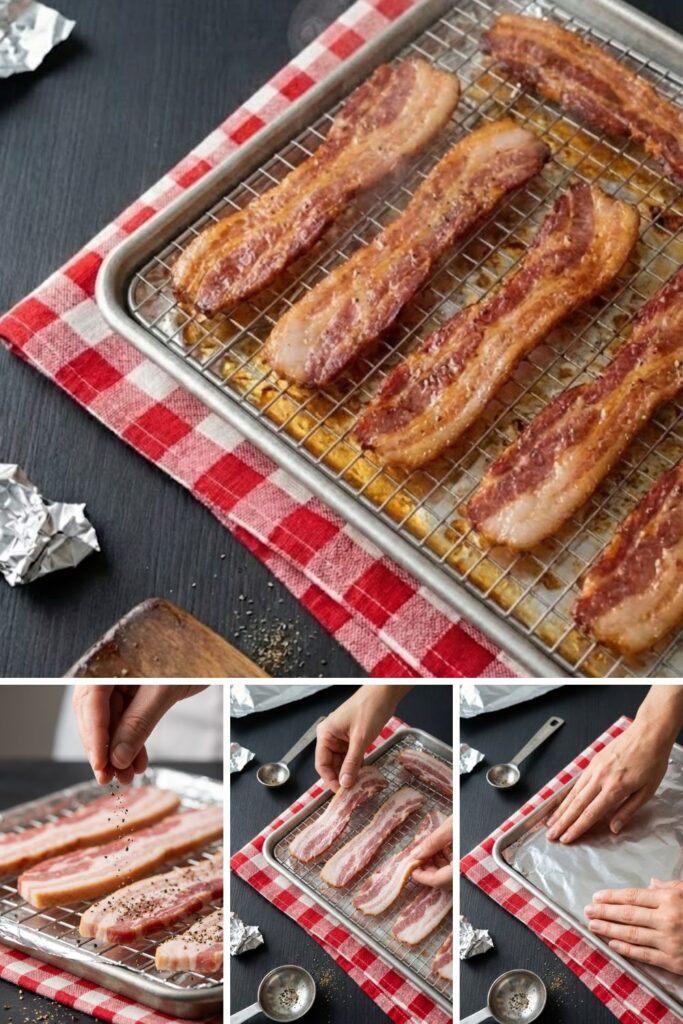
- Prep the Pan: Line a rimmed baking sheet with heavy-duty aluminum foil or parchment paper, then place a wire cooling rack inside the pan.
- Arrange the Bacon: Lay the bacon strips flat across the rack in a single layer, ensuring they do not overlap or bunch up.
- Cold Start: Place the baking sheet into a cold oven on the middle rack, close the door, and set the temperature to 400°F.
- Bake: Cook for 12 to 15 minutes, checking frequently after the 12-minute mark until the bacon is crispy and golden brown.
- Drain and Serve: Remove the pan from the oven and immediately transfer the bacon strips to a plate lined with paper towels to drain excess grease.
Recipe Tips
- Don’t Preheat: This is the most critical step; starting cold renders the fat slowly and keeps the bacon flat.
- Watch the Thickness: If you are using regular or thin-cut bacon instead of thick-cut, check the oven around the 10-minute mark to prevent burning.
- Cleanup Hack: If you don’t have a wire rack, you can cook the bacon directly on parchment paper, though the texture will be slightly less crisp on the bottom.
- Save the Fat: If you use a clean pan lined with parchment, carefully pour the rendered liquid gold into a jar for cooking eggs later.
What To Serve With Bacon
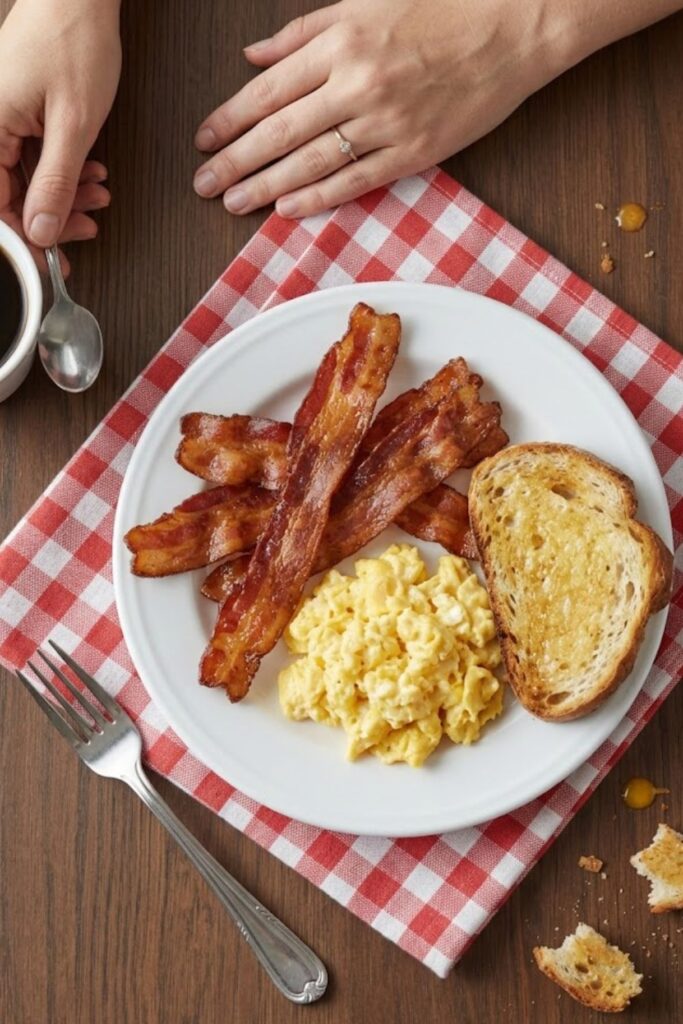
Serve these perfectly flat strips alongside fluffy scrambled eggs and toast for a classic diner-style breakfast at home. They also work exceptionally well for stacking in BLTs or club sandwiches because they don’t curl up, ensuring every bite has the perfect amount of crunch.
How To Store
Store any leftovers in an airtight container or zip-top bag in the refrigerator for up to 5 days. You can reheat them quickly in the microwave for 10-15 seconds to restore their crispiness before serving.
FAQs
Why do you start with a cold oven?
Starting cold allows the bacon fat to render slowly as the oven heats up, which prevents the meat from shocking, curling, and shrinking excessively.
Can I use this method for turkey bacon?
Yes, but turkey bacon has less fat to render, so you should brush the rack with a little oil first and reduce the cooking time by a few minutes.
Do I have to use a wire rack?
No, you can bake the bacon directly on a parchment-lined baking sheet, but the rack allows grease to drip away for a crispier, less greasy final product.
Nutrition
- Calories: 90
- Total Fat: 7g
- Saturated Fat: 2.5g
- Cholesterol: 20mg
- Sodium: 380mg
- Total Carbohydrate: 0g
- Protein: 6g
Try More Recipes:
Alton Brown Oven Bacon Recipe
Description
A technically superior method for preparing bacon that utilizes a cold-start oven and a wire rack to ensure even fat rendering, minimal shrinkage, and maximum crispness without the need for constant monitoring.
Ingredients
Instructions
- The Infrastructure: Line a large rimmed baking sheet with heavy-duty aluminum foil for easy cleanup. Place a wire cooling rack inside the pan. This elevation is critical for 360-degree air circulation.
- The Alignment: Arrange the bacon strips across the wire rack in a single, parallel layer. Ensure the strips do not overlap, as overlapping areas will remain soft and under-rendered.
- The Cold Start: Place the baking sheet on the middle rack of a completely cold oven. Do not preheat. Close the door and set the temperature to 400°F.
- Thermal Rendering: As the oven temperature climbs, the bacon fat begins to liquify (render) slowly. This gradual increase in temperature allows the fat to exit the muscle fibers before the proteins tighten, preventing the bacon from curling.
- The Final Crisp: Once the oven reaches 400°F, keep a close watch. The bacon will typically reach peak crispness 12 to 15 minutes after the target temperature is hit, or approximately 20 minutes from the initial cold start.
- Drain and Stabilize: Immediately remove the pan and transfer the strips to a paper-towel-lined plate. The residual heat (carry-over cooking) will finish the crisping process as the bacon cools for 60 seconds.