
 Sandra
 This creamy, pungent Alton Brown Horseradish Cream Sauce is made with sour cream, fresh horseradish, and Dijon mustard, and is ready in just 10 minutes. It delivers that signature sinus-clearing kick that cuts through rich meats beautifully. I love how the fresh root makes this version superior to anything store-bought.
The Secret To Getting It Right
Most people grab the jarred stuff, but Alton Brown’s version insists on fresh root, and honestly, it changes everything. The bottled version is often pickled in too much vinegar, masking the true heat, while grating it fresh gives you a clean, sharp punch that you can control.
The real secret, however, is time. You must let this sauce sit in the fridge for at least four hours before serving. I once rushed it and served it immediately, and the flavors hadn’t melded; the sour cream was too distinct from the heat. Giving it that resting time transforms it into a unified, silky condiment.
Alton Brown Horseradish Cream Sauce Ingredients
- 1 cup sour cream
- 1/4 cup fresh horseradish, grated (or drained prepared horseradish)
- 1 tablespoon Dijon mustard
- 1 teaspoon white wine vinegar
- 1/2 teaspoon kosher salt
- 1/4 teaspoon freshly ground black pepper
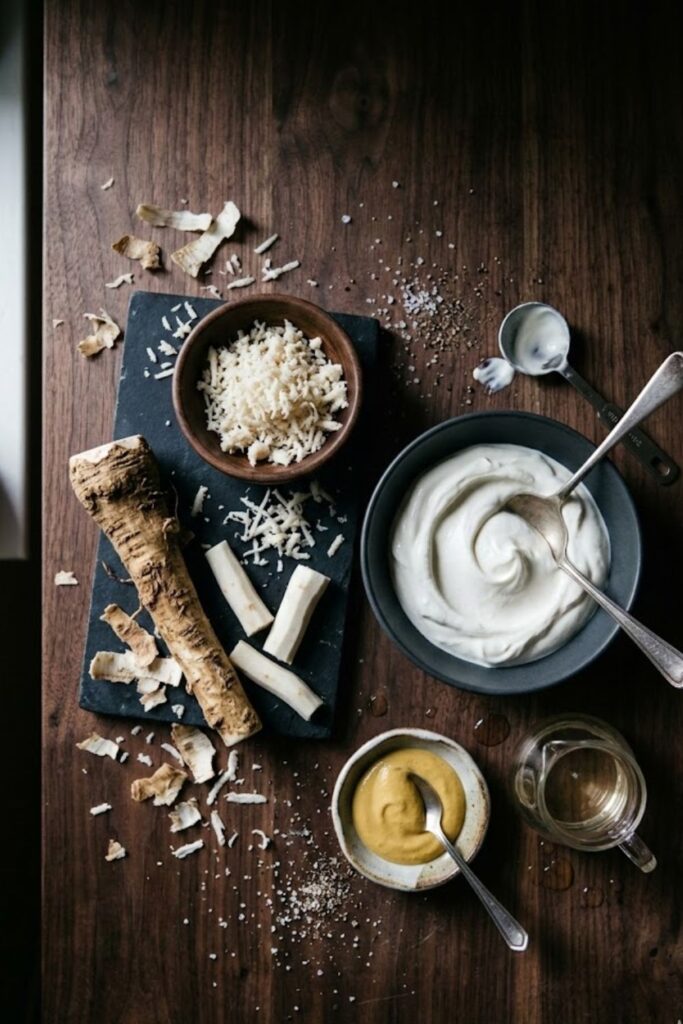
How To Make Alton Brown Horseradish Cream Sauce
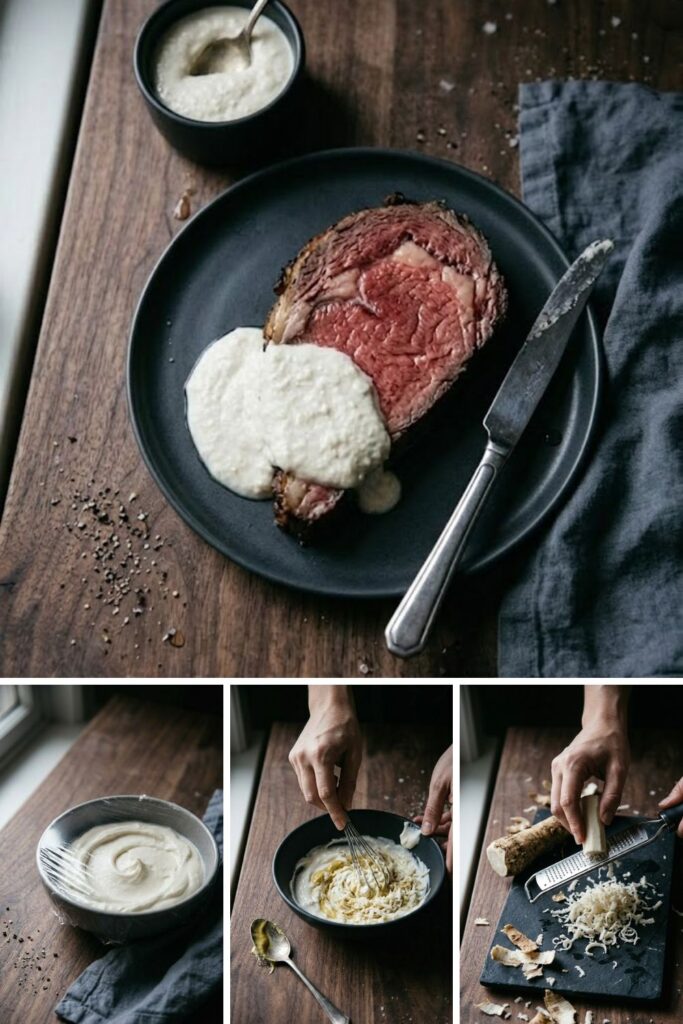
- Prep the Root: Peel the fresh horseradish root and grate it using a microplane or fine grater until you have 1/4 cup of shavings.
- Whisk Ingredients: In a medium mixing bowl, combine the sour cream, grated horseradish, Dijon mustard, white wine vinegar, kosher salt, and black pepper. Whisk until the mixture is completely smooth and creamy.
- Chill: Cover the bowl tightly with plastic wrap and refrigerate for at least 4 hours (or overnight) to allow the flavors to meld and develop.
Recipe Tips
- Drain the Jar: If using jarred horseradish instead of fresh, place it in a mesh sieve and press out the excess vinegar liquid so your sauce doesn’t get watery.
- Watch the Fumes: Fresh horseradish releases strong oils when grated—similar to onions but sharper—so try not to lean directly over the bowl while working.
- Adjust the Heat: The potency of fresh root varies significantly; taste your sauce after mixing and add more horseradish if you want a stronger kick.
What To Serve With Horseradish Cream Sauce
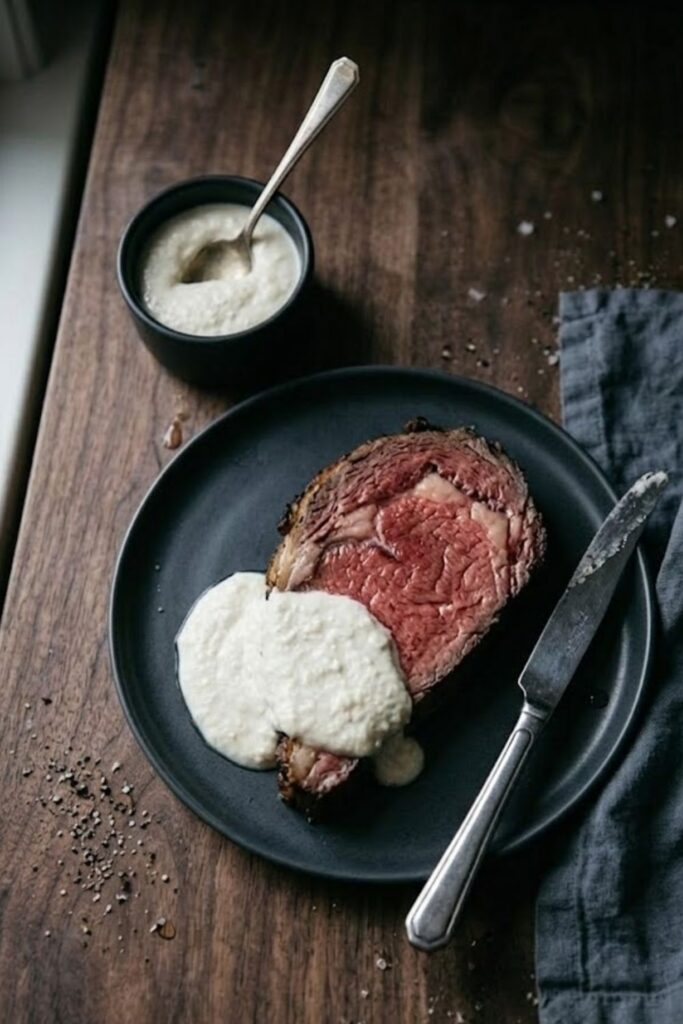
Serve this alongside a standing rib roast or prime rib for the classic holiday pairing. It also works beautifully with raw oysters, adding a spicy contrast to the briny seafood. I also like smearing it on leftover roast beef sandwiches the next day.

How To Store
Keep this sauce in an airtight container in the refrigerator for up to 2 weeks. Do not freeze it, as the sour cream will separate and become grainy upon thawing.
FAQs
- Can I use prepared horseradish? Yes, substitute the fresh root with an equal amount of prepared horseradish, but ensure you drain the liquid first to maintain the right consistency.
- How long does it last? It stays fresh in the fridge for about two weeks, though the heat may mellow slightly over time.
- Is this sauce spicy? It has a strong kick, but the sour cream balances it; you can adjust the spice level by adding more or less horseradish.
- Can I use Greek yogurt? You can swap half the sour cream for Greek yogurt for a lighter version, but full-fat sour cream gives the authentic rich texture.
Nutrition
- Calories: 50
- Total Fat: 4g
- Saturated Fat: 2.5g
- Cholesterol: 15mg
- Sodium: 120mg
- Total Carbohydrate: 2g
- Protein: 1g
Try More Recipes:
Alton Brown Horseradish Cream Sauce Recipe
Description
A potent and velvety condiment that balances the sharp, nasal-clearing heat of fresh horseradish with the cooling richness of sour cream and a subtle tang of Dijon mustard.
Ingredients
Instructions
- Peel and grate the fresh horseradish root using a microplane or fine grater to create a delicate texture that releases the maximum amount of pungent oils.
- Whisk the sour cream, grated horseradish, Dijon mustard, white wine vinegar, salt, and pepper in a medium bowl until the mixture is completely smooth and uniform.
- Cover the bowl tightly with plastic wrap to prevent the volatile aromatic compounds from evaporating or oxidizing.
- Chill the sauce in the refrigerator for at least 4 hours; this rest period is essential for the flavors to meld and for the heat of the horseradish to permeate the fat of the sour cream.
Notes
- Grating the horseradish root triggers a chemical reaction where the enzyme myrosinase converts glucosinolates into allyl isothiocyanate, the volatile compound responsible for the signature “nasal heat” that defines the sauce.
- The addition of white wine vinegar serves as a chemical stabilizer; the acidity lowers the pH of the mixture, which halts the enzymatic reaction at its peak pungency and prevents the horseradish from turning bitter.
- Utilizing full-fat sour cream provides a necessary lipid buffer that coats the tongue, allowing the palate to experience the complex flavors of the root without the heat becoming physically overwhelming.