 Sandra
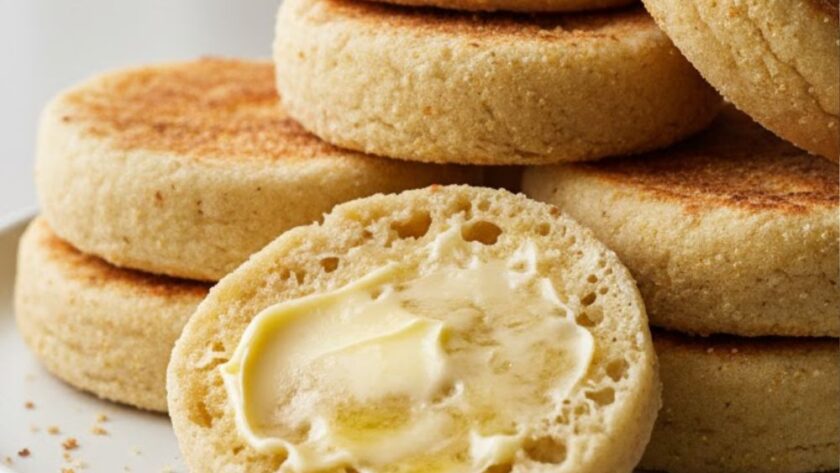
 This chewy, porous Alton Brown English Muffins recipe is made with non-fat powdered milk, vegetable shortening, and yeast, and is ready in under an hour. Splitting the warm muffin reveals steaming nooks and crannies perfect for holding pools of melted butter. I was surprised by how a batter so wet could turn into such a structured bread.
The Secret To Getting It Right
The batter for these muffins is incredibly wet and sticky, appearing almost like a thick pancake batter rather than a traditional bread dough. My first instinct was to add more flour to make it manageable, but that would have been a mistake; the high hydration is exactly what creates those signature large air pockets when the steam expands on the griddle.
Another unique trick in this recipe is adding the second half of the salt after the first rise. This allows the yeast to work vigorously during the initial proof without being inhibited, giving you a lighter, airier texture in a short amount of time.
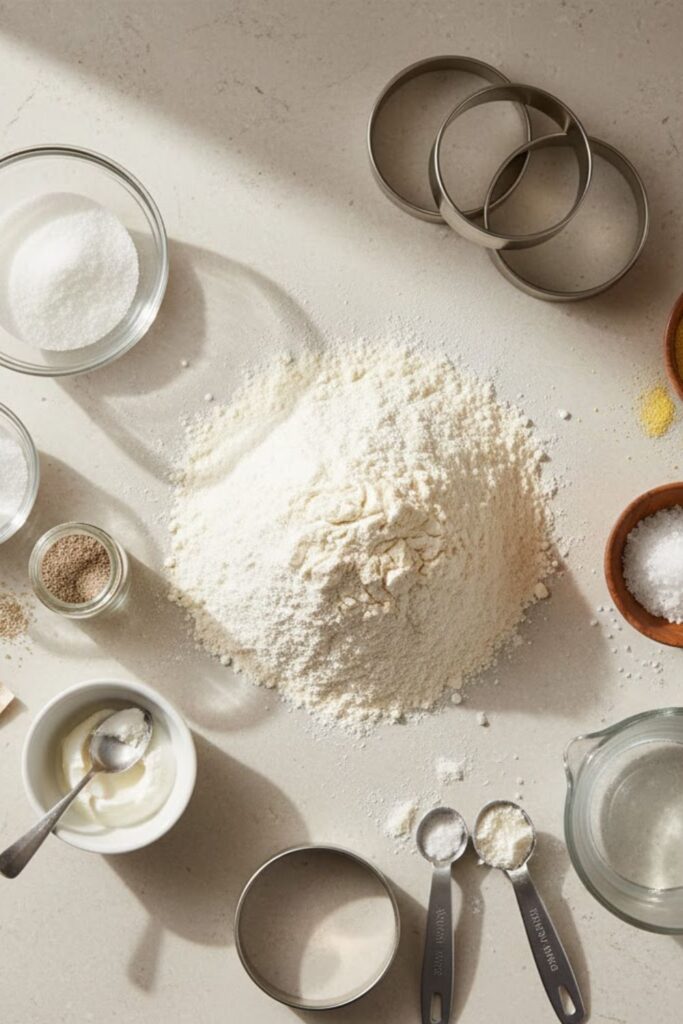
Alton Brown English Muffins Ingredients
- 1/2 cup non-fat powdered milk
- 1 tablespoon sugar
- 1 teaspoon kosher salt, divided (1/2 tsp for base, 1/2 tsp for finishing)
- 1 tablespoon vegetable shortening
- 1 cup hot water
- 1 packet (2 1/4 teaspoons) active dry yeast
- 1/8 teaspoon sugar (for yeast activation)
- 1/3 cup warm water (105°F)
- 2 cups all-purpose flour, sifted
- Non-stick vegetable spray
- Cornmeal, for dusting
How To Make Alton Brown English Muffins
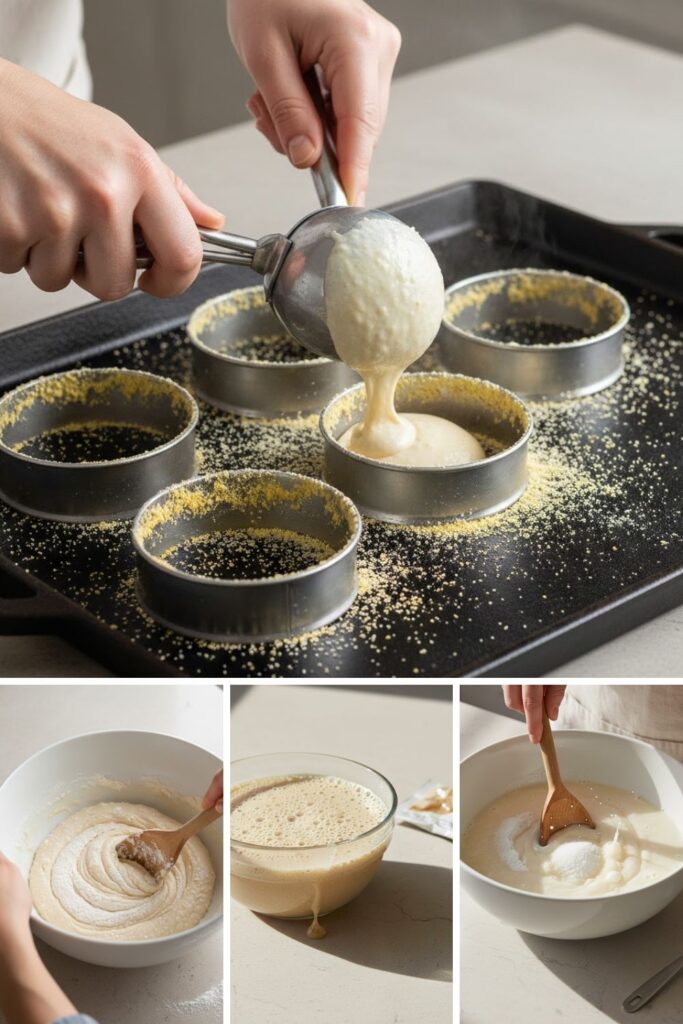
- Prepare The Base: In a bowl, combine the powdered milk, 1 tablespoon sugar, 1/2 teaspoon of the salt, shortening, and hot water. Stir until the sugar and salt dissolve and the shortening melts, then let the mixture cool to room temperature.
- Proof The Yeast: While the base cools, combine the yeast and 1/8 teaspoon sugar in the 1/3 cup warm water. Let it rest for about 5 minutes until the mixture is foamy and dissolved.
- Mix The Batter: Add the yeast mixture to the cooled milk mixture. Stir in the sifted flour and beat thoroughly with a wooden spoon to combine.
- First Rise: Cover the bowl with a clean towel and let the batter rest in a warm spot for 30 minutes.
- Final Seasoning: Add the remaining 1/2 teaspoon of salt to the batter and beat thoroughly to incorporate.
- Preheat: Heat an electric griddle to 300°F (or use a cast iron skillet on low-medium heat). Place metal rings on the griddle, coat them generously with vegetable spray, and sprinkle cornmeal inside.
- Cook First Side: Using a #20 ice cream scoop (or about 1/3 cup), drop the batter into the rings. Cover the rings with a baking sheet or pot lid and cook for 5 to 6 minutes.
- Flip And Finish: Remove the lid, flip the rings over using tongs, cover again, and cook for another 5 to 6 minutes until golden brown.
- Cool: Transfer the muffins to a cooling rack, remove the rings, and let them cool completely before splitting.
Recipe Tips
- Trust the stickiness: The dough is meant to be a wet batter. Do not knead it or add extra flour during the process, or you will lose the famous nooks and crannies.
- Grease generously: The batter sticks aggressively to metal. Spray your rings (or clean tuna cans) very well with non-stick spray before filling them.
- Use a thermometer: An electric griddle set to exactly 300°F is ideal because it provides steady, moderate heat that cooks the center without burning the crust.
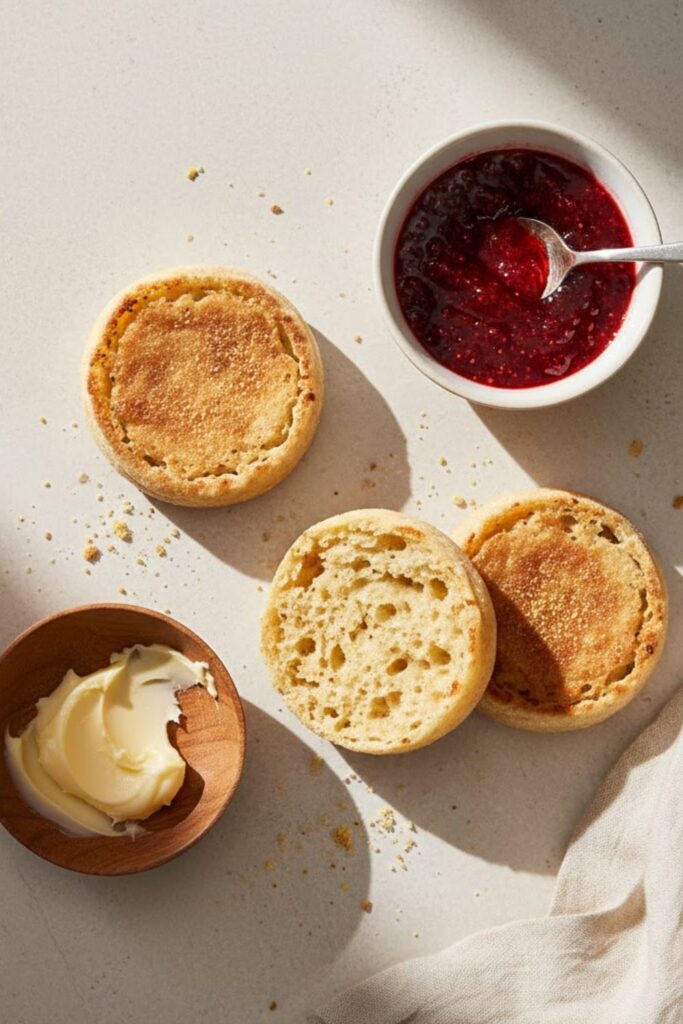
- Split with a fork: Never use a knife to cut English muffins; piercing the perimeter with a fork preserves the rough interior texture that holds butter so well.
What To Serve With English Muffins
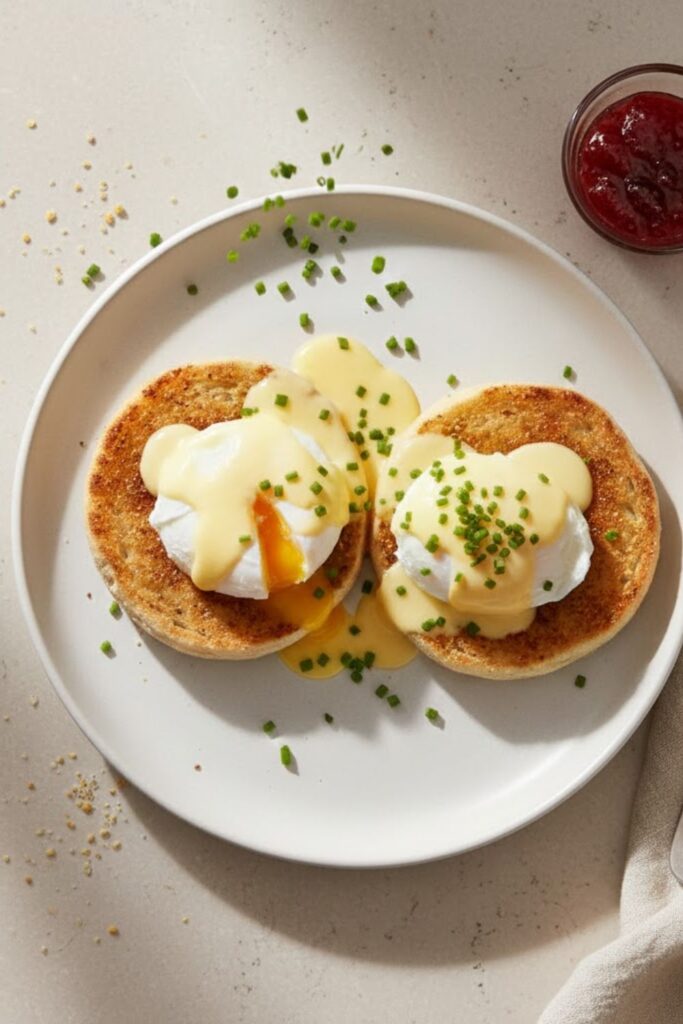
Serve these warm with salted butter and strawberry jam for a classic breakfast experience that highlights the texture. They are also the structural foundation for Eggs Benedict, holding up perfectly to poached eggs and rich hollandaise sauce without becoming soggy.
How To Store
Store cooled muffins in an airtight container at room temperature for up to 3 days. For longer storage, fork-split them and freeze in a zip-top bag for up to 3 months, then toast directly from frozen.
FAQs
Can I use butter instead of shortening?
Yes, you can substitute unsalted butter, but shortening yields a slightly more tender, traditional crumb structure.
What if I don’t have muffin rings?
You can make your own by removing the tops and bottoms of 7-ounce tuna cans and washing them thoroughly, or shape thick foil into rings.
Why is my dough so runny?
This recipe uses a high-hydration batter to create steam pockets; if you measured correctly, the runny texture is intentional.
Can I bake these in the oven?
These are designed for griddle cooking to get the flat crusts, but you can finish them in a 350°F oven for 5 minutes if the centers are still gummy after griddling.
Why add salt in two stages?
Adding half the salt later allows the yeast to activate faster during the short 30-minute rise, ensuring a fluffy muffin.
Nutrition
- Calories: 140
- Total Fat: 2g
- Saturated Fat: 0.5g
- Cholesterol: 1mg
- Sodium: 280mg
- Total Carbohydrate: 26g
- Protein: 5g
Try More Recipes:
- Alton Brown Eggs Benedict Recipe
- Alton Brown Angel Food Cake Recipe
- Alton Brown Red Velvet Cake Recipe
Alton Brown English Muffins Recipe
Description
A classic griddle-baked bread featuring a signature honey-combed interior and a crisp, cornmeal-dusted exterior achieved through a unique ring-mold cooking process.
Ingredients
Instructions
- Combine the powdered milk, 1 tablespoon sugar, 1/2 teaspoon salt, shortening, and hot water; stir until dissolved and allow to cool to room temperature.
- Proof the yeast by mixing it with 1/8 teaspoon sugar in 105°F water for 5 minutes until foamy.
- Incorporate the yeast mixture into the cooled milk base, then beat in the sifted flour with a wooden spoon until a smooth, sticky batter forms.
- Rise the batter in a warm, draft-free spot for 30 minutes until doubled in size and full of air bubbles.
- Season the fermented batter by beating in the remaining 1/2 teaspoon of salt, which helps control the final yeast activity and strengthens the flavor.
- Prep an electric griddle or cast iron skillet at 300°F, placing greased metal rings on the surface and dusting the inside with cornmeal.
- Scoop the batter into the rings, cover with a baking sheet to trap heat, and cook for 5 to 6 minutes until the bottom is golden.
- Flip the rings over, replace the cover, and cook for another 5 to 6 minutes to finish the other side.
- Cool the muffins thoroughly on a wire rack before removing the rings and splitting them open.
Notes
- Utilizing powdered milk instead of fresh milk provides a higher concentration of lactose, which aids in superior browning on the griddle and contributes to a softer, more tender crumb.
- Covering the muffins with a baking sheet during the griddle-cooking phase creates a localized oven effect, ensuring the thick batter cooks through to the center before the exterior burns.
- Splitting the muffins with a fork rather than a knife is essential to preserve the “nooks and crannies,” as a blade will smash the delicate internal air pockets created during the fermentation process.