 Sandra
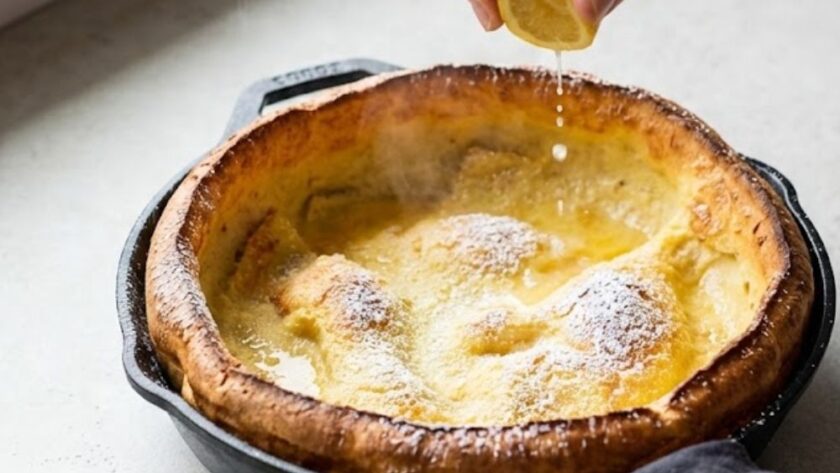
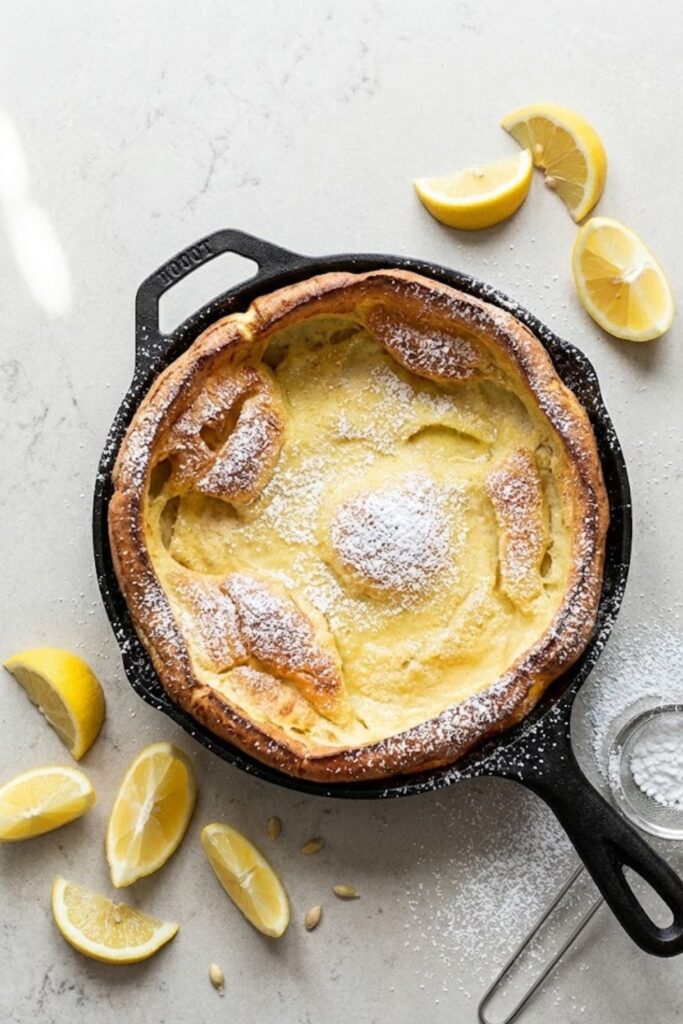
 This golden, custardy Alton Brown Dutch Baby is made with room-temperature eggs, milk, and a unique split-butter technique, ready in under 40 minutes. The batter hits the hot cast-iron skillet and climbs the sides of the pan to create a dramatic, towering crust with a tender center. I love making this recipe because it delivers a restaurant-quality brunch presentation with zero flipping required.
The Secret To Getting It Right
I learned quickly that Alton Brown’s version differs from traditional Dutch babies in one key way: the butter. While most recipes call for melting an entire stick of butter in the skillet and pouring the batter into the pool of fat, this method splits the butter. You melt two tablespoons directly into the batter and use only one tablespoon in the pan. This creates a slightly more cake-like, rich interior texture while still achieving those crispy edges.
The second lesson was the absolute necessity of room-temperature ingredients. When I tried rushing this with cold milk and eggs from the fridge, the batter seized up when I added the melted butter, and the pancake barely puffed in the oven. Taking the time to let the eggs and milk sit out for 30 minutes makes the difference between a flat crepe and a towering masterpiece.
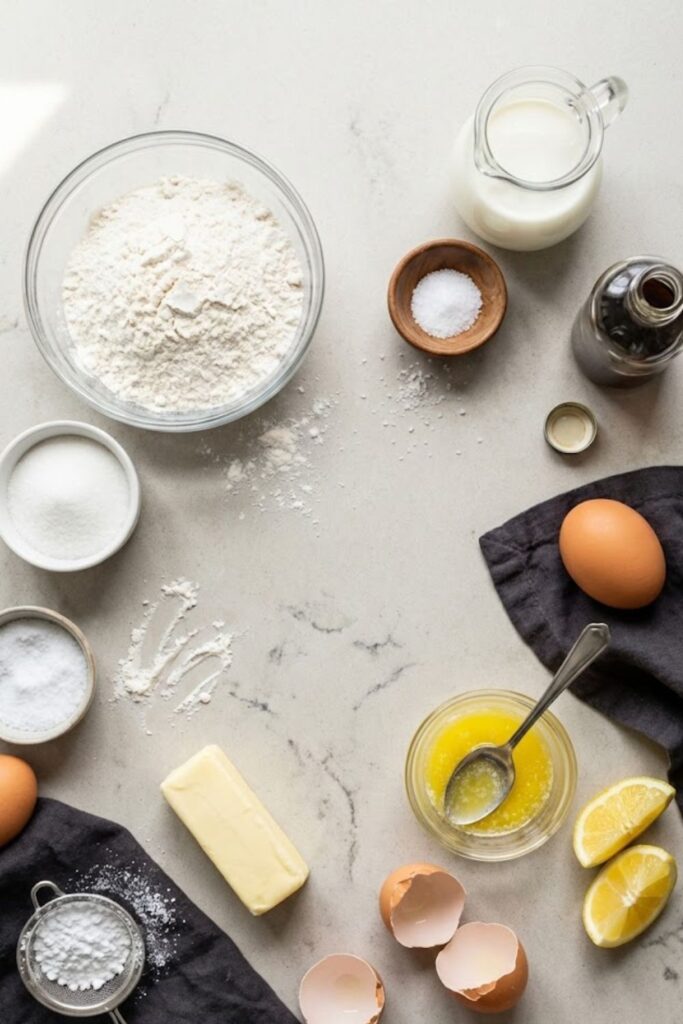
Alton Brown Dutch Baby Ingredients
- 3 tablespoons unsalted butter, divided (2 tbsp for batter, 1 tbsp for pan)
- 1/2 cup all-purpose flour
- 3 tablespoons granulated sugar
- 1/2 teaspoon kosher salt
- 2 large eggs, room temperature
- 1/2 cup whole milk, room temperature
- 1/2 teaspoon vanilla extract
- Lemon wedges and powdered sugar, for serving
How To Make Alton Brown Dutch Baby
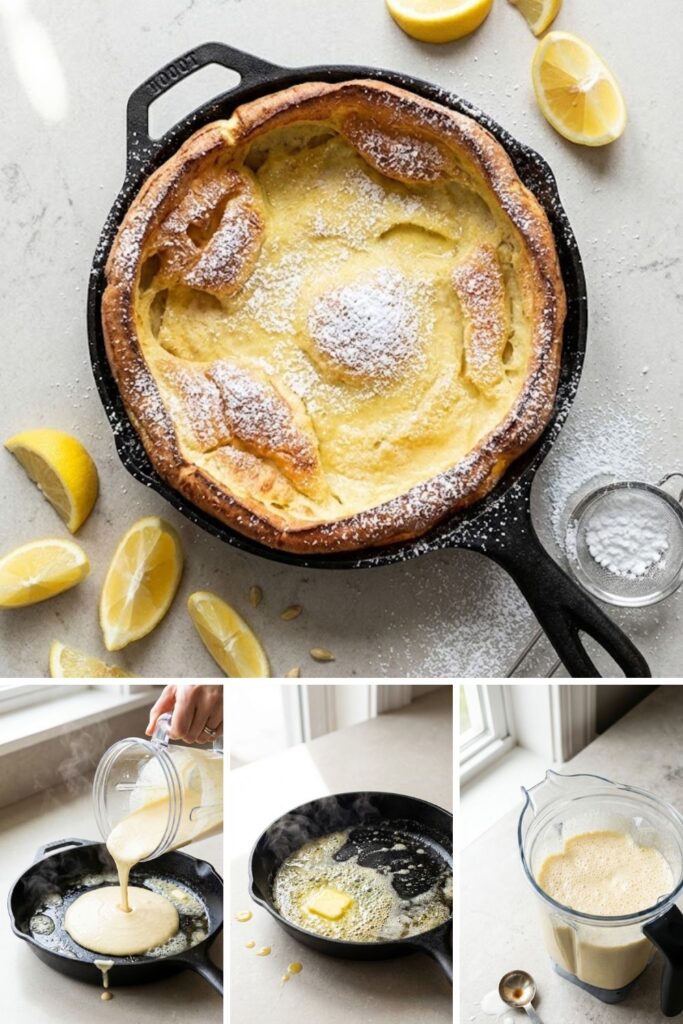
- Preheat the Pan: Place a 10-inch cast-iron skillet on the middle rack of your oven and preheat to 375°F. Let the pan heat up for at least 10 to 15 minutes so it is scorching hot.
- Mix Dry Ingredients: While the oven heats, place the flour, sugar, and salt in a food processor or blender. Pulse a few times to combine.
- Prepare the Batter: Melt 2 tablespoons of the butter and let it cool slightly. Add the eggs, milk, vanilla extract, and the melted butter to the flour mixture. Process for 30 to 45 seconds until the batter is completely smooth and frothy.
- Butter the Skillet: carefully remove the hot skillet from the oven. Drop the remaining 1 tablespoon of butter into the pan and swirl it around immediately to coat the bottom and sides.
- Bake: Pour the batter directly into the center of the hot skillet. Return the pan to the oven immediately and bake for 20 minutes. Do not open the oven door during this time.
- Finish and Serve: Check that the pancake is puffed and golden brown. Remove from the oven, dust with powdered sugar, and serve immediately with lemon wedges.
Recipe Tips
- No Peeking: Opening the oven door releases the steam that helps the pancake rise. Keep the door closed for the full 20 minutes to prevent the structure from collapsing.
- Room Temperature is Key: If your eggs and milk are cold, the batter won’t emulsify properly with the melted butter. Sit them in warm water for 5 minutes if you are short on time.
- Pan Size Matters: This recipe is specifically calibrated for a 10-inch skillet. Using a 12-inch skillet will result in a much thinner, flatter pancake that cooks too quickly.
- Serve Instantly: The dramatic puff relies on hot steam, so the Dutch baby will begin to deflate the moment it leaves the oven. Have your toppings ready before you take it out.
What To Serve With Dutch Baby
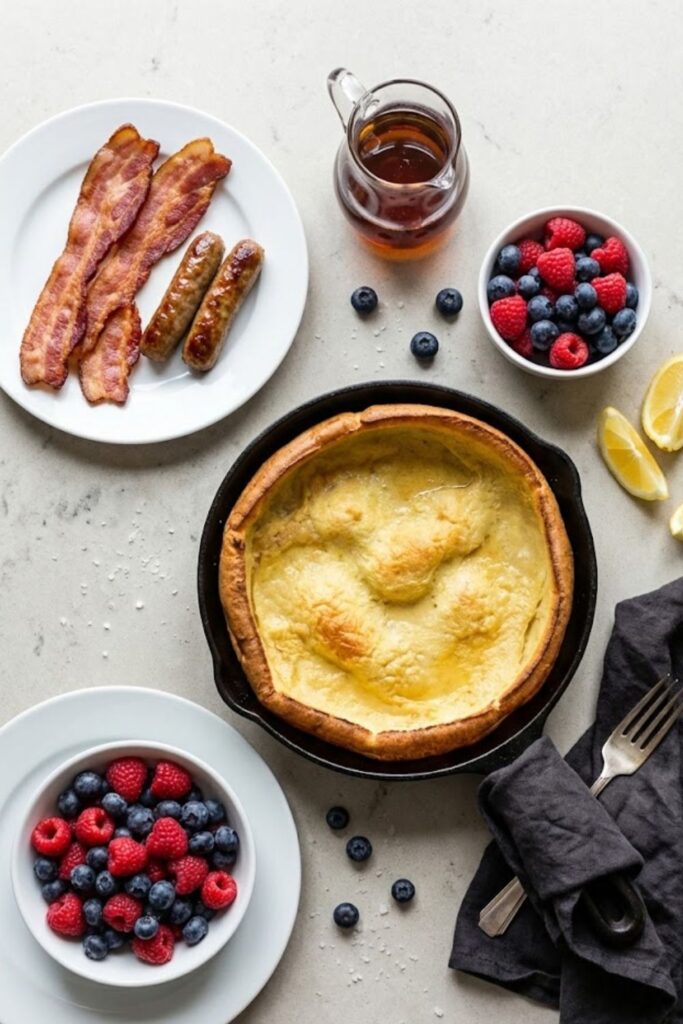
The classic pairing for this dish is a simple squeeze of fresh lemon juice and a dusting of confectioners’ sugar, which cuts through the richness of the egg batter. For a heartier brunch, I like to serve this alongside savory sides like crispy bacon or breakfast sausage links to balance the sweetness of the pancake. Fresh berries, such as raspberries or blueberries, also add a nice pop of color and tartness.
How To Store
Dutch babies are best eaten fresh and do not store well, as they lose their texture and become dense within minutes. If you do have leftovers, keep them in the fridge for up to 1 day and reheat in a toaster oven, though they will be more like a crepe than a puffy pancake.
FAQs
- Why did my Dutch baby not rise?
The most common culprits are a pan that wasn’t hot enough or opening the oven door too early. Ensure your skillet preheats for the full time and keep the oven sealed until the timer goes off. - Can I make the batter ahead of time?
Yes, you can blend the batter the night before and store it in the refrigerator. However, you must let it come back to room temperature for at least 30 minutes before baking, or it won’t puff. - Do I need a cast-iron skillet?
Cast iron is best because it retains heat effectively, which is crucial for the rise. If you don’t have one, a heavy-bottomed stainless steel oven-safe frying pan or a round baking dish can work, but the crust may not be as crisp.
Nutrition
- Calories: 310
- Total Fat: 18g
- Saturated Fat: 10g
- Cholesterol: 215mg
- Sodium: 320mg
- Total Carbohydrate: 28g
- Protein: 9g
Try More Recipes:
Alton Brown Dutch Baby Recipe
Description
A dramatic, giant puffed pancake that relies on steam and a high-heat cast-iron environment to create towering, golden edges and a tender, custard-like center.
Ingredients
Instructions
- Preheat a 10-inch cast-iron skillet in the oven at 375°F for at least 15 minutes to ensure the thermal mass of the pan is high enough to trigger an immediate rise.
- Pulse the flour, sugar, and salt in a blender or food processor to ensure the dry ingredients are aerated and free of clumps.
- Blend the melted butter, room temperature eggs, milk, and vanilla into the dry mixture for 45 seconds until the batter is completely smooth and highly aerated.
- Melt the final tablespoon of butter in the scorching hot skillet, swirling quickly to coat the entire interior surface.
- Pour the batter into the center of the pan and return it to the oven immediately to prevent heat loss.
- Bake for exactly 20 minutes; do not open the oven door at any point, as the sudden drop in temperature can cause the steam-supported structure to collapse.
- Serve immediately while puffed and golden, finishing with a heavy dusting of powdered sugar and fresh lemon juice.
Notes
- Using room temperature eggs and milk is vital; cold ingredients will lower the initial temperature of the batter, resulting in a significantly flatter pancake with less “creep” up the sides of the pan.
- Blending the batter for a full 45 seconds develops just enough gluten to provide the structural integrity needed to hold the air, while also incorporating the micro-bubbles that expand into the final puff.
- The addition of fresh lemon juice at the end provides a necessary acid hit that cuts through the richness of the butter and eggs, creating the classic “German Pancake” flavor profile.