 Sandra
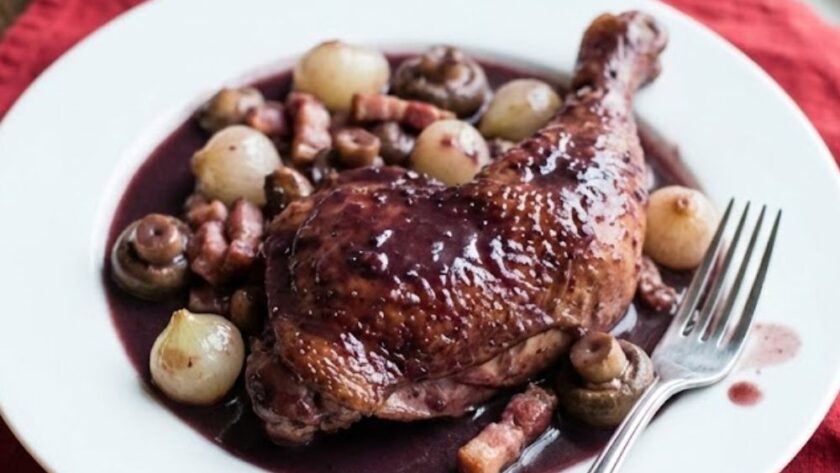
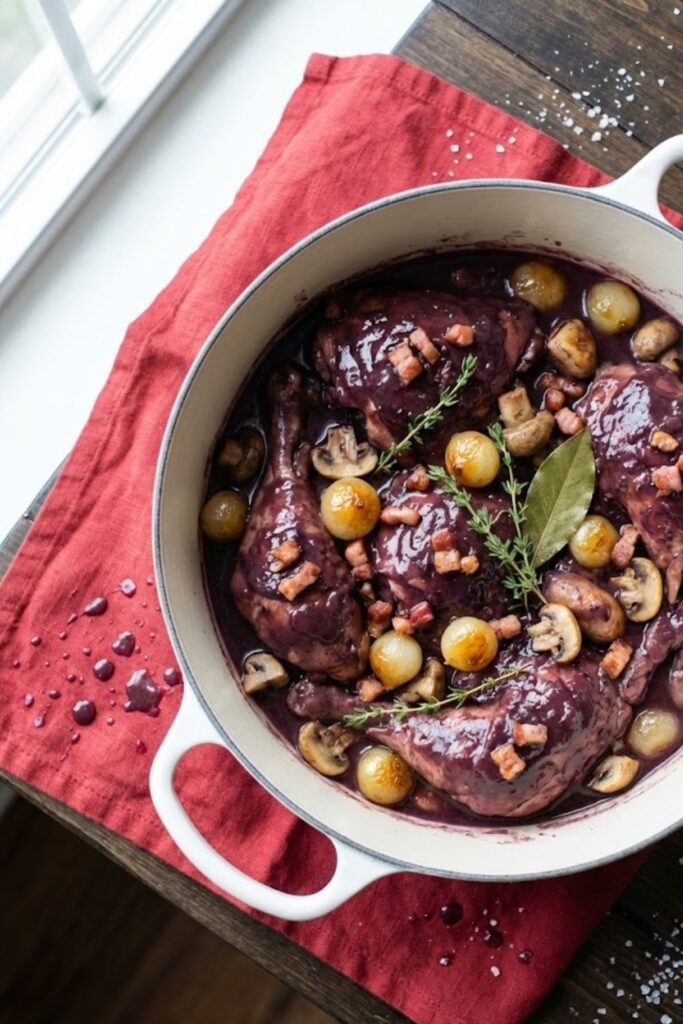
 This rich, tender Alton Brown Coq Au Vin is made with two full bottles of Pinot Noir, crispy salt pork, and pearl onions, ready in about 24 hours including the overnight marinade. The sauce transforms from a purple braising liquid into a glossy, chocolate-colored glaze that clings perfectly to the meat. I love how this method separates the mushy stew vegetables from the perfectly browned garnish for the best texture.
The Secret To Getting It Right
I learned quickly that patience is the most critical ingredient in this recipe. Alton Brown’s method insists on a two-day process where the chicken marinates overnight in wine, which might seem fussy, but it turns the meat a stunning purple hue and tenderizes it completely. If you skip this step, you miss out on the deep, vinous flavor that penetrates the meat rather than just coating it.
Another game-changer is how this recipe handles vegetables. Most people throw everything in the pot at once, resulting in mushy carrots and onions by the time the chicken is done. This version uses one set of vegetables solely for flavoring the braise (which get discarded) and a separate set of pearl onions and mushrooms that are cooked in bacon fat and added at the very end for perfect texture.
Alton Brown Coq Au Vin Ingredients
- 4 chicken legs with thighs (or 4 leg quarters)
- Kosher salt and freshly ground black pepper
- 1/2 cup all-purpose flour
- 6 oz salt pork, cubed (or slab bacon)
- 2 tbsp water
- 24-30 pearl onions, blanched and peeled
- 8 oz button mushrooms, quartered
- 1 tbsp unsalted butter (if needed)
- 2 (750ml) bottles red wine (Pinot Noir or Burgundy)
- 2 cups chicken stock
- 2 tbsp tomato paste
- 1 medium onion, quartered
- 2 stalks celery, quartered
- 2 medium carrots, quartered
- 5 garlic cloves, crushed
- 6 sprigs fresh thyme
- 1 bay leaf

How To Make Alton Brown Coq Au Vin
- Prep the Onions: Bring a small pot of water to a boil. Cut the root ends off the pearl onions and blanch them for 1 minute. Drain, cool, and pop them out of their skins.
- Coat the Chicken: Season the chicken pieces generously with salt and pepper. Place them in a large zip-top bag with the flour and shake vigorously until well coated. Remove chicken and set aside.
- Render the Pork: In a large heavy-bottomed pan or skillet, add the cubed salt pork and 2 tablespoons of water. Cover and cook over medium heat until the water evaporates. Uncover and continue cooking until the pork is golden and crispy. Remove the pork with a slotted spoon and save it.
- Brown the Garnish: In the same pan with the rendered fat, sauté the peeled pearl onions until lightly browned, about 8-10 minutes. Remove and set aside. Add the mushrooms (add the butter here if the pan is dry) and sauté until golden. Remove mushrooms. Store the pork, onions, and mushrooms in a container in the fridge for tomorrow.
- Brown the Chicken: In the remaining fat, brown the chicken pieces on all sides until golden. Do not overcrowd the pan. Transfer the browned chicken to a large Dutch oven.
- Deglaze and Assemble: Pour off any excess fat from the skillet. Deglaze with about 1 cup of the red wine, scraping up the browned bits. Pour this liquid over the chicken in the Dutch oven. Add the chicken stock, tomato paste, quartered onion, celery, carrots, garlic, thyme, and bay leaf. Pour in the remaining wine (about 1.5 bottles).
- Marinate: Cover the Dutch oven and refrigerate overnight. This is crucial for the flavor profile.
- Braise: The next day, preheat your oven to 325°F. Place the covered Dutch oven in the oven and cook for 2 to 2.5 hours, or until the chicken is very tender.
- Reduce the Sauce: Remove the chicken to a heatproof dish and keep warm. Strain the liquid through a colander, discarding the soggy vegetables and herbs. Return the strained liquid to the pot and boil over medium-high heat until reduced by one-third (about 20-30 minutes). It should be thick and glossy.
- Finish the Dish: Add the reserved pearl onions, mushrooms, and salt pork into the reduced sauce. Simmer for 15 minutes to heat through. Return the chicken to the pot, coat with sauce, and serve.

Recipe Tips
- Don’t skip the marinade: The overnight soak is what differentiates this from a quick stew. It allows the wine’s acidity to tenderize the connective tissue in the legs.
- Watch the salt: Salt pork can be very salty. Taste your sauce before adding more salt at the end, especially after reducing the liquid which concentrates the flavors.
- Thicken if needed: If your sauce is still too thin after reducing, mash 1 tablespoon of butter with 1 tablespoon of flour (beurre manié) and whisk it into the simmering sauce to tighten it up.
- Dry the chicken: Before flouring, pat the chicken dry. This helps the flour stick evenly and prevents steaming when you sear it in the fat.
What To Serve With Coq Au Vin
This dish is incredibly rich, so it needs a starch to soak up that dark, glossy wine sauce. Creamy mashed potatoes are the traditional choice, but buttered egg noodles or crusty sourdough bread work equally well to clean the plate.

How To Store
Coq au Vin tastes even better the next day as the flavors continue to meld. Store leftovers in an airtight container in the refrigerator for up to 3-4 days. You can freeze it for up to 3 months, though the texture of the potatoes (if served with them) may suffer.
FAQs
Can I use chicken breast instead of legs?
I wouldn’t recommend it. Breast meat dries out during the long braising time. Legs and thighs have the connective tissue needed to stay juicy and tender.
Do I really need two bottles of wine?
Yes, this recipe relies on the wine for the braising liquid volume. Since you reduce it significantly at the end, you need that initial quantity to create the rich sauce.
Can I use bacon instead of salt pork?
Absolutely. Thick-cut slab bacon is a perfect substitute. It will add a slightly smokier flavor than salt pork, which many people actually prefer.
What kind of wine should I buy?
Pinot Noir or a red Burgundy is traditional. Don’t buy expensive wine, but avoid “cooking wine” with added salt. Use something you would be willing to drink.
Why is my chicken purple?
The overnight marinade in red wine stains the meat. This is completely normal for authentic Coq au Vin and a sign that the flavor has penetrated deep into the chicken.
Nutrition
- Calories: 850 kcal
- Total Fat: 45g
- Saturated Fat: 15g
- Cholesterol: 210mg
- Sodium: 1200mg
- Total Carbohydrate: 25g
- Protein: 55g
Try More Recipes:
- Alton Brown Pancakes Recipe
- Alton Brown Tres Leches Cake Recipe
- Alton Brown Devil’s Food Cake Recipe
Alton Brown Coq Au Vin Recipe
Description
A traditional French “rooster in wine” braise that utilizes a two-day technique. By browning the meat before an overnight cold-soak, the flavors of the Burgundy wine and aromatics are forced deep into the chicken, resulting in a complex, mahogany-colored sauce and incredibly tender meat.
Ingredients
Instructions
- Prepare Onions: Blanch pearl onions in boiling water for 1 minute, then “pop” them from their skins. This preserves the structural integrity of the onion for the final garnish.
- Coat Chicken: Season chicken with salt and pepper, then toss in a bag with flour. This flour will eventually serve as the thickening agent (roux) for the sauce during the braise.
- Render Fat: Add salt pork and 2 tbsp water to a pan. Cook covered until water evaporates, then uncover and fry until crispy. This “wet render” prevents the pork solids from burning before the fat has fully liquified. Save the crispy pork.
- Brown Garnish: Sauté pearl onions in the pork fat until browned. Remove. Sauté mushrooms until golden (add butter if necessary). Store the pork, onions, and mushrooms in the fridge overnight.
- Sear Chicken: Brown the chicken quarters in the remaining fat until the skin is golden and the Maillard reaction is achieved. Transfer to a large Dutch oven.
- Deglaze and Assemble: Deglaze the skillet with 1 cup of wine, then pour over the chicken. Add stock, tomato paste, quartered vegetables, garlic, and herbs. Pour in the remaining wine.
- Marinate: Cover and refrigerate for at least 12 hours. This post-sear marinade allows the seasoned wine to replace the moisture lost during the browning process.
- Braise: The next day, bake covered at 325°F for 2 to 2.5 hours until the chicken reaches an internal temperature of at least 175°F (ideal for dark meat tenderness).
- Reduce Sauce: Remove chicken and keep warm. Strain the liquid, discarding the soggy vegetables. Boil the liquid over medium-high heat until reduced by one-third; the sauce should become glossy and coat the back of a spoon.
- Final Assembly: Add the reserved pearl onions, mushrooms, and salt pork to the sauce. Simmer for 15 minutes, then return the chicken to the pot to glaze before serving.