 Sandra
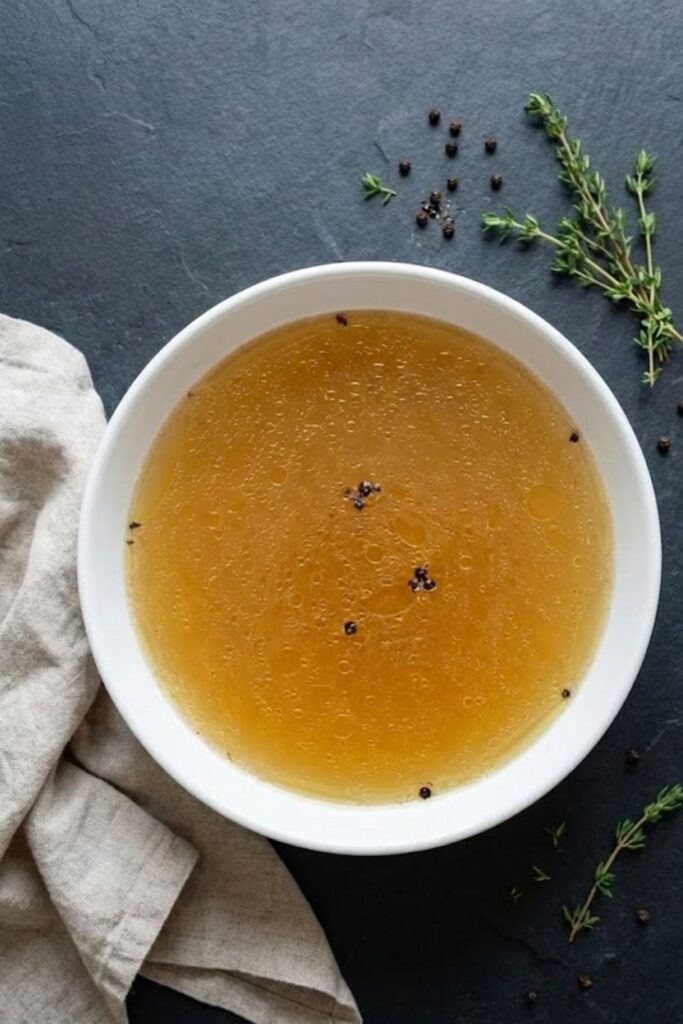
 This rich, gelatinous Alton Brown Chicken Stock is made with four pounds of chicken parts and a classic mirepoix, ready in about eight hours. The real magic happens when you chill it overnight and wake up to a pot of “chicken jello”—the ultimate sign of a perfect extraction. I learned that using a steamer basket insert makes this process cleaner and easier than any other method I’ve tried.
The Secret To Getting It Right
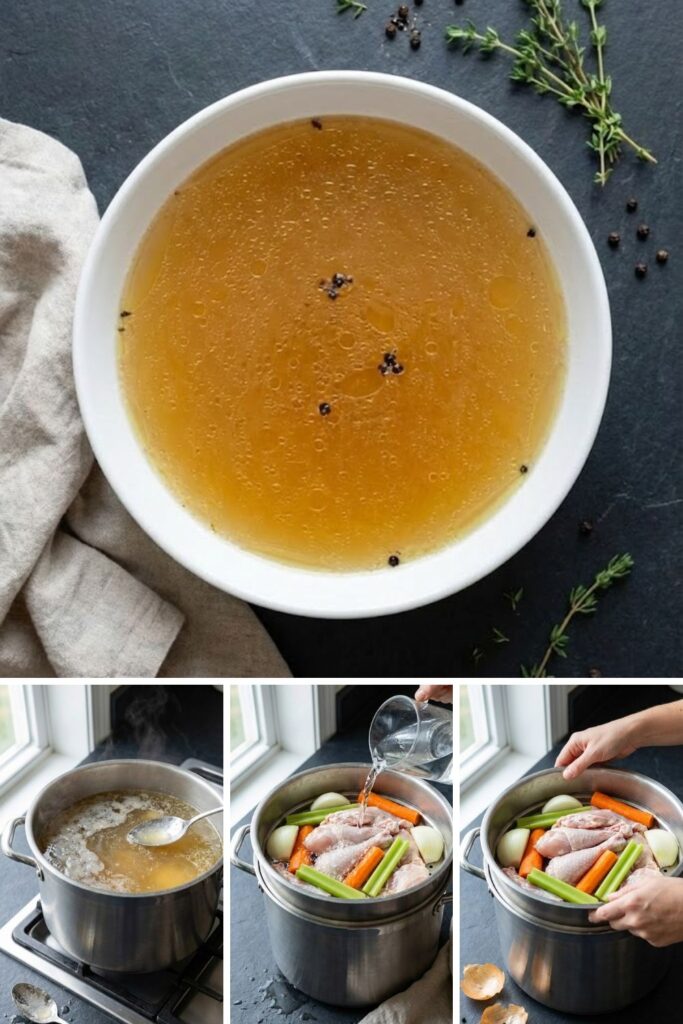
I used to think making stock was just boiling bones until the water turned yellow, but Alton Brown’s method taught me two crucial lessons. First, the “steamer basket hack” is genius; by placing your ingredients inside a steamer insert within the stockpot, you eliminate the dangerous pouring and messy straining at the end—you just lift the basket out, and your liquid gold is left behind.
The second lesson was temperature control. I learned the hard way that boiling your stock vigorously emulsifies the fat and impurities, turning the liquid cloudy and greasy. This recipe relies on a bare simmer—where bubbles just barely break the surface—to keep the stock crystal clear and extract the maximum amount of gelatin from the connective tissue.
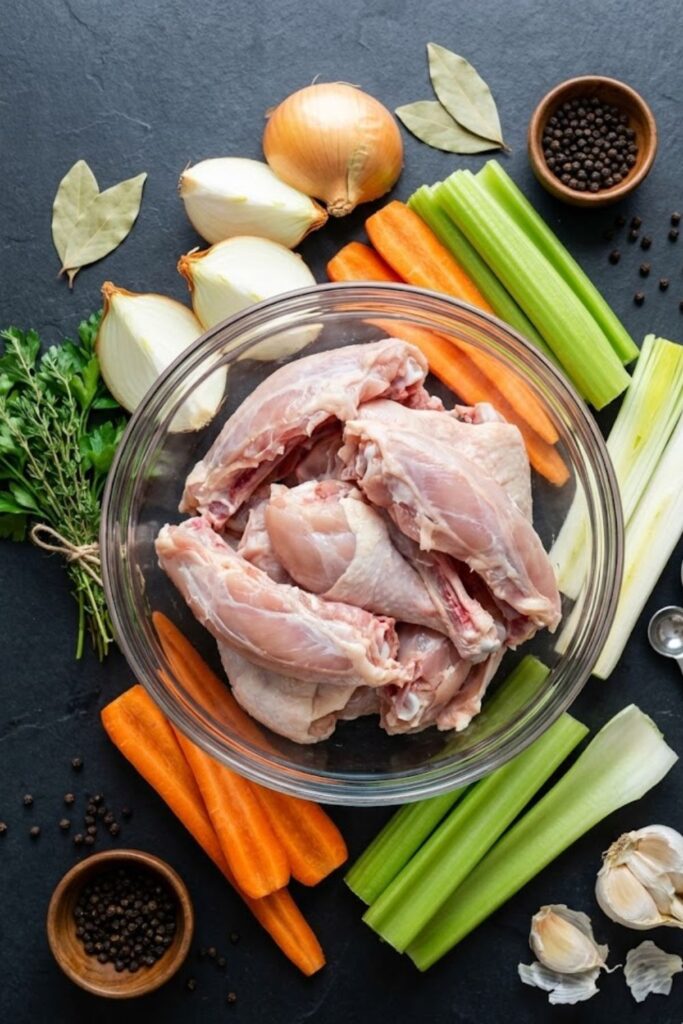
Alton Brown Chicken Stock Ingredients
- 4 pounds chicken carcasses: including necks and backs (or wings if backs aren’t available).
- 2 gallons cold water: enough to cover the chicken by a few inches.
- 1 large onion: quartered (peel on is fine for color).
- 4 carrots: peeled and cut in half crosswise.
- 4 ribs celery: cut in half crosswise.
- 1 leek: white part only, cleaned and cut in half lengthwise.
- 10 sprigs fresh thyme: whole stems.
- 10 sprigs fresh parsley: with stems.
- 2 bay leaves: dried or fresh.
- 8 to 10 black peppercorns: whole.
- 2 cloves garlic: peeled and smashed.
How To Make Alton Brown Chicken Stock
- Prep the Basket: Place the chicken carcasses, onion, carrots, celery, leek, thyme, parsley, bay leaves, peppercorns, and garlic into a large steamer basket insert. Place this basket inside your 12-quart stockpot.
- Add Cold Water: Pour the 2 gallons of cold water over the ingredients. Ensure the bones and vegetables are submerged; add a bit more water if necessary.
- Bring to Simmer: Turn the heat to high and watch closely. As soon as you see the first bubbles break the surface, immediately reduce the heat to medium-low. Do not let it come to a rolling boil.
- Skim and Simmer: Maintain a very gentle simmer. For the first hour, skim the gray foam (scum) off the surface every 15 minutes. Simmer uncovered for 6 to 8 hours, adding hot water if the level drops below the ingredients.
- Strain and Cool: Lift the steamer basket out of the pot to remove all solids instantly. Strain the remaining liquid through a fine-mesh sieve into a clean container. Cool rapidly in an ice bath to below 40°F before transferring to the fridge.
Recipe Tips
- The Ice Bath is Mandatory: Stock is a breeding ground for bacteria if it stays in the “danger zone” (40°F–140°F) too long. Fill your sink with ice water and submerge the pot (without getting sink water in the stock) to cool it down rapidly before refrigerating.
- Don’t Salt Yet: You’ll notice there is no salt in this recipe. Stock is a base ingredient, and if you salt it now, it might become too salty when you reduce it later for sauces.
- The Fat Cap: After chilling overnight in the fridge, a layer of fat will harden on top. This protects the stock from spoilage. Only remove this fat cap right before you are ready to use the stock.
- Cloudy Stock Fix: If your stock turns cloudy, it usually means it boiled too hard. It’s still perfectly safe and delicious to eat, but it won’t be as pretty in clear soups like consommé.
What To Serve With Chicken Stock
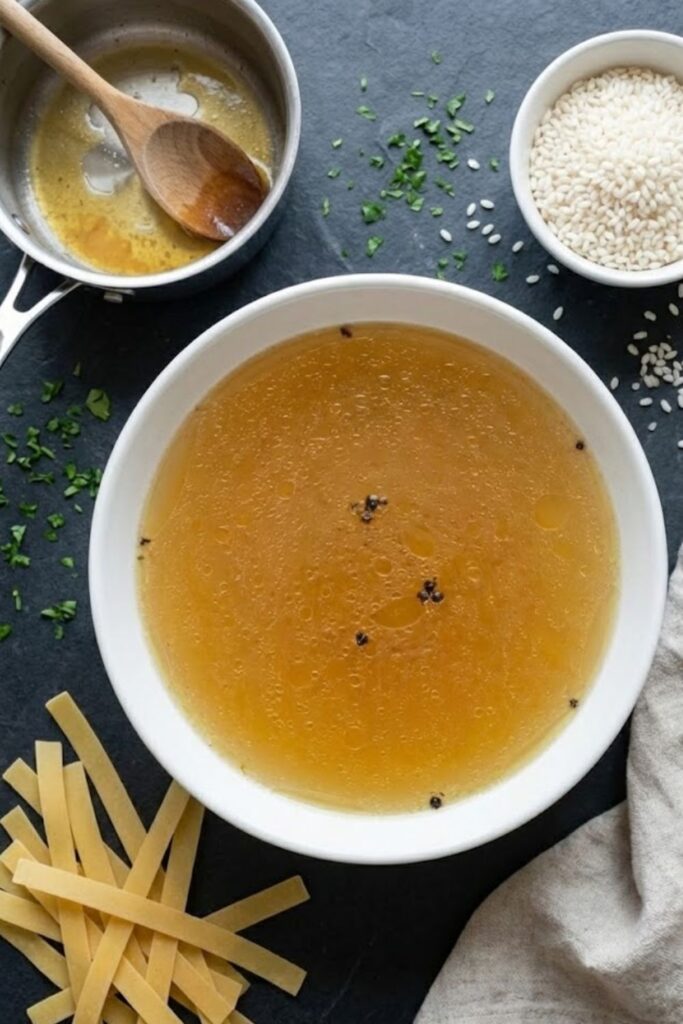
This stock is the backbone of a classic chicken noodle soup or a comforting risotto where the broth flavor is front and center. It also serves as the perfect liquid for braising vegetables or deglazing a pan to make a quick sauce for roasted meats.
How To Store
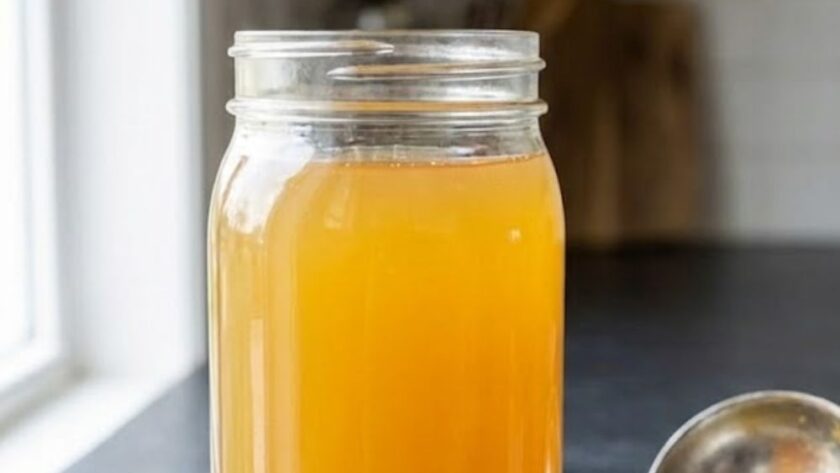
Store the stock in the refrigerator for up to 3 days. For longer storage, freeze it in quart-sized containers or ice cube trays for up to 3 months; just be sure to leave an inch of headspace for expansion.
FAQs
Why do I need to start with cold water?
Starting with cold water allows the proteins and albumin to dissolve slowly and coagulate, which makes them easier to skim off. Hot water cooks the proteins instantly, locking them inside the meat and making the stock cloudy.
Can I use a pressure cooker instead?
Yes, Alton Brown has a variation for this. You can cook the same ingredients at high pressure for 45 to 60 minutes, though the resulting broth may be slightly cloudier than the slow-simmered stovetop version.
What if I can’t find chicken backs?
Chicken wings are the best substitute because they have a high ratio of skin and cartilage to bone, which produces plenty of gelatin. You can also use a leftover roast chicken carcass, though the flavor will be lighter.
Why use a leek?
Leeks add a subtle, sweet onion flavor that is more complex than yellow onions alone. Make sure to wash it thoroughly, as dirt often hides between the layers.
Nutrition
- Calories: 45 kcal
- Total Fat: 1.5g
- Saturated Fat: 0.5g
- Cholesterol: 5mg
- Sodium: 80mg
- Total Carbohydrate: 2g
- Protein: 6g
Try More Recipes:
- Alton Brown Chicken Wings Recipe
- Alton Brown 40 Cloves and a Chicken Recipe
- Alton Brown Chicken Pot Pie Recipe