 Sandra
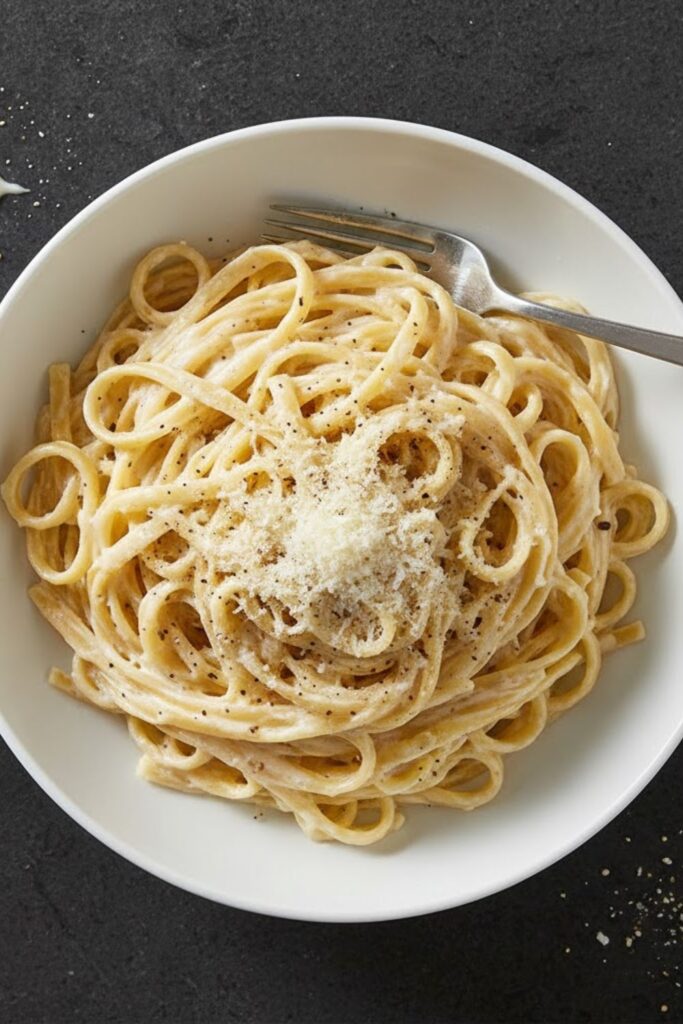
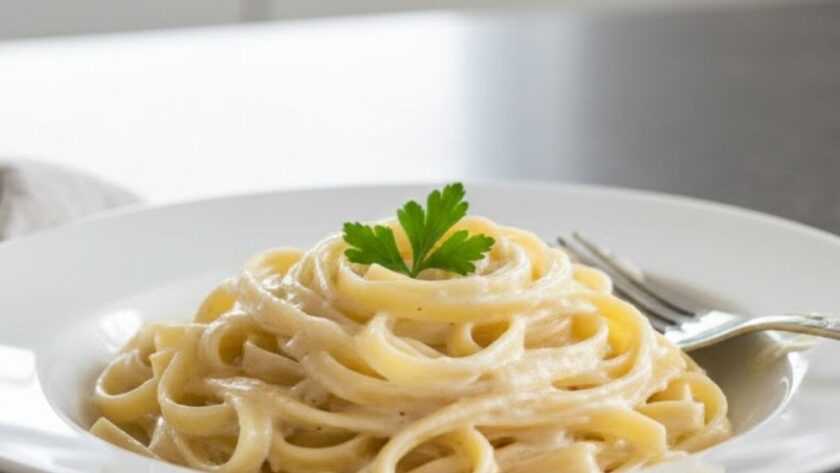
 This velvety, rich Alton Brown Alfredo Sauce is made with butter, heavy cream, and freshly grated Parmesan, coming together in just 20 minutes. The secret lies in the emulsion created when starchy pasta water meets the bubbling dairy, transforming simple ingredients into a coating consistency that clings to every noodle. I’ve found this technique proves you never need a jar again.
What I Learned Making This
I used to think the thickness of Alfredo sauce came from heaps of cheese or, heaven forbid, flour. Making this recipe taught me that the real magic is in the emulsion—the scientific suspension of fat and liquid. By using reserved starchy pasta water (liquid gold, as Alton calls it), you create a bridge between the butter-cream mixture and the cheese, resulting in a sauce that is glossy and stable rather than greasy and separated.
Another crucial lesson was temperature control. If you add the Parmesan to boiling cream, it will seize and become grainy immediately. I learned to pull the pan off the heat before whisking in the cheese, ensuring that smooth, restaurant-quality texture that coats the back of a spoon perfectly.
Alton Brown Alfredo Sauce Ingredients
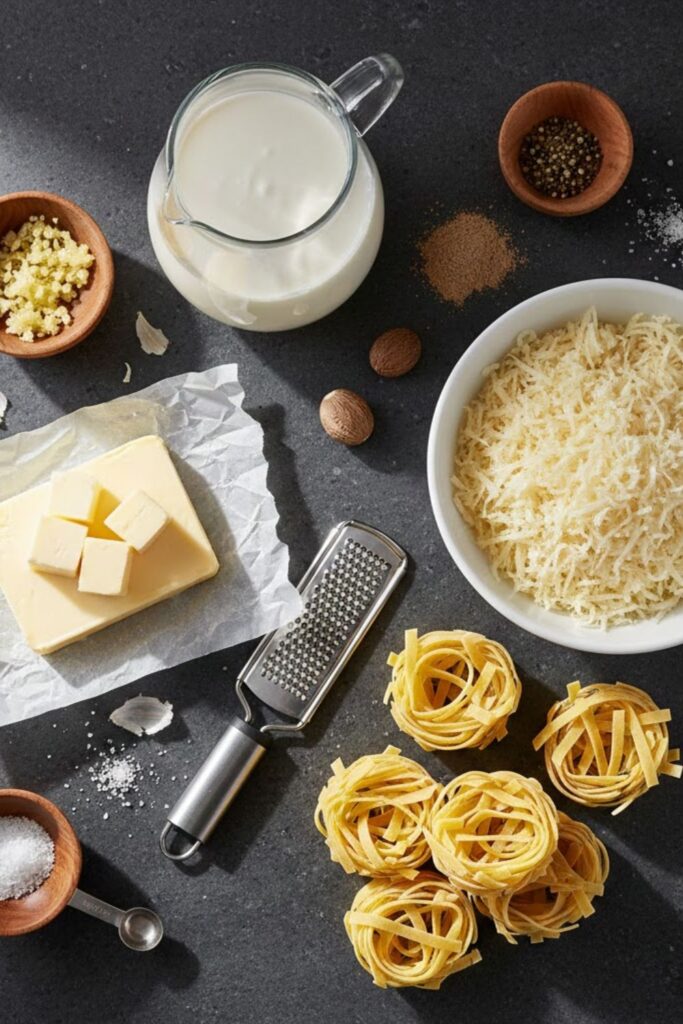
- Unsalted Butter: 4 tablespoons (1/2 stick), cut into cubes for even melting.
- Heavy Cream: 1 cup, preferably at room temperature to prevent seizing.
- Garlic: 2 cloves, finely minced (smashed and chopped to release oils).
- Nutmeg: 1/4 teaspoon, freshly grated if possible (a signature Alton touch).
- Parmesan Cheese: 1 1/2 cups, freshly grated (do not use pre-shredded tubs).
- Salt: 1/2 teaspoon kosher salt, plus more for pasta water.
- Black Pepper: 1/2 teaspoon, freshly ground.
- Pasta Water: 1/2 cup reserved from boiling the fettuccine.
- Fettuccine: 1 pound dried pasta.
How To Make Alton Brown Alfredo Sauce
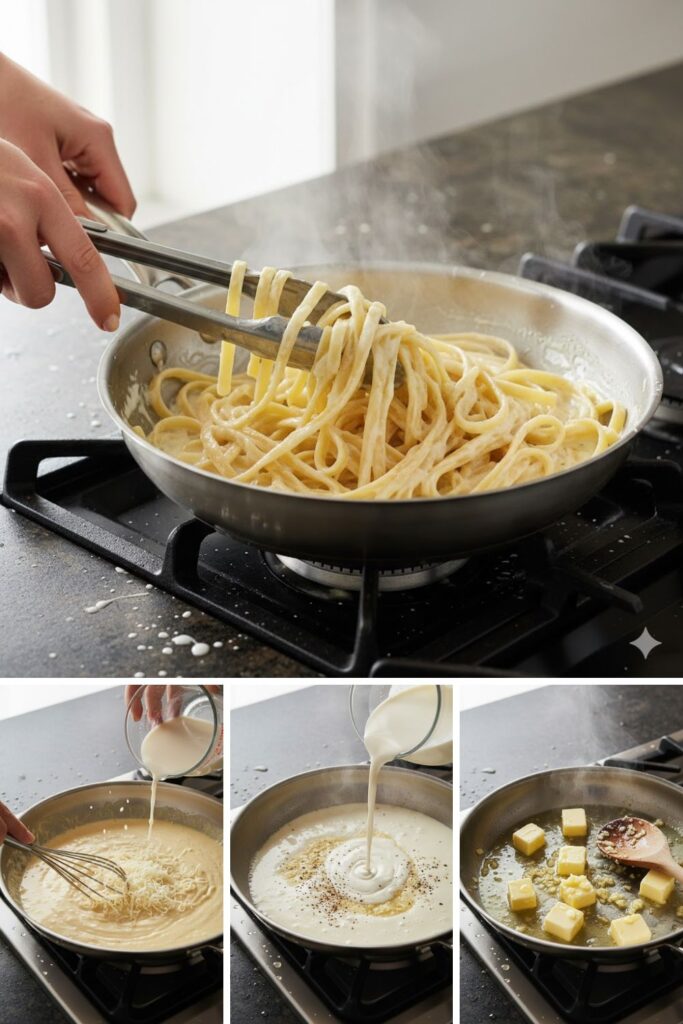
- Boil the Pasta: Bring a large pot of water to a boil and salt it heavily. Add the fettuccine and cook until al dente. Before draining, dip a measuring cup in and carefully reserve 1/2 cup of the starchy cooking water. Drain the pasta but do not rinse it.
- Start the Base: While the pasta cooks, place a large sauté pan over medium heat. Add the butter and garlic. Sauté gently for 1-2 minutes until the garlic is fragrant but not browned.
- Simmer the Cream: Pour in the heavy cream, salt, pepper, and nutmeg. Bring the mixture to a gentle simmer (small bubbles, not a rolling boil) and let it cook for 3-5 minutes to slightly reduce and concentrate the flavors.
- Create the Emulsion: Remove the pan from the heat. Gradually whisk in the grated Parmesan cheese until smooth. It may look thick. Splash in 2-3 tablespoons of the reserved hot pasta water and whisk vigorously to emulsify the sauce into a glossy cream.
- Toss and Serve: Add the hot, drained fettuccine directly to the pan. Toss efficiently with tongs for 1-2 minutes, allowing the pasta to absorb some sauce. If it looks dry, add more reserved pasta water a splash at a time until silky. Serve immediately.
Recipe Tips
- Grate Your Own Cheese: Pre-grated cheese contains anti-caking agents like cellulose that prevent it from melting smoothly, leading to a gritty sauce. Always buy a block and grate it yourself.
- The Nutmeg Factor: Don’t skip the nutmeg. It doesn’t make the dish taste like dessert; it adds a subtle, warm background note that cuts through the richness of the cream and enhances the dairy flavor.
- Don’t Overheat the Cheese: High heat separates the fats in cheese, causing grease pools. Always take the pan off the burner before adding the Parmesan.
- Salt the Water: Since there are few ingredients, seasoning the pasta water is your only chance to flavor the noodles themselves. It should taste like the ocean.
What To Serve With Fettuccine Alfredo
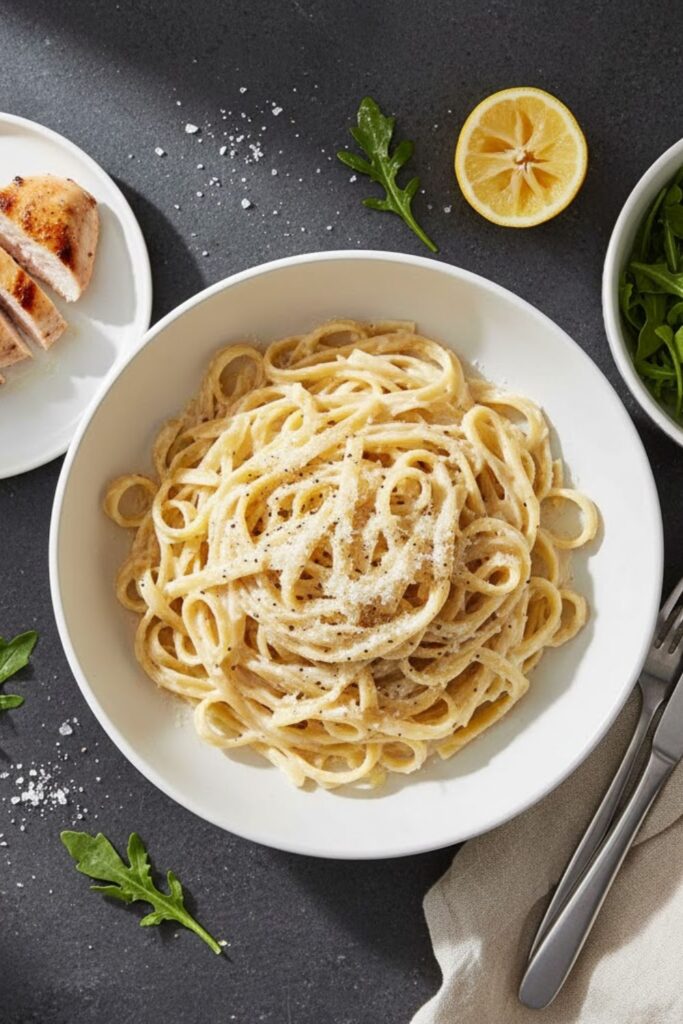
Because this dish is incredibly rich, it pairs best with a sharp, acidic component to cleanse the palate. A simple arugula salad with a lemon vinaigrette works wonders to cut through the heavy cream. For protein, grilled chicken breast or seared scallops are classic accompaniments that don’t overpower the delicate sauce.
How To Store
Alfredo sauce is notorious for breaking when reheated. Store leftovers in an airtight container in the fridge for up to 3 days. To reheat, place the pasta in a saucepan with a splash of water or milk over low heat, stirring gently to re-emulsify the fats as they warm up.
FAQs
- Why did my sauce turn out grainy?
This usually happens if the heat was too high when you added the cheese. The proteins clump up and separate from the fat. Next time, remove the pan from the heat completely before whisking in the cheese. - Can I use milk instead of heavy cream?
You can, but the sauce will be much thinner and less rich. If using milk, you might need a small amount of cornstarch or flour (a roux) to help it thicken, though that deviates from the classic texture. - Why do I need the pasta water?
The water is full of starch released from the noodles. This starch acts as a binding agent (emulsifier) that helps the oil from the butter and cheese mix seamlessly with the water-based cream.
Nutrition
- Calories: 580
- Total Fat: 38g
- Saturated Fat: 22g
- Cholesterol: 115mg
- Sodium: 650mg
- Total Carbohydrate: 45g
- Protein: 18g
Try More Recipes:
- Alton Brown Cranberry Sauce Recipe
- Alton Brown Allspice Dram Recipe
- Alton Brown Chicken Stock Recipe